Mariana González, for Molto Giusti
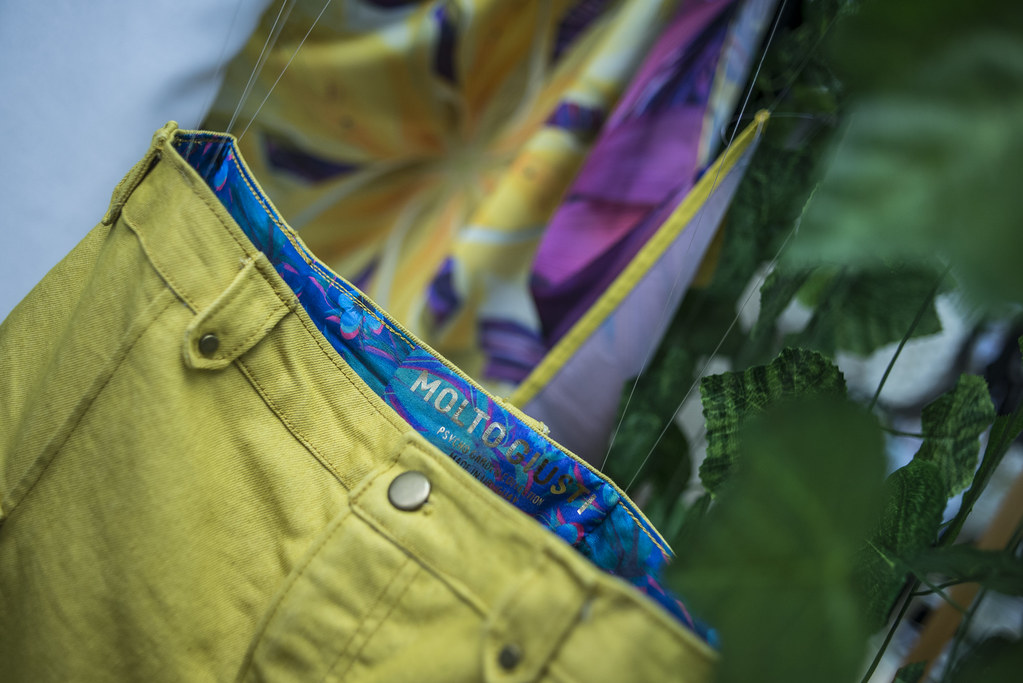
Mariana González, a student in the Fashion Design program, worked with Molto Giusti, a company that specializes in swimwear and men's underwear.
The company, founded by designer Flavio Giusti, is known for its floral-inspired prints.
González suggested to the company that they expand their target audience, which he did by designing functional, adaptable garments. He conducted a trend analysis to see how he could incorporate these different styles. From then on, he began compiling a photographic archive. He visited parks and gardens to take photos of plants and flowers to create textures and patterns.
Based on the photos, he created some drawings in a more illustrative style and others in a vector style. He divided them into natural colors, as he observed them, and altered or hyperrealistic colors.
She used the collage technique during the creative process to find inspiration. She placed various patterns into stencils, which she then applied to the garments. She didn't throw away the leftover pieces; instead, she used them for other appliqués.
Carol Rosenblatt, Camila Galfione, and Carmela Sotuyo, for Margo Baridon
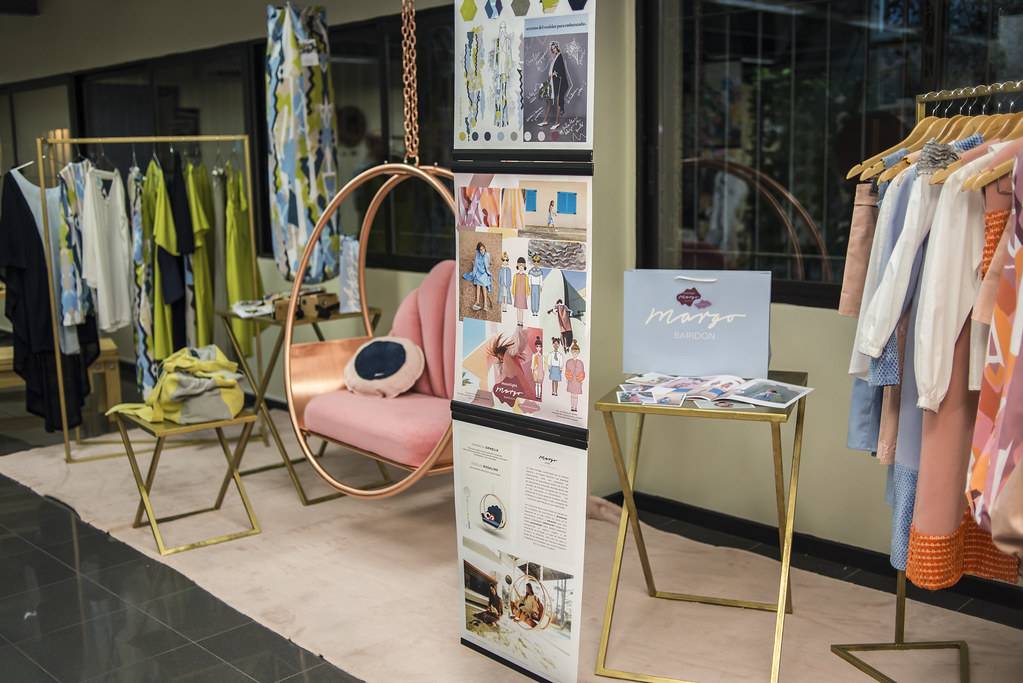
This project was created by Carol Rosenblatt, a student in the Industrial Design program, and by Camila Galfione and Carmela Sotuyo, students in the Fashion Design program.
Margo Baridonis a women's clothing brand. The students noted that it features an elegant and sophisticated style, with colorful and dynamic garments, and that the designer's creative process is research-based.
The brand's target audience is a sophisticated, confident woman who seeks distinctive designs and prioritizes quality.
Rosenblatt designed two furniture pieces for the brand. Sotuyo designed clothing for girls, and Galfione designed maternity wear.
"Margo's customer base spans a wide age range, and many of its current customers are mothers with young daughters," explained Sotuyo.
Galfione chose "Genesis" as the name for her collection, in reference to creation. "My collection aims to support women at this time so they can feel radiant," she explained.
Ana Sofía Bustin, for Stadium
The footwear brandStadium first became acquainted with Recreación when Ana Sofía Bustin, a student in the Fashion Design program, participated in the ShoeTalent competition in 2016.She won the competition and received a cash prize to launch a business venture. “The company offered to partner with me on the venture, and I gladly accepted.”
“Stadium did not specify any particular needs. It is a company with more strengths than weaknesses due to its achievement of its objectives: being the Uruguayan market leader in the footwear sector, providing excellent service to its customers, and offering the widest variety of products at an affordable price,” Bustin summarized. “However, after conducting an analysis of the company and a market study, I was able to identify certain weaknesses that could serve as potential areas for improvement.”
“The company is looking to expand its target audience and reach a market segment that is more attuned to contemporary fashion trends. Unlike the company’s traditional customers, this niche market seeks a certain degree of differentiation,” he explained. “However, the brand’s offerings are mass-market in nature and do not stand out for their high quality. In its quest to reach a new audience, Stadium is striving to update and modernize itself. Despite being in a continuous process of improvement, the brand is still not valued by everyone in the same way, and there is a segment of the population that does not prefer it: there is a flaw in the type of communication being used,” he continued. “This market segment requires a different type of advertising and promotion than what has been done so far.”
Bustin pointed out that, since its inception, Stadium has segmented its customer base by gender: men’s and women’s footwear. “Today, that distinction may be rejected by a market segment that seeks to blur the lines between genders.”
Another area that needs improvement is the use of raw materials. Currently, the company uses synthetic materials because this allows it to produce the final product at a low cost. “It is not known for using materials responsibly, and this also leads to some resistance from a segment of the market. In a context where consumers increasingly value transparency in production processes, Stadium eliminates any trace of its products’ origin.”
Finally, “there is a noticeable shortfall in the company’s own line of athletic shoes”: while there is a wide variety of “casual-athletic-inspired shoes from third-party brands,” “the company’s own line is quite limited and cannot compete with international brands.”
Following this analysis, Bustin worked on his proposal. “The main objective was to change perceptions of the company’s image and bring the brand closer to an audience that hadn’t yet purchased its products. The plan was to create a small capsule collection of eight models of casual urban shoes inspired by athletic and sportswear. The idea was not to produce shoes for sports, but rather a shoe to be worn in various everyday situations. The main feature of this footwear would be its comfort and practicality.”
The shoes designed by the student were intended to be environmentally friendly. “The goal was to create a narrative around the concept of sustainability so that the company could project an image more closely associated with ethical and responsible consumption.” Additionally, the proposal is gender-neutral. “The idea was to erase the dividing line that had been created over decades and offer a product that went beyond feminine or masculine: one that is for everyone. In this way, Stadium would be adjusting its image and could be perceived as a more inclusive and modern brand.”