Rosina Santos, for CTC Empalme Olmos
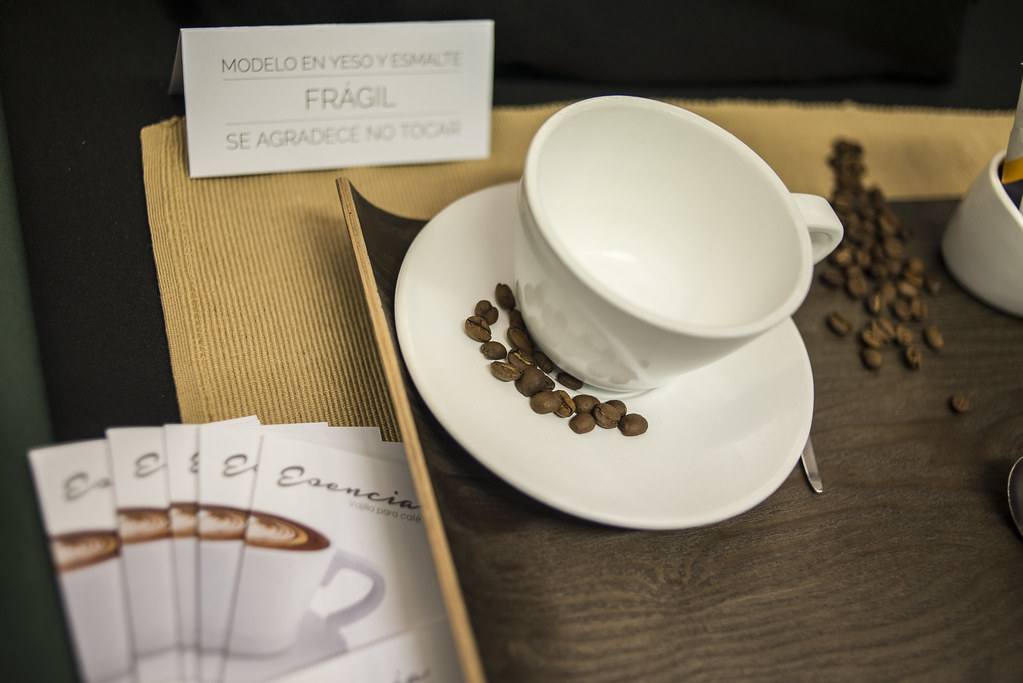
The company manufactures porcelain products. Its project focused on tableware.
The goal was to create a line of tableware for specialty coffee shops, in response to new market demand and the target audience. Specialty coffee shops are those that serve high-quality coffee, follow a meticulous process at every stage, and place great emphasis on traceability from the coffee’s origin at the farm.
Rosina Santos drew inspiration from the world of coffee: the plant, the liquid, the flow, the organic, the natural. From these concepts emerged Esencia, a tableware collection whose form and materials allow it to capture the essence of coffee and create an experience that engages with coffee on a visual, conceptual, and functional level.
For the cups, he drew on organic curves to create the texture and shape of the handle. They all stem from the same curve, which creates a visual continuity associated with the concept of fluidity. Additionally, the handle is open, allowing the cups to be stacked easily and conveniently—a key feature for coffee shops, the target audience.
The cups also feature additional design elements to help maintain the coffee’s temperature for longer, thanks to a raised pattern that increases the wall thickness, a rounded bottom that allows liquids to flow more smoothly and helps preserve the foam, and a wide rim that makes it easier to create latte art—the designs drawn on the surface of the coffee. Additionally, the handle is sized so that the user can hold it comfortably with one or two fingers.
The line includes four cup sizes. As for the plates, the set comes in two different sizes. The fact that there are only two sizes helps streamline the line.
The shape of the products allows for versatility in creating different stacking combinations, thereby enhancing their visual appeal.
Porcelain is ideal for tableware: it preserves the coffee's natural flavor, is lead-free, and is easy to sanitize.
Carol Rosenblatt, Camila Galfione, and Carmela Sotuyo, for Margo Baridon
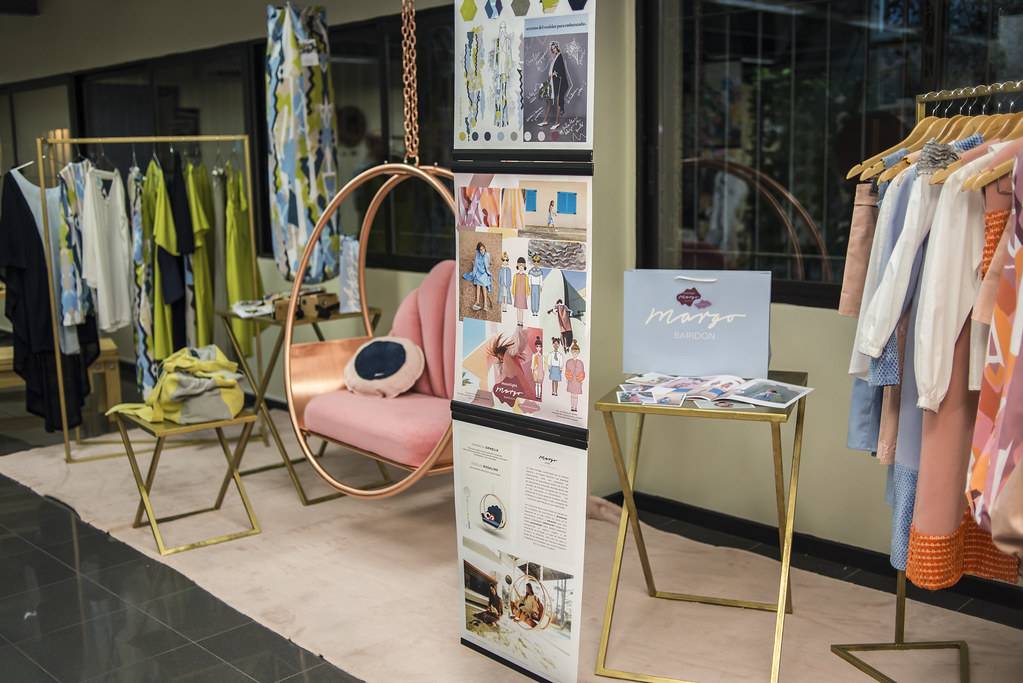
This project was created by Carol Rosenblatt, a student in the Industrial Design program, and by Camila Galfione and Carmela Sotuyo, students in the Fashion Design program.
Margo Baridonis a women's clothing brand. The students noted that it features an elegant and sophisticated style, with colorful and dynamic garments, and that the designer's creative process is research-based.
The brand's target audience is a sophisticated, confident woman who seeks distinctive designs and prioritizes quality.
Rosenblatt designed two furniture pieces for the brand. Sotuyo designed clothing for girls, and Galfione designed maternity wear.
"Margo's customer base spans a wide age range, and many of its current customers are mothers with young daughters," explained Sotuyo.
Galfione chose "Genesis" as the name for her collection, in reference to creation. "My collection aims to support women at this time so they can feel radiant," she explained.
Marcela Balladares, for NYR
“From the very start of the Integrative Project, I was determined to work in the furniture industry, so I selected a number of companies in the field and reached out to them,” said Marcela Balladares, a student in the Industrial Design program. “NYR was not only the first to respond, but they also showed a strong interest in taking on the project.”
NYR specializes in the domestic manufacturing and importation of a wide variety of seating furniture—sofas, armchairs, recliners, and corner sofas. As the student explained, “they offer very high-quality craftsmanship, which allows them to stand out nationally and also facilitates the customization of products to suit the consumer’s preferences, which greatly expands their market.” She described the company’s work as “artisanal” since they do not produce any of their products on a large scale and “in each one, you can see the perfectly executed hand-finished details.”
My first contact with the company was through the marketing manager, Brian Jaffe, who told me they had been looking for an opportunity to work with a designer for some time. “First, we talked about what an industrial designer is, the benefits of working with one, and what I could offer the company with my experience. That’s how I secured the first of many meetings, where I was always welcomed with open arms. They made time to answer all my questions, helped me with my research, showed me the procedures used in the factory, and addressed every issue that came up along the way. I never received a ‘no’ to any of my requests.”
“Marcela came in with a clear idea of what she wanted to do,” Jaffe said. “We told her that our doors were open 365 days a year so she could come by and let us know how the project was coming along, but also so she could clear up any questions with the technicians who were bringing her idea to life. She would visit, check on the progress, and go over some of the more technical aspects of the plans and designs with the director.”
The designer identified the needs that the new design was intended to address. “At NYR, they shared some areas they wanted to explore as suggestions; for example, designing sofas for large spaces like nightclubs or lobbies.” And that’s where the design process began.
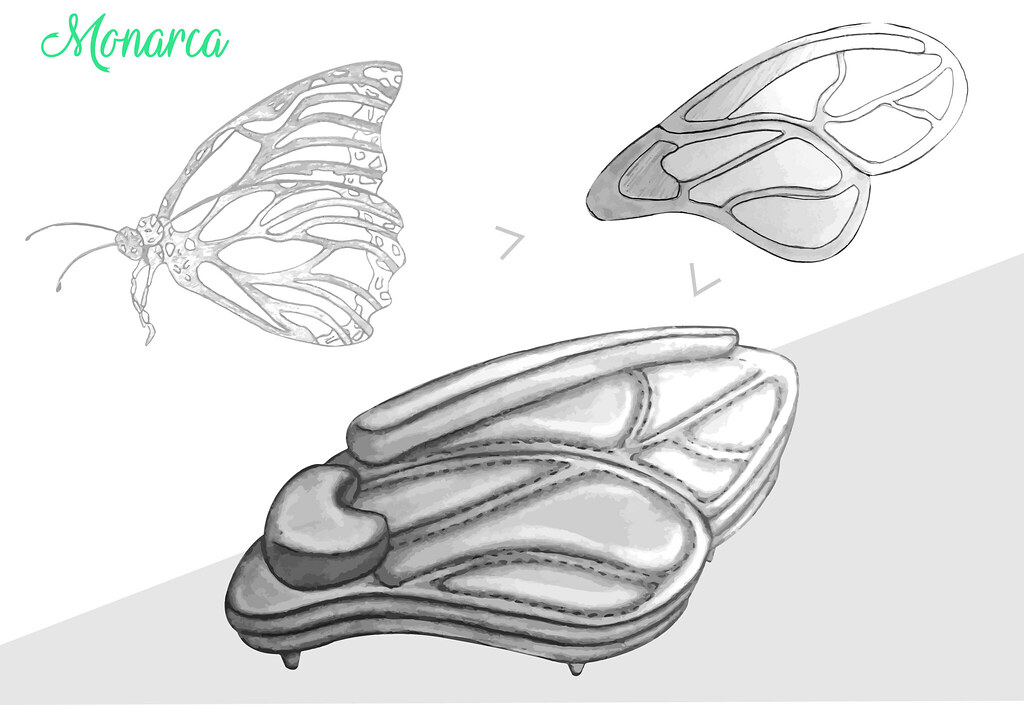
The brief was clear: “to create a product that would combine NYR’s exceptional quality with an innovative design that would modernize the company’s brand.” That is how the Monarca sofa was born, “which explores a modern/contemporary aesthetic inspired by the furniture trends for 2018.”
He also discussed the company’s production system: “NYR’s artisanal upholstery process and the quality standards it applies to raw materials.”
“It was a successful collaboration because the product turned out to be an enriching experience for both parties; we both learned and adapted to a new proposal that presented a challenge in terms of both design and manufacturing,” Balladares summarized. “For this success to materialize, it’s important to note that the design process, from the very beginning, involved extensive communication with the company, as well as face-to-face exchanges of opinions and perspectives. In my opinion, this was key to understanding each other without interference.”
Speaking on behalf of NYR, Jaffe commented that “rather than adapting the design to what the company was capable of,” they tried the opposite: “It was a wonderful process of discovery and research into many specific aspects that we had never explored before with our products.” He said this posed a challenge to their own factory: “to see just how far we were capable of going in developing a completely new product.”
The feedback has been “overwhelmingly positive” from both sides. The result is the Monarca sofa in the NYR catalog.
“The experience turned out to be much more enriching than I ever dared to imagine, because I had the opportunity to understand aspects of design that can only be appreciated in a real-world work setting,” the student emphasized. “Above all, it is immensely satisfying to see the fruits of the past six months’ labor embodied in a product that captures the essence of NYR, its work, and its standards, combined with the creativity I brought to the project as a future industrial designer,” she summarized. “I am pleased to say that the Monarca sofa will be part of NYR’s product line.”
“The company has created by our developers and others created by people we work with overseas; we’re always talking about very exclusive lines,” Jaffe added. “What we told Marcela was that we want to include this design as just another one, because we found it just as exclusive and just as interesting.”
In the same vein, he noted: “During one of the conversations the company director had with Marcela, it was suggested that she join the NYR team and start working with us.”