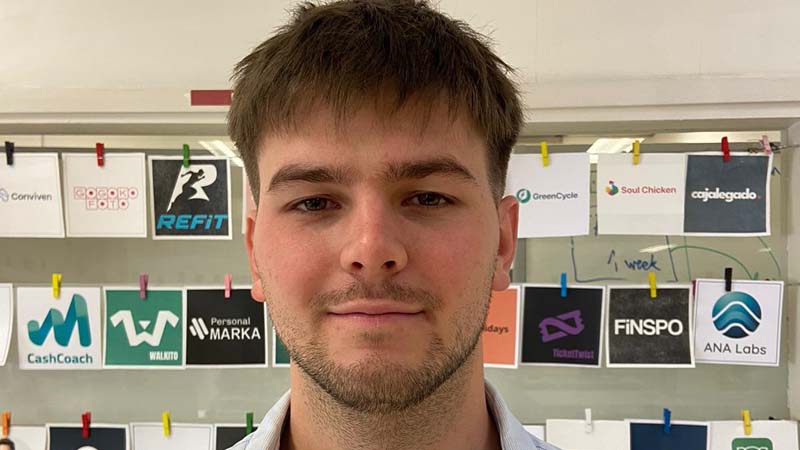
Together with veterinarian Yael Filipiak, the lab’s founder, they are leading a project that has already been validated by veterinarians and is preparing to compete for the ANDE Seed Fund.
From a DIY lab to an innovative commercial solution
CellX was founded by Yael, who, after years of experience in veterinary medicine, identified an opportunity in regenerative therapies that were being used in other countries but were virtually inaccessible in Uruguay due to import costs. To overcome this obstacle, she set up her own laboratory in an apartment, using her own resources and with the help of colleagues.
There, he began producing platelet-rich plasma (PRP), a treatment that stimulates cell regeneration in animals. “It’s an injectable product that’s applied directly to the affected area and promotes tissue healing. We saw some remarkable cases, such as that of a female dog who, after tearing her ligaments, was walking pain-free just 24 hours after the treatment,” Alexander explains.

What does CellX do, and how does it work?
The startup develops three types of products: PRP, platelet lysate (a more effective version of PRP), and platelet-poor plasma (PPP). These treatments are derived from equine blood, due to its greater volume, greater efficacy, and lower risk of immune reactions in dogs and cats.
“Platelet lysate, for example, allows us to administer only the growth factors without introducing whole platelets, which further reduces the risk of side effects,” explains Alexander.
In addition, all products are sterilized at LATU and meet high quality standards.

Market validation and next steps
So far, five veterinarians have successfully used CellX products. The team already has brand, a landing page, and a marketing strategy in place.
Alexander is focused on scaling the business and opening at least 50 veterinary clinics in the coming year, as well as moving forward with the necessary health and safety approvals.
“We’re going to apply for the ANDE Seed Fund to boost production and raise awareness of the project at universities, seminars, and more clinics,” he says.
Beyond dogs and cats: a growing market
Currently, CellX is focused on small animals, but the company also sees great potential in the equine sector, particularly with regard to sport horses and breeding stock. “Today we are building the lab’s reputation in the more accessible segment, but in the future we will also target the equine sector,” Alexander notes.
One of the factors that helped validate the model is the network of trust among veterinarians: “They’re very collaborative, and when they trust a product, they recommend it to their colleagues, which opens doors for us.”

Biotechnology Applied to Technical Sales
As a biotechnology student, Alexander discovered that his calling lay more in technical sales than in the lab. “You need to know what you’re talking about. When you go to a veterinary clinic and explain the treatment, you have to be able to answer technical questions on the spot,” he notes. He also appreciates that the program at Universidad ORT Uruguay courses such as business management, economics, intellectual property, and biobusiness, which gave him key tools to lead the commercial side of the business.
Support from the CIE
The project is being incubated at ORT’s Center for Innovation and Entrepreneurship (CIE), where Alexander also works.“The CIE is key. It connects you with mentors, helps you practice your pitch, provides feedback on your business model, and brings you into contact with other entrepreneurs. It’s a constant source of support,” he says.
Try it to learn
His advice for students who want to start a business is clear: “Just give it a try. There’s no better way to figure out what you want to do than by diving into a project. Even if it doesn’t work out, you’ll discover your interests, gain experience, and find your place.”
Toward New Therapies
Currently, they continue to explore new solutions and work toward developing a therapy using stem cells derived from mares to treat equine endometriosis. The team hopes that these types of products can also be patented, which opens up the possibility of expanding internationally.