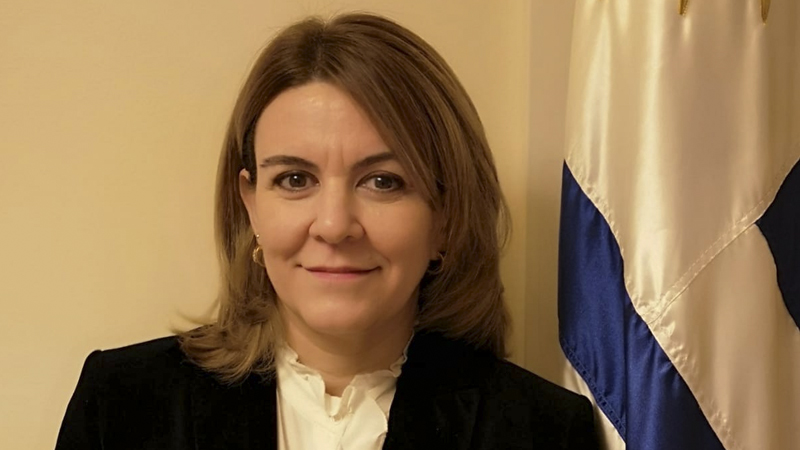
After graduating from the Bachelor’s Degree in International Studies from Universidad ORT Uruguay joining the Foreign Service of the Republic, Alejandra De Bellis took office in 2016 as Uruguay’s ambassador to the United Nations Educational, Scientific and Cultural Organization (UNESCO) and settled in Paris, France.
In that role, he faces the daily challenge of defending our country’s interests and sharing Uruguayan experiences that other countries can draw upon.
In this article, De Bellis discusses the challenges of his work, what drives him, his memories of his time at ORT, and the mark he hopes to leave through a professional career that knows no bounds.
What is the role of a permanent delegate to UNESCO?
UNESCO is the specialized agency of the United Nations (UN) responsible for education, the natural and social sciences, and communication and information. Since its inception, the organization’s mission has been to contribute to the achievement of peace through educational, scientific, and cultural cooperation. To this end, countries exchange and negotiate standards and guidelines in these areas; share their experiences and best practices; and cooperate with one another.
The role of a permanent delegate to UNESCO is to represent their country in all intergovernmental forums held within the organization, to defend their country’s interests, and to ensure that everything UNESCO produces—let us not forget that it is the UN system’s great think tank—is received and put to good use in Uruguay. The reverse is also true: the delegate seeks to ensure that Uruguay’s successful experiences at the national level can be shared and utilized by other countries around the world that need them.
How and when did the opportunity to take on this role in Paris arise?
From a very early age, I chose to pursue a career in diplomacy. I joined the Foreign Service of the Republic through a competitive examination in 1996, and since then I have held various positions and assumed a range of responsibilities, both in Montevideo and abroad. It was in 2016 that I was asked to serve as Uruguay’s ambassador to UNESCO.
What are the main challenges you face in your job?
Multilateral diplomacy requires a constant willingness to engage in dialogue and put forward proposals, and at the same time offers enormous opportunities for the country.
What has it been like living abroad?
I am convinced that it is an enriching experience. Both professionally and personally, going abroad—whether to study or work—is an adventure that brings diversity, often challenges us, and allows us to see the world and ourselves from a different perspective.
"We learn from our peers, from other colleagues, from our successes and our mistakes, and it is essential to share and pass on that experience."
What are your memories of your time at ORT while pursuing your bachelor's degree in International Studies?
Those were wonderful years, and I have fond memories of both the faculty and the student body, which was very diverse and included people of different ages and backgrounds, all with varied career aspirations. All of this created a very interesting sense of breadth and potential. I’ve stayed in touch with several of them to this day.
Which skills you acquired at ORT during your studies do you apply in your day-to-day work?
All of them. I always say that all the tools and concepts I learned during my degree program, in the courses I took, ended up being useful to me sooner or later, or I saw them put into practice in my professional life.
What kind of legacy would you like to leave through your work?
What I believe is most important, regardless of one’s professional field, is to approach it with dedication and professionalism. Knowledge transfer is also crucial: professional development is an ongoing, lifelong process. We learn from our peers, from other colleagues, from both successes and mistakes, and it is essential to share and pass on that experience.