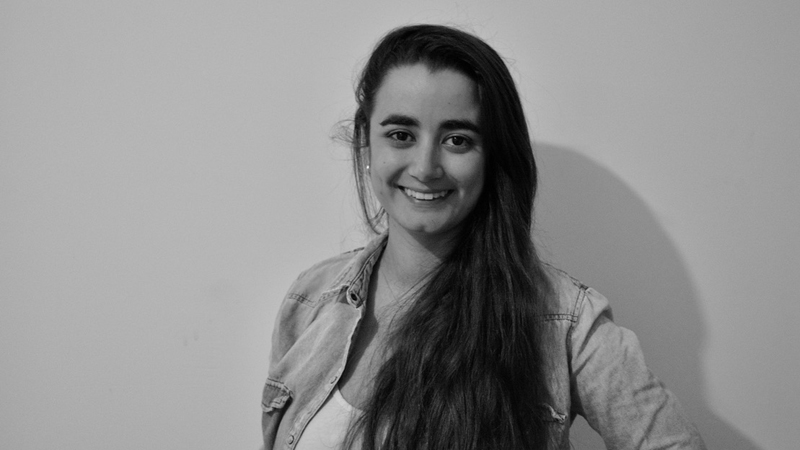
She currently lives in Salto and tackles a major professional challenge every day with commitment, dedication, and a positive attitude. Looking ahead, Fátima would like to help promote engineering among teenage girls and contribute to the development of environmentally sustainable alternatives. Learn more about her story in this article.
How did the opportunity to work as an engineer in the Transmission Unit at UTE come about?
Although I studied telecommunications engineering, I developed a professional profile in the electricity sector. That’s what I focused on in my final college courses. One of them was the elective course on Electrical Installations.
That’s how I got the chance to apply for a position at UTE. Given my interest in the field, I didn’t hesitate to apply. My work at UTE has motivated me to keep learning, and that’s why I’m currently pursuing a master’s degree in renewable energy.
What does your daily work involve, and what are your main responsibilities?
I work as an Analyst in the Transmission sector. My current responsibilities are quite varied: network analysis (potential outages, specific events, load conditions, SCADA alarms, among others), providing support for construction projects, and collaborating with other departments.
What was it like to make the decision to move to Salto for a new professional opportunity?
From the very beginning, I saw it as a way to grow not only professionally but also personally. Leaving Montevideo and moving to the countryside—to a city where I didn’t know anyone—was quite a challenge. Although at first it wasn’t one of my biggest concerns, being far from family and friends is one of the things I miss the most.
What challenges does working for UTE, Uruguay’s state-owned electric power company, entail?
It is undoubtedly a huge challenge. It is one of Uruguay’s leading state-owned companies and the only one in the electric power sector. This entails a great deal of responsibility in several areas. First and foremost, we must provide an efficient and safe service, since the entire country depends on the power generated here.
The second point relates to continuous improvement and adapting to new technologies as they are introduced, as well as a commitment to continued growth with an emphasis on the triple bottom line: social, environmental, and economic.
"One of my greatest aspirations is to use my position to help develop environmentally sustainable alternatives that will reduce the immense environmental impact that humans have caused."
How do you remember the process that led to your decision to study Telecommunications Engineering, and what was your experience like at ORT?
Ever since high school, I knew exactly what I wanted to do: study engineering. The problem was that I hadn’t decided on a specific branch of the field. The introductory talks at ORT, where they explain what each engineering discipline entails, were very helpful to me. It was based on that information that I made my decision.
My time at ORT was a great experience in many ways: the classes, the professors, and the group of friends I made. Sometimes, without even realizing it—and other times, struggling through it—we’d spend hours in the library, the quiet study room, or any empty classroom we could find. During the final stretch of my degree, I think we spent more time in the project room than we did at home.
What is it like to work in a field that is uncommon among women? Do you think that, little by little, telecommunications engineering is becoming more popular among women?
While historically the number of women in engineeringhas been very low, little by little, that trend has been reversing, and there are more and more of us(although it’s true that we’re still a minority).
Fortunately, in the workplace, I never felt discriminated against for being a woman, and I never saw it as a limitation. In fact, I believe that, these days, the idea that “engineering is harder if you’re a woman” needs to be eradicated. However, there is still a lot of work to be done to achieve that.
Currently, since there are so few of us in the field, it’s rare to encounter a female colleague in the workplace; that’s why I believe it’s essential to promote engineering in high school and encourage women to pursue a career in engineering.
What were the key factors that helped you advance in your career?
The key factors that help me advance are commitment, a positive attitude, and a willingness to work hard.
What kind of impact would you like to make through your work?
I’d liketo help promote engineering among teenage girls. I believe that decisions about career paths are made at a very young age, and often without proper guidance.
For this reason, I would like to share my professional journey through informational talks on the fields of both electrical and telecommunications engineering, helping young people make informed decisions and providing them with as much guidance as possible.
My other major aspiration is to use my position to help develop environmentally sustainable alternatives aimed at reducing the immense environmental impact that humans have caused.