One of the projects is being led by Gonzalo Croci, who holds a Ph.D. in Security and Crime Studies from University College London (UK), a Master’s degree in Latin American Studies from the University of Oxford (UK), and a Master’s degree in Public Policy from the Hertie School (Germany).
The second project is led by researchersMarcos Segantini and Santiago Acerenza. Segantini holds a PhD in Public Policy from Clemson University in South Carolina (United States) and a master’s degree in Economic History from the University of the Republic. Acerenza holds a PhD in Economics from Iowa State University (United States).
Drug dealing and urban violence
“Over the past decade, Uruguay has experienced a steady increase in lethal violence linked to small-scale cocaine trafficking, a phenomenon that challenges its historical perception of safety,” Croci explained in reference to the selected research. His project seeks to understand“the operational and structural dynamics of small-scale cocaine trafficking in Montevideothrough the application of crime script analysis, an innovative methodology in the Latin American context.”
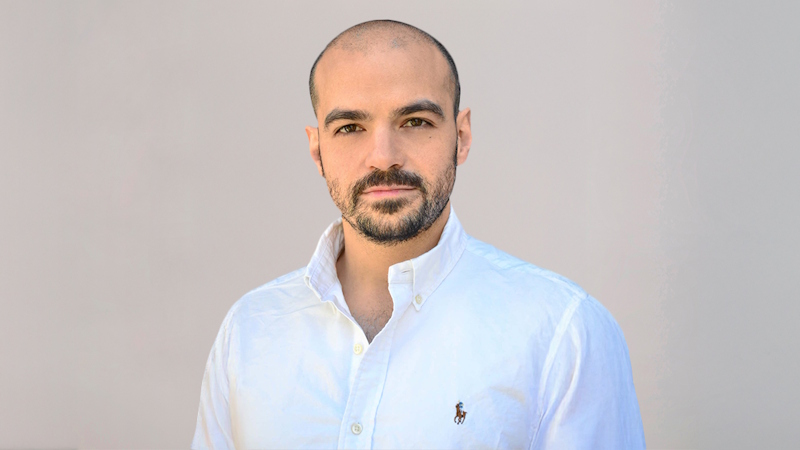
By triangulating open-source intelligence (OSINT) and interviews with key stakeholders—such as police officers, judicial officials, community leaders, and incarcerated individuals—Croci will map the critical stages of small-scale drug trafficking: entry into the country, procurement, distribution, and sale of drugs, while also taking into account the factors that facilitate such activity, such as access to weapons, the use of violence, and money laundering.
The originality of the project lies in linking the study of organized crime with the territorial and social dynamics of urban violence, providing previously unpublished evidence on how illegal markets operate.
Dr. Gonzalo Croci
The findings will provide practical insights for the design of “more targeted and effective” public policies, contributing both to academic debate and to the development of evidence-based security interventions.
Crime and the Economy
For his part, Segantini explained that, over the past two decades, the academic literature has shown thatcrime “not only generates social costs, but also profound economic consequences”; for example, it affects investment, discourages entrepreneurship, accelerates business closures, and distorts economic activity across different regions.

The project he is conducting in collaboration with Acerenza aims to assess how “the spatial evolution of crime affects the creation and closure of businesses in Uruguay, using data from various sources and applying econometric techniques.”
What makes this project innovative is that it brings together two areas of research that have traditionally been studied in isolation in Uruguay: the study of crime and the analysis of regional economic development.
From a methodological standpoint, Segantini explained, “the project introduces significant methodological innovations by applying a causal identification strategy based on shift-share instruments, which have been little used to date in studies on crime and entrepreneurship.” This technique, he said, “will make it possible to isolate the exogenous effect of crime on entrepreneurial activity, minimizing biases and potential problems of causal reversal.”