As part of the Third Latin American Congress on Educational Measurement and Evaluation, graduates of the Master’s in Education program at Universidad ORT Uruguay the assessment practices of Uruguayan teachers at various educational levels.
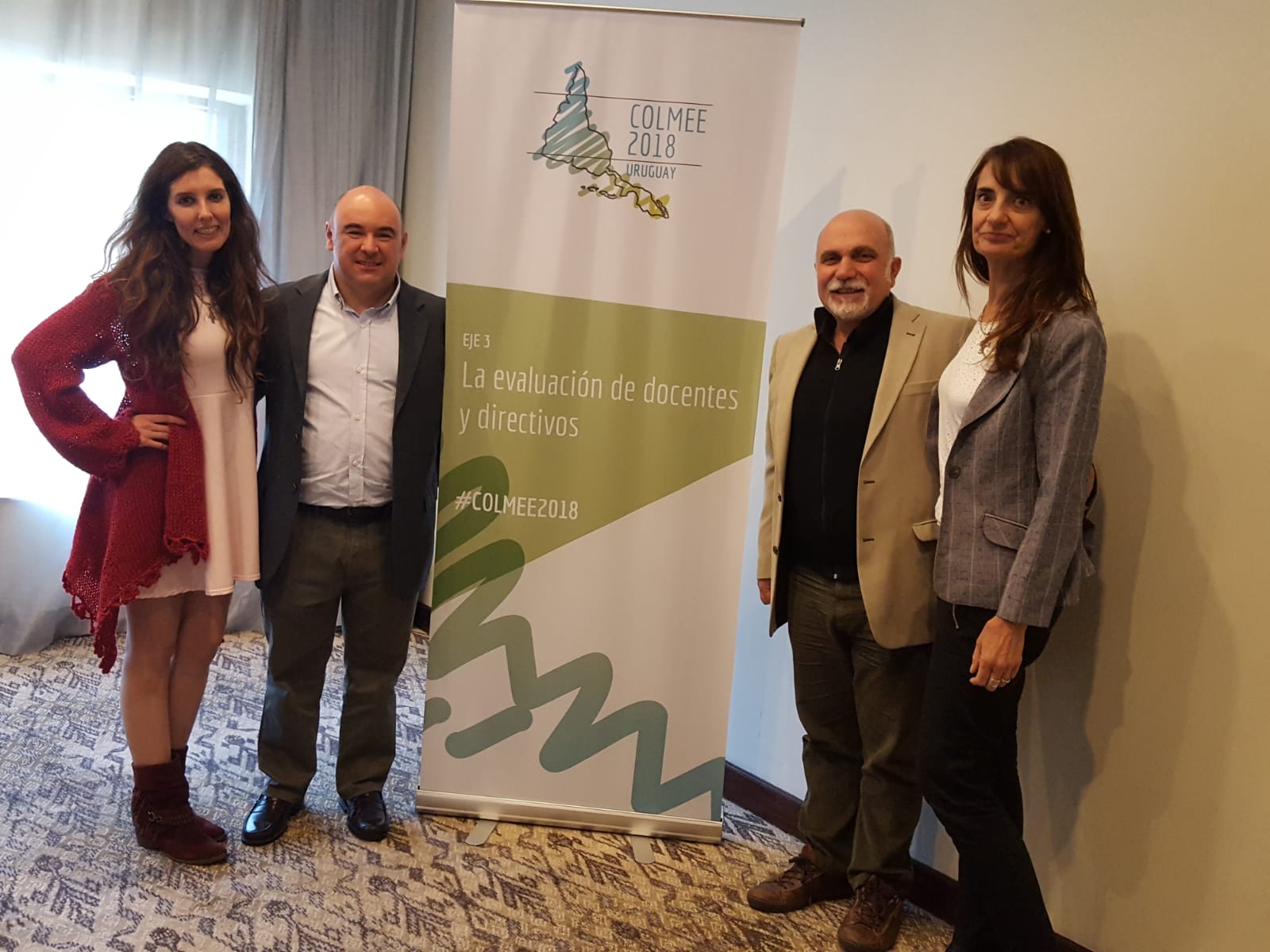
Gustavo Bentancor, M.A., Natalia Rivero, M.A., and Diana Shablico, M.A., were the speakers at the mini-symposium titled “Teachers’ Assessment Practices as a Subject of Study: Three Research Studies in Elementary, Secondary, and Teacher Education.”
The session was moderated by Dr. Eduardo Rodríguez Zidán, associate academic coordinator for graduate programs at the Institute of Education.
The event took place on Saturday, May 12, at the Radisson Montevideo.
The “supreme” importance of assessment
“Assessment should not be seen as a criticism of teachers’ work or as a personal threat, but rather as a tool for improvement,” said Gustavo Bentancor. In his view, examining assessment practices is of “paramount importance,” as they are closely linked to teaching and student learning.
During the symposium, she shared her experience studying how secondary school teachers assess students. She also presented the findings of her thesis,“Mathematization: A Look at the Teaching and Assessment Practices of Teachers in the Basic Education Cycle in a Metropolitan Area of Montevideo,”which she submitted as a requirement for her Master’s degree in Education.
Bentancor, like the rest of the team at the Institute of Education, also encountered “traditional” assessment practices. The results were similar even though their studies were conducted at different times and within different educational subsystems.
For her part, Diana Shablico spoke about the assessment of learning in teacher training at the Artigas Teachers’ Institute (IPA). She focused on the perspectives of students and teachers, explaining how they perceive assessment.
He also described the process of conducting his research and the results he obtained based on his analysis of the IPA’s curricula.
Why Talk About Certain Things
“The mini-symposium was an enriching experience because it provided an opportunity to share data and experiences on a topic that, in my view, is central to the educational agenda,” explained Shablico, who described the experience as “excellent.”
With the room packed, the graduate noted that, from the very beginning, a “relaxed and pleasant atmosphere” had taken hold, “where relevant questions and comments were shared.”
Bentancor, for his part, highlighted the diversity of the participants. There were teachers from various educational levels, both domestic and international, such as from Argentina and Mexico.
“The findings shared—based on the research presented—contribute not only to improving teacher evaluations but also to fostering processes of reflection that can lead to improvements in school subsystems,” Bentancor concluded.