The award falls under the category “Essays on History, Memoirs, Testimonies, and Biographies—Published Works” of the 2023 Literary Awards, which were announced in January 2024. These awards, organized by the MEC, received nearly 500 submissions, of which 37 were awarded prizes and 36 received honorable mentions.
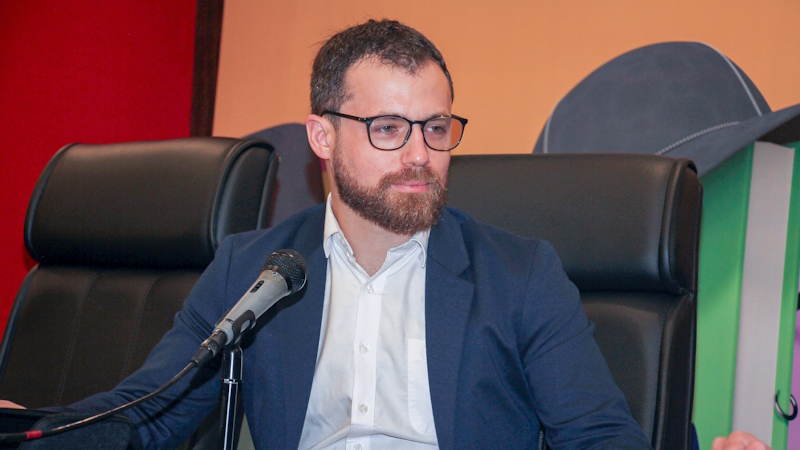
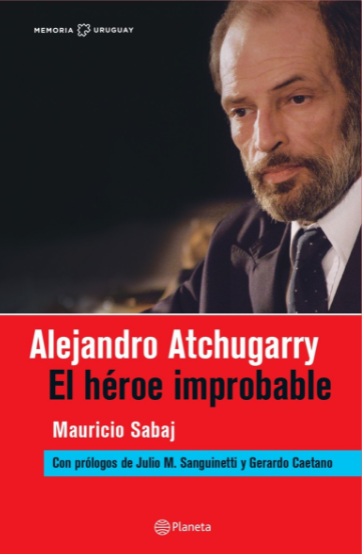
Mauricio Sabaj, a graduate of the Bachelor’s program in Journalism, received an honorable mention for his book *Alejandro Atchugarry: The Unlikely Hero*, published in 2022.
In this brief interview, he discussed the path that led him to this research, his final assessment, and the importance of recognition.
 How would you assess the book now, a year and a half after its publication?
The entire process was very rewarding. From the moment I began my research (four years before publication), discovering Alejandro Atchugarry’s personality was truly exciting.
Atchugarry was a very important figure in the country's history, and until the book was published, very little was known about him, his political career, his life, and his true role in the 2002 crisis.
Writing it was quite a challenge. I wanted to keep readers engaged throughout the book, make sure they never got bored, and ensure that not a single line was superfluous.
From the moment it was published, everything exceeded my expectations: the presentation at the Legislative Palace, the media coverage, the public’s warm reception, receiving this award, and—perhaps most rewarding of all—the feedback from readers.
How significant is it to you to receive an award like this Honorable Mention in the Prize for Literature?
It's always nice to receive some kind of recognition for the work you do. Even more so when it's recognition of this kind.
The warm reception from the public, the feedback from readers, and receiving this recognition have filled me with joy. However, I believe that what really mattered was telling Atchugarry’s political and personal story.
Looking back, why did you want to tell this story?
At first, it was out of personal curiosity. In Uruguay, where people tend to reject any politician who doesn’t belong to the party they vote for, I was struck by the fact that Alejandro Atchugarry was so respected and beloved by people from all political parties. I wondered how he had managed to achieve that. This is one of the central themes of the book.
I was even more surprised that he had earned much of that affection while serving as Minister of Economy, since those who hold that position are usually viewed with considerable distaste. Atchugarry, moreover, was not an economist but a lawyer—a detail that piqued my curiosity even further.
Then, as I delved deeper into my research, I was surprised to find that very little was known about his personality, his political career, and his role in the 2002 crisis. People recognized him as the savior of the crisis, but many within the political system attributed only a secondary role to him. I wanted to know what role he had played during those months, which were so crucial to the country’s history.
I also came to discover and unravel an incredible personality. Discovering and telling his story was fascinating.
Finally, I wanted to reflect on his life and career. I wanted people to truly understand who Alejandro Atchugarry was and his significance in the history of the country.