Trade between Uruguay and China has grown to such an extent that China has surpassed Brazil as the leading destination for Uruguayan exports. In 2013, China and the rest of Asia represented the second-largest market for Uruguay, behind Mercosur. Understanding the culture and maintaining a reputation as a reliable supplier are key.
Trade between Uruguay and China increased fivefold between 2007 and 2013. It has grown at a cumulative annual rate of 30%, with exports growing at a faster rate (45%) than imports (23%).
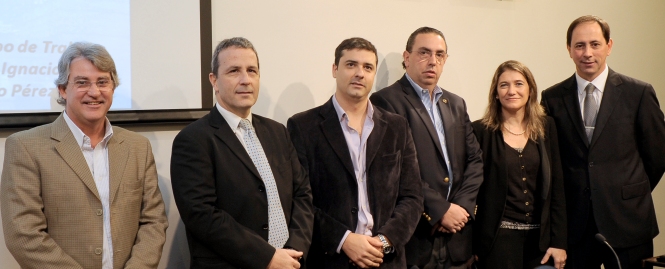
On June 6, 2014, leading figures in the agribusiness sector spoke at the School of Management and Social Sciences about developments in the sector and the best approach to this attractive and promising market.
The event was titled “Can Asian Demand Sustain Another 10 Years of Growth in Uruguay’s Agribusiness Sector?” and was part of the Management and Business Lecture Series organized by the Graduate School of Universidad ORT Uruguay.
The Glances
Juan Ignacio Lema, M.Sc., a professor of agribusiness at the university, pointed out a significant fact: Asia accounts for half of the world’s population, making it a potentially attractive market for Uruguayan agricultural products.
“Since 2013, Asia has been Uruguay’s leading trading partner, overtaking Brazil. This has led companies to change their strategies,” he explained. The changes are cultural but also logistical.
China uses a different language, is in a time zone that is completely opposite to Uruguay’s, and trade involves at least 35 days of sea transport.
The professor discussed factors that are making China increasingly attractive. The first of these is demographic change: population growth and the urbanization of Chinese society.
China is also seeing a rise in purchasing power and the growth of the middle-class consumer base, leading to changes in lifestyle and commerce.
This last point was emphasized by Hugo Pareschi, General Manager of Calcar. China has a “very large middle class” that continues to grow.
“We Uruguayan exporters are small fry; we have little presence in the markets. We’re not leaders in terms of volume, but I think it’s very important to keep in mind that (…) wherever Uruguayan exporters are found, they’re always well-known, well-received, and respected,” he explained.
“We have a long-standing tradition of compliance” that bolsters the country’s reputation, Pareschi said, adding that Uruguayan dairy industries are serving the Chinese market well.
“The government’s presence through its agencies and ministries is very important,” he said, highlighting the work of Uruguay XXI, the National Meat Institute (INAC), the National Milk Institute (INALE), and the National Institute of Viticulture (INAVI).
Plan
Alejandro Evia, Commercial Manager at Nidera, focused his presentation on the importance of not thinking in the short term.
“China is thinking 20 or 30 years ahead. And if I wait 30 years to make a decision, it will be too late,” he warned. “We need to change our mindset. This isn’t something that can be done overnight.”
China commented: “It has taken some rather unorthodox steps, but it is striving to become the world leader in consumption and trade, so it has had to adapt to trade policies.”
He also warned that Uruguay will not be able to “feed China,” but that Uruguayan companies must be supported in meeting the Asian country’s demands. “Who is helping them?” he asked.
Marcelo Secco, CEO of Tacuarembó Marfrig (Marfrig, one of the world’s leading food producers and exporters, acquired Frigorífico Tacuarembó in 2006), spoke about the need to approach business from a “multi-country” perspective.
“If there’s one thing I don’t believe, it’s that we have a business with concentration risk,” Secco said.
“Uruguay has a special relationship with China, but that’s not enough,” he said. “The opportunity is there.” One way forward is to start understanding Chinese culture. Marfrig “had a hard time grasping that a bone—which we buy here for dogs—is considered food there.”
Furthermore, he said, we must not forget other Asian countries that are undergoing processes similar to China’s, such as Thailand and Malaysia.
Finally, Pablo Caputti, a professor of agribusiness at the university who holds a Ph.D. in Economics and a master’s degree in Agricultural Economics from the Federal University of Rio Grande do Sul, emphasized the importance of culture—a view shared by all the speakers.
“Cultural factors play a crucial role in business,” he said. He explained that, to close a deal, the Chinese must go through a series of processes that Westerners often do not understand. However, “we shouldn’t be afraid of complex and large-scale projects.”
Caputti pointed out that it is important for Uruguayan business leaders to learn to think differently and with a long-term perspective. “Before you know it, the things you didn’t do, you can no longer do. We don’t have a culture of thinking 30 years ahead. Perhaps that is the challenge facing Uruguayan public policy.”
https://youtu.be/t3uU1fOn_Ww