
“In today’s educational landscape, it is a given that a teacher, with only initial training, will not be able to rely solely on what they learned for the rest of their career. They will inevitably require ongoing professional development tailored to their specific needs,” said Rossina Bernasconi, who added that has “key principles regarding how to train others.”
The master’s degree has had a “very significant” impact on Marianela Campos’s current work, she noted. For her, the reason lies in the fact that she was able to “approach the training of others from a clearer and more up-to-date perspective.”
Pursuing her graduate degree allowed Daniela Viola to view education from a different perspective: “I’m ‘looking’ at the teaching profession in a different way—one that’s deeper, more critical, and more complex. And, most importantly, I’m discovering why it’s necessary to change certain things.”
Bernasconi, Campos, and Viola were the first graduates to defend their final theses in 2019 and earn a Master’s degree in Trainer Education from Universidad ORT Uruguay.
The three of them described their experiences after completing the graduate program, identified the areas they believe they will be able to improve upon, and explained what it feels like to be part of the first cohort to complete and graduate from the master’s program.
Rossina Bernasconi: The Start of a New Phase of Specialization
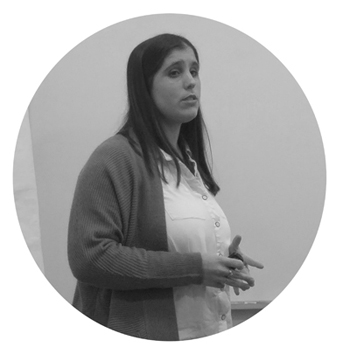 She is a teacher and has university diploma in bilingual education from the University of Montevideo. She currently works as a Spanish teacher at Ivy Thomas Memorial School, as a multigrade English teacher at a public school, and as a foreign language teacher at the Elbio Fernández Teacher Training Institute.
How was your experience in the Master's Program in Trainer Development? What is your assessment of the program?
My experience was very positive. I learned about new topics and was able to delve deeper into many others, gaining a fresh perspective on the education and training that current and future teachers need.
We are able to analyze, assess, plan, and evaluate training programs for both the educational sector and the business world. In the educational sector, it is now a given that a teacher, with only initial training, will not be able to rely solely on what they learned early in their career for the rest of their professional life. They will necessarily require ongoing training tailored to their specific professional needs. The business sector also faces the need to continuously train its employees, due to the constant changes that current jobs are undergoing and will continue to undergo.
What do you feel the master's program contributed? What is the most valuable lesson you've taken away from it?
I believe I have acquired the skills and strategies needed to identify people’s training needs, plan a training program, implement it—or guide the person who will carry it out—and evaluate it.
It helped me realize that any organization that wants to survive in this day and age must be one that learns, is open to change, and provides ongoing training to its employees. The most valuable asset of any organization—whether it’s an educational institution or a business—is its people, who need lifelong learning and who will implement the changes deemed necessary.
Another powerful idea I’m taking away is the concept of learning how to learn: a quality that is intrinsic to the times we live in, given the constant changes.
In your work, what aspect do you think you’ll be able to improve or enhance as a result of completing your master’s degree?
I found it very rewarding for my work to understand how people learn best, as this is a key factor in quality education. Being able to nurture each individual’s skills and design innovative learning experiences that engage those who are eager to learn is another lesson I took away from the Master’s in Teacher Training, and one that I strive to apply every day in my classrooms.
The graduate program has opened up many opportunities for me, particularly a new approach to teacher training—which I’ve already been able to put into practice since the middle of this year—as well as training for trainers from various organizations. I hope to be able to contribute to this field of knowledge in that regard.
What motivated you to continue your studies and pursue a master’s degree? Why do you think it’s important to keep learning?
The desire to continue learning and the curiosity to discover more effective learning methods were some of the reasons that led me to pursue this graduate program. Another factor was the opportunity to discover useful tools and resources to support learning.
I started out thinking that they “were going to tell me how to teach better,” but as I worked through the various courses, I realized that the path wasn’t laid out for me: it was something I would have to discover and decide for myself. Today, I can say that I’ve gained some insights into how to mentor others. It is clear to me that this graduate program is not the end of my training. On the contrary, it is the beginning of a new phase of specialization that I plan to pursue.
What is it like to be part of the first class to complete and graduate from the Master’s Program in Trainer Development?
It’s a sense of a job well done, of knowing that despite the obstacles we faced, we were able to overcome them and move forward. Being part of the first cohort fills me with pride for having completed this demanding phase of my education. That pride also stems from knowing that this program is recognized and accredited by a prestigious university in our country, namely Universidad ORT Uruguay. What remains with me is the sense of a door opening thanks to the completion of this master’s degree.
Through my professional work and training, I hope to live up to the high academic and educational standards I have received. In this way, I will seek to attract and encourage future education professionals to specialize in this field, positioning the Master’s in Teacher Training as one of the leading options.
Marianela Campos: Education as a Way of Life
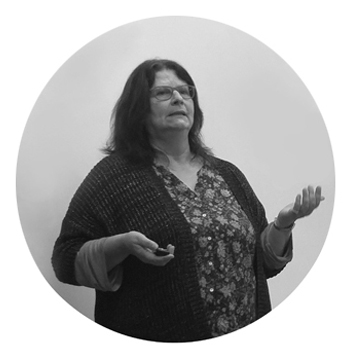 He currently works in the field of teacher education. He teaches courses on pedagogy, the history of education, and human rights in the Early Childhood Education program offered at the "María Stagnero de Munar" and "Joaquín R. Sánchez" Teacher Training Colleges in Montevideo.
What was your experience like in the Master’s in Trainer Development program? What is your assessment of the graduate program?
In my opinion, Universidad ORT Uruguay an interesting challenge by offering a new degree program focused on a profession that didn’t exist in our field before. From 2017 to 2019, students in the Master’s in Trainer Development engaged in intensive study and project work. It involved developing various specific skills to establish a serious and professional stance toward those we will train or toward those who are already trainers.
I believe that the opportunity to pursue a blended-learning graduate program is what made it possible for me to enroll and complete it, since my heavy work schedule prevents me from attending classes as frequently as a traditional on-campus program would require. Furthermore, this format allowed me to share the experience with extraordinary people—both faculty and students—who live abroad or in rural areas of Uruguay.
What do you feel the master's program contributed? What is the most valuable lesson you've taken away from it?
It certainly taught me a lot. Now that I’ve completed the program, I’m rereading the material and enjoying it from a different perspective, without the pressure of exams. I also began applying the knowledge I gained from the program to my work while I was still taking the courses.
One interesting point is to consider the work involved in training trainers, including from a financial perspective. As teachers, we often contribute to course design, the development of materials, or the delivery of courses. This work is viewed as part of our teaching role, and we do not receive specific compensation for it.
I believe that, in this profession, we must pave the way for our training to be recognized. It is important to ensure that jobs are created within the Uruguayan education system that are specifically tailored to our qualifications, with compensation that reflects the unique nature of our work. I hope that new opportunities will arise where our training is a highly valued requirement and/or a deal-breaker for those who lack it.
What motivated you to continue your studies and pursue a master’s degree? Why do you think it’s important to keep learning?
For me, studying and continuing my education has been a way of life—a commitment and an ongoing challenge to stay up to date, so that I can offer the best possible support through academic supervision and in teacher training.
I’ve been interested in educational innovation for a long time. I looked for online courses to delve deeper into the field of trainer development, but nothing like that existed in this country. Courses were already being offered abroad, but their costs were beyond my means.
The opportunity to pursue the Master’s in Trainer Development came along with the chance to receive a partial scholarship, for which I applied and was accepted. It is a joy for me, as well as for my family and friends, to have achieved this goal and earned the degree.
What is it like to be part of the first class to complete and graduate from the Master’s Program in Trainer Development?
The impact of our training on our current work is undoubtedly significant. This is because it allows us to approach the training of others from a clearer, more up-to-date, and more specific perspective. I feel that opening doors to new job opportunities and establishing a new profession in the Uruguayan market is both a tremendous opportunity and a challenge for us.
Daniela Viola: Looking at Teaching in a New Light
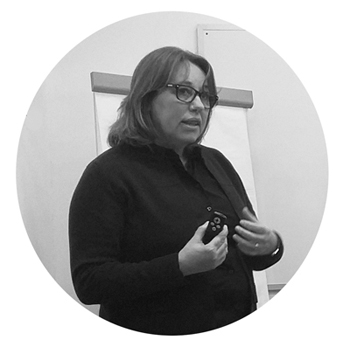 He is a first-grade teacher.to be She completed her teaching degree at the Paysandú Teacher Training Institute. She also teaches chemistry at Liceo No. 7 and at Colegio Los Candiles in Paysandú. She is a teacher with 30 years of experience in the field.
How was your experience in the Master's Program in Trainer Development? What is your assessment of the program?
It was a very rewarding experience. A graduate program enriches you in many ways. On the one hand, on a conceptual level, it allows you to engage with the latest developments and research in your field through reading and shared reflection with faculty and students. Not only do you stay up to date, but you also begin to explore other perspectives—ones that are deeper and broader. On the other hand, you develop a set of academic skills that are very important for teaching, especially at the higher education level.
What do you feel the master's program contributed? What is the most valuable lesson you've taken away from it?
There are many things left behind. Some are tangible, such as my final project—a training plan for mentor teachers—which can be implemented at any time, just as it is. Others are more intangible, such as valuable lessons that are inherent to the specific knowledge, skills, and attitudes of a trainer.
I realize that I have developed more general skills typical of a graduate program. Above all, I have gained the confidence to generate and communicate knowledge derived from the workplace, which can be valuable to education professionals. I also feel more confident in applying research methods appropriately and in guiding students’ written academic work.
In your work, what aspect do you think you’ll be able to improve or enhance as a result of completing your master’s degree?
There are many aspects of my teaching practice that could be improved. I am already “viewing” my work as a teacher in a different way—one that is more profound, critical, and complex. And, most importantly, I am discovering why it is necessary to change certain things. From considerations regarding the institutional context and culture, through content, competencies, methodological strategies, virtual spaces, and assessment, I am rethinking the educational field in a new way.
Working at the tertiary level in the initial training of teachers and professors provides an opportunity to apply these insights to teaching, research, and outreach. There is a wide range of opportunities for direct professional practice, which can be effectively reinforced, supported, and enhanced by the contributions of graduates of the Master’s Program in Teacher Education.
What motivated you to continue your studies and pursue a master’s degree? Why do you think it’s important to keep learning?
Being part of the faculty team responsible for the initial training of teachers and professors means taking on a significant commitment and a strong desire to improve the quality of education in general. The chance to begin this graduate program with a 50% scholarship presented itself as an opportunity for personal and professional growth.
I had to weigh the challenges, such as living in the interior of the country and traveling periodically to attend in-person classes, as well as the difficulties arising from my work, since I had to balance my study time with my other daily work responsibilities. However, I was delighted to share learning opportunities with students from other professional backgrounds, which greatly enriched the learning experience.
Finally, regarding the importance of continuing to learn, I have seen this for myself here, and I reaffirm that it is the best way to “thrive” in the 21st century, in the knowledge society.
What is it like to be part of the first class to complete and graduate from the Master’s Program in Trainer Development?
I must admit that it was a huge challenge, and I was worried that I wouldn’t be able to meet the requirements or live up to the high standards expected of this program. Universidad ORT Uruguay also Universidad ORT Uruguay a long-standing reputation for academic rigor. However, my fears faded as I felt supported and encouraged at every step of the way to achieve the best possible results.
All the instructors in the program were excellent, as were the platform management and services such as the library. I greatly appreciate the program’s rigorous yet well-structured design, which did not drag on and was successfully completed within the planned two-year timeframe.
I also recognize the value of blended learning, which allowed me to complete my education thanks to the benefits of this learning format. I am very happy and grateful to have met this great academic challenge, which, while the result of tremendous personal effort, was made possible by the supportive environment and institutional backing provided by Universidad ORT Uruguay.