Three final projects completed by students and graduates of the School of Engineering at Universidad ORT Uruguay recognized by the National Academy of Engineering of Uruguay in the Final Projects and Graduate Thesis Competition.
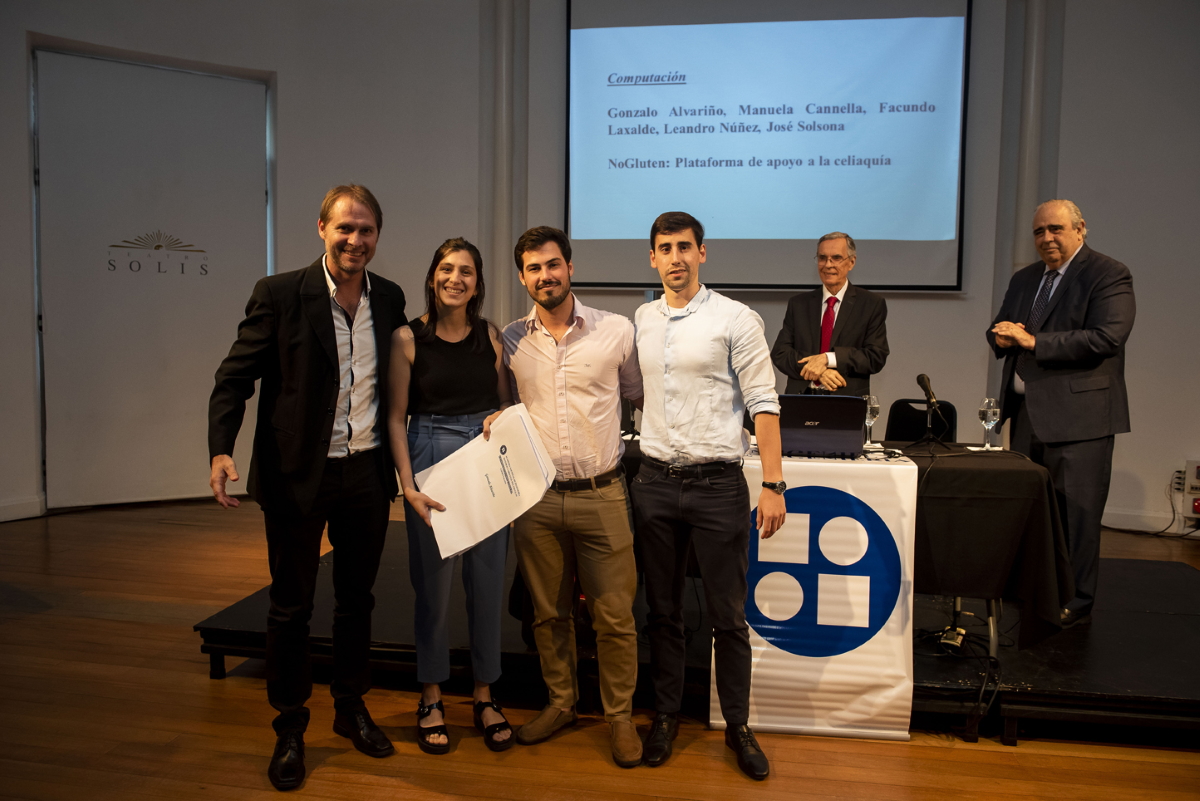
In the Computing category, Systems Engineering graduates Gonzalo Alvariño, Manuela Cannella, Facundo Laxalde, Leandro Nuñez, and José Solsona won the award for creating the NoGluten platform, which provides support to people with celiac disease.
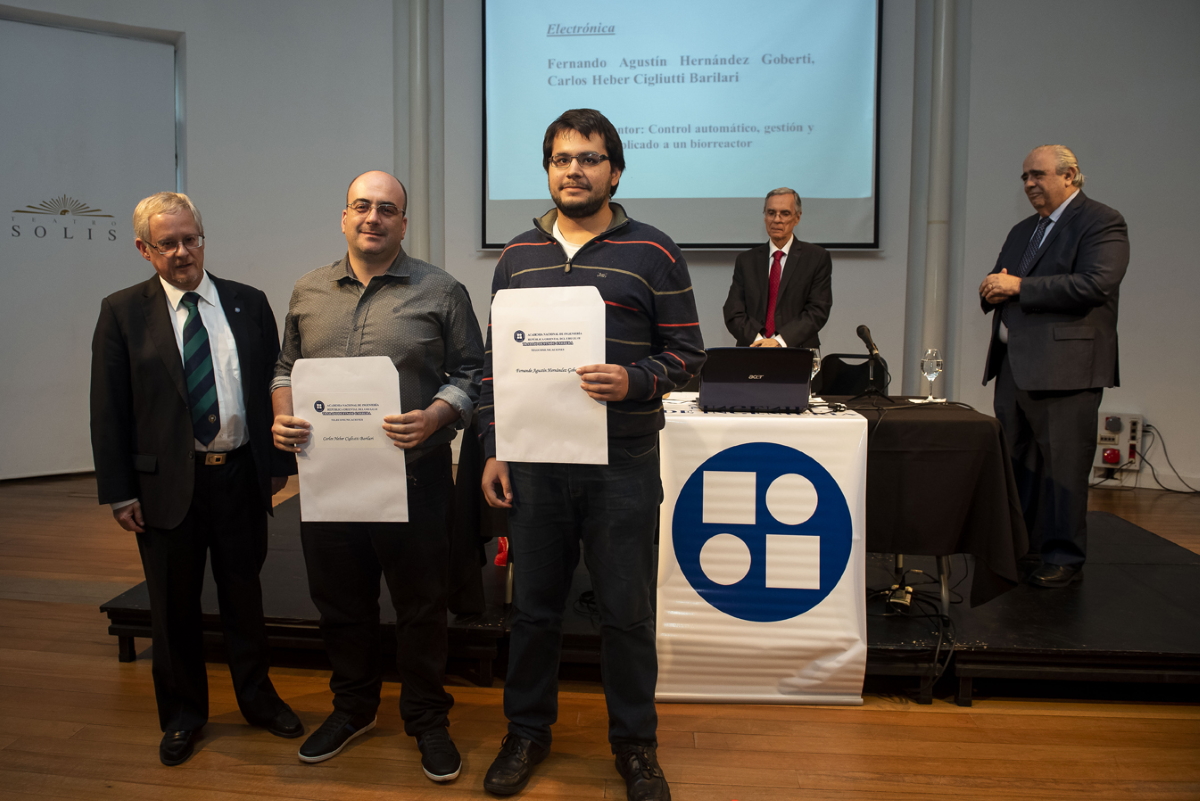
In the Electronic Engineering category, the winners were graduates Fernando Hernández and Carlos Cigliutti, who developed SmartFermentor, a bioreactor that automatically controls, monitors, and manages various fermentation processes.
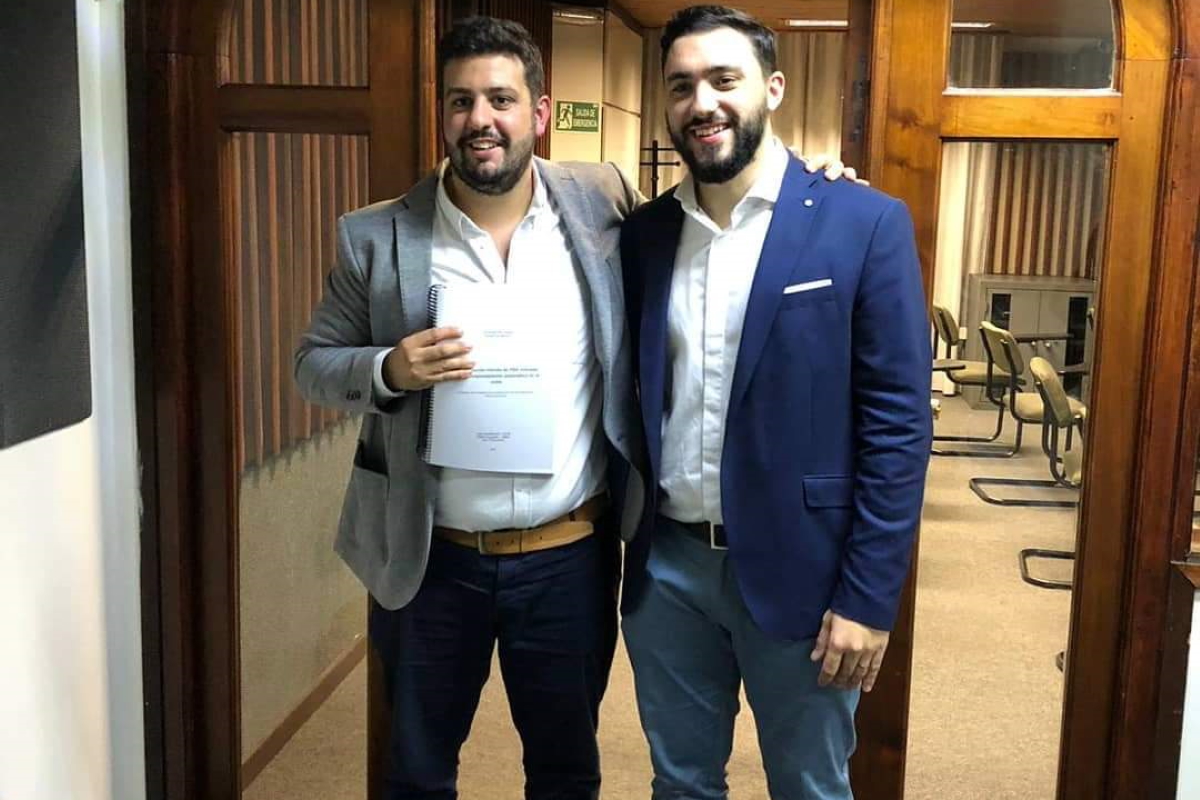
Meanwhile, in the Telecommunications Engineering category, students Juan José Behrend and Gastón Pouquette were recognized. They created RITI, a hybrid virtual PBX (Private Branch Exchange) solution with automatic cloud provisioning.
Representatives from all the winning projects spoke about their projects.
-
NoGluten: The Guide for People with Celiac Disease Right in the Palm of Your Hand
"When it came time to choose a topic for our final thesis project, the fact that one of our team members had celiac disease played a major role in our decision to develop a platform focused on that issue," says Manuela Cannella, one of the founders of NoGluten.
The first phase of the research involved identifying the main needs of people with celiac disease when it comes to finding suitable foods to eat. The first issue that came up was grocery shopping. “Now, large supermarket chains are setting up dedicated aisles where all products suitable for people with celiac disease are stocked, but if you go to a small grocery store, you have to look at each item one by one and read all the ingredients,” Cannella explained.
According to him, although people who have had celiac disease for a long time already know which brands or products they can consume, there are many foods that, due to cost considerations, do not bear the logo of the Uruguayan Celiac Association (Acelu) or an international logo indicating that they are gluten-free and suitable for people with celiac disease.
In fact, this is one of the solutions the NoGluten platform aims to provide: users can scan a product’s barcode to find out whether or not it is suitable for people with celiac disease. “The app shows who says it’s suitable: whether it’s Acelu, the celiac community, or a suggestion or recommendation from someone with celiac disease. With all that information, it’s up to the user to decide whether or not to consume the product,” said the systems engineer from ORT.
Currently, NoGluten has than 300 products listed in the app, but it makes clear that this list is constantly changing. “Since this is a very sensitive issue, we can’t just upload things on a whim. There are products that don’t contain gluten today, but might in the future. So what we upload is based on the Acelu list and the celiac community’s list. They have a list that they keep updating, and as they do so, we update it on the platform as well,” explained the graduate.
Another feature of the app is the ability to find businesses that offer gluten-free food, which is becoming increasingly common.
And what happens when someone with celiac disease goes on a trip? With this in mind, Cannella, Gonzalo Alvariño, Facundo Laxalde, Leandro Nuñez, and José Solsona created a section where the community could share their experiences and add places or recommendations abroad, as well as suggestions for supermarkets or restaurants that sell products suitable for people with celiac disease.
Finally, NoGluten also includes recipes, many of which were provided by a fellow member of the celiac support group, while others were inspired by various specialized blogs. “We thought it would be great to have all these elements in one place,” Cannella concluded.
-
SmartFermentor: Interdisciplinary Collaboration
Fernando Hernández and Carlos Cigliutti used their final thesis project to create a bioreactor for ORT’s Biotechnology Laboratory. Its key feature is scalability; in other words, additional features and sensors can be added to it in the future.
The graduates named this bioreactor the SmartFermentor. It is a device used to provide a biological mixture—such as cells or bacteria—with the physical conditions necessary for proper growth: temperature, pH, and agitation. The device enables automatic control, as well as the monitoring and management of these various factors.
“The mixtures must remain under stable conditions for a certain period of time. For example, the temperature must be within a specific range for optimal growth, so the Biotechnology Laboratory needed to monitor these variations and, if they occurred, be able to control them,” explained Cigliutti, an electronics engineer from ORT. It was this need that led to the development of the bioreactor as a solution.
As for temperature, the graduate explained, SmartFermentor takes specific action to cool the mixture if it begins to heat up due to biological processes. On the other hand, if it starts to become acidic, the bioreactor adds a base to balance the pH.
The bioreactor makes it possible to monitor and record all processes, and it also allows for remote control of the mixing process, since it often had to remain running for several days.
“It was a challenge to build a bioreactor from scratch. The good thing about it is that it’s scalable—in other words, you can add sensors and other components that the original doesn’t have, and we could end up measuring some very interesting things. In contrast, it was very expensive to add features to the German bioreactor that the lab already had,” the engineer said.
According to him, it took them a year to complete the project, and it cost US$2,000—a far cry from the US$50,000 price tag of the German device.
“Our goal was to achieve the precision they required and do so at the lowest possible cost using what’s available on the market,” Cigliutti concluded.
-
RITI: a simple solution built on 32 different technologies
At the time he was writing his thesis, Juan José Behrend was working as Infrastructure Manager at PedidosYa, the country’s largest delivery company, which has call center with over 150 employees. The calls coming in and going out of the call center originated not only in Uruguay, but also in Argentina, Chile, Brazil, and Panama, which meant that the company’s telephone costs were very high.
With the aim of reducing those costs, Behrend and his partner Gastón Pouquette developed RITI, a hybrid solution that allows users to set up a cloud-based telephone system and make IP calls—which are made over the internet—making them free.
“The challenge was to create a small device that was easy and quick to set up, without requiring any technical knowledge whatsoever. Anyone should be able to plug it in at a restaurant or call center and automatically have IP telephony—which is free,” said Pouquette, a telecommunications engineering student at ORT.
For Behrend, the most challenging part was automating the process entirely without any human intervention. “There are companies everywhere that can set up IP phone systems. But making this work by simply plugging in a little box—one that could identify the company and automatically know that when a person picks up the phone and dials a call, it has to go over IP to be free—was what took us the longest and was the core of our project,” said Behrend.
With this project, in addition to winning the award from the National Academy of Engineering of Uruguay, Pouquette and Behrend received an award from the National Agency for Research and Innovation (ANII) in a competition in which they competed against final-year projects from all engineering schools at various universities. “They selected the most innovative ones—those that could make a contribution to society. We were one of only two projects selected as among the most innovative of 2017–2018, and we also received financial support to carry out the project,” said Pouquette.
Both students said the project required a lot of work, explaining that during the year they spent developing it, they met every day for at least three or four hours. “Along the way, we integrated more than 32 different technologies, which is truly, from an engineering and technical standpoint, a massive undertaking. We used technologies that are considered cutting-edge today,” said the students, who began the project in 2017.
“We can deploy a cloud-based PBX in five seconds—something that might take days or even a week to set up and get up and running with another PBX,” Behrend concluded.