 What are Arduino boards?
Arduino is an open-source platform (featuring free and open-source hardware and software) designed for simple and efficient prototyping.
Their flexibility makes the boards easy to use while providing the features needed for advanced applications.
Arduino provides resources that allow us to implement various systems without needing to have specific knowledge of each board's "brain."
Arduino's greatest strength and resource is its community; because it is open-source, there are resources that are constantly being improved and implemented in various ways.
To give you an idea, the official Arduino forum alone has over 2.5 million posts by more than 380,000 members. If we add to that the various forums, articles, reviews, and so on, the number is incalculable.
These topics range from the boards themselves, through the various sensors and actuators and internet connectivity, to using Arduino as a tool in the classroom.
 How do they work?
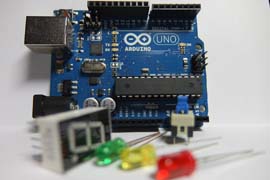
Most Arduino boards are based on Atmel microcontrollers.
A microcontroller is a mini-PC contained within an integrated circuit that includes various types of memory, a processor, input/output controls, communication interfaces, and other components.
Arduino boards come with what's called a bootloader, which performs a number of initialization tasks (such as enabling the serial interface and timers) for the hardware, allowing us to work at a higher level.
This abstraction allows us not only to use the same program on different boards, but also to focus on the program’s logic itself and avoid wasting time on tasks that are already included in the libraries.
Anyone who has worked with a microcontroller knows that you need a brand-specific programmer to program it, but with Arduino, that’s not necessary. Just download the development environment and connect the board via USB.
The boards are designed to work without external programmers. Although this may seem like a minor detail, it is believed to be one of the reasons why they have been so successful and have established themselves in the market, since many people who are new to the world of electronics find these tools difficult or complicated to use.
What are the benefits of this technology?
This technology offers a new paradigm for both amateur and commercial use, as well as in education. Arduino is often used to validate an idea within startups or even established companies; depending on the complexity, a working prototype or demonstration of what you want to develop can be ready in a matter of weeks.
When it comes to education, several elementary school courses teach programming using Arduino, and it is being used in high schools and universities to introduce students to the world of electronics. In schools, Scratch is generally used to program the boards.
More and more manufacturers are producing new Arduino-compatible boards, sensors, and actuators.
This wide selection has a direct impact on prices; increasingly complex sensors and actuators are becoming available at lower prices. In fact, some manufacturers are seeking to differentiate their products by creating Arduino libraries for them, complete with examples and guides.
 What practical significance does this have?What are the capabilities of Arduinos? What can you do with a board?
In my view, prototyping is the most important practical application. According to Atmel, 56% of hardware manufacturers use Arduino for prototyping.
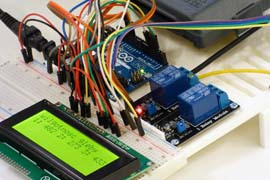
An Arduino board manages inputs and outputs, making it possible to carry out all kinds of projects. The only limit is your imagination. For example, you can use an Arduino to control your air conditioner, measure the temperature in a room, control a robot, or notify you if your home alarm goes off, and so on.
While Arduino is very useful in a variety of settings, its limitations must also be taken into account. It should not be used for health and safety applications or similar purposes without a thorough understanding of electronics (no one would ever think of using an Arduino to control a pacemaker).
However, you can enhance the board’s durability yourself. In other words, since it’s an open-source, open-architecture system, you can purchase higher-quality components and take the necessary precautions to ensure more professional use of this technology.
 What is the connection between Arduino boards and the Internet of Things?
There is a growing global trend toward the Internet of Things (IoT), in which Arduino plays a major role. On Saturday, April 2, at Genuino Day 2016 (formerly Arduino Day), there were two major announcements regarding the integration of Arduino and the IoT.
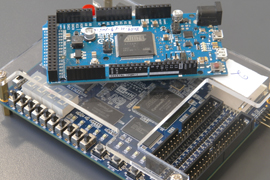
The first is the official launch of the new Arduino MKR1000 board. This board features Wi-Fi connectivity (IEEE 802.11 b/g/n), a low-power 32-bit processor, a real-time clock, and is designed for efficient operation with a lithium-polymer (Li-Po) battery. It serves as a sort of "starter kit" for the IoT.
The second, and an even more significant change, is the launch of Arduino Create, which includes an IoT platform similar to those already offered by Microsoft and IBM, but developed by and for Arduino: Arduino Cloud.
This allows us to easily schedule events or send messages over the Internet. Although it is still in beta, you can start using this platform on a trial basis.
Another major change introduced by Arduino Create is Project Hub, a platform for sharing projects built with Arduino, which is based on and developed in collaboration with hackaday.io (one of the most popular electronics project sites).
What prior knowledge is required to use one?
The boards are programmed using the Arduino IDE and written in C++. If you know how to program in any object-oriented language (C#, VB, Java, Python, etc.) or C, it will be very easy to get started.
You’ll need a basic understanding of programming concepts such as variables, functions, conditional statements, and loops, as well as some basic knowledge of electronics. In fact, the IDE itself comes with examples, along with their corresponding wiring diagrams and a list of required materials, all available online.
In short, any high school student studying technology can start using these boards. Of course, as you want to do more complex things with different devices, you’ll need a deeper understanding of electronics. It’s a great way to get started in the world of electronics.