Since the late 20th century, Spanish language instruction in China has seen steady growth, as evidenced by the increase in the number of Spanish departments at universities, the demand for Spanish language teachers, and the volume of research on Spanish language instruction.
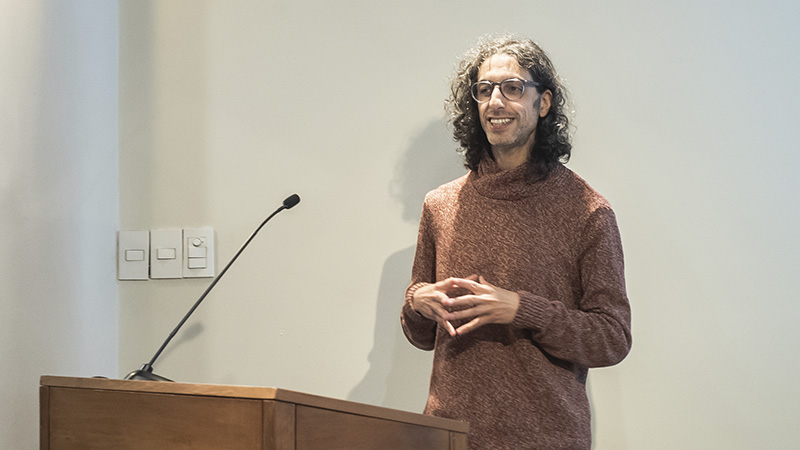
It is undeniable that China is a dominant player, not only economically but also politically and academically. For these and many other reasons, Javier Sabah decided to explore these topics in depth in his doctoral research, which he titled Spanish in Chinese Universities: The Role of the Textbook and the Instructor in Teaching Varieties of Spanish and Sociocultural Content.
In particular, the author— who holds a Ph.D. in Education from Universidad ORT Uruguay—sought to shed light on the impact of Chinese teachers’ attitudes and opinions on the teaching of varieties of Spanish and sociocultural content through the textbook *Español Moderno*.
In China, the teaching of Spanish as a foreign language at the university level has a history has 70 years and has seen steady growth in the 21st century.
Teachers who teach Spanish in China
What are the characteristics of Spanish teachers? What are their distinctive features and the elements that set them apart? According to Sabah’s doctoral dissertation—which employed a mixed-methods approach with an emphasis on qualitative research—these are individuals who, almost without exception, learned the language using the *Español Moderno* textbook, which they now teach.
In addition, many of them have pursued advanced training abroad, with Spain being the most popular destination. However, they typically complete their initial training in China and specialize abroad in fields such as language and literature, rather than language teaching.
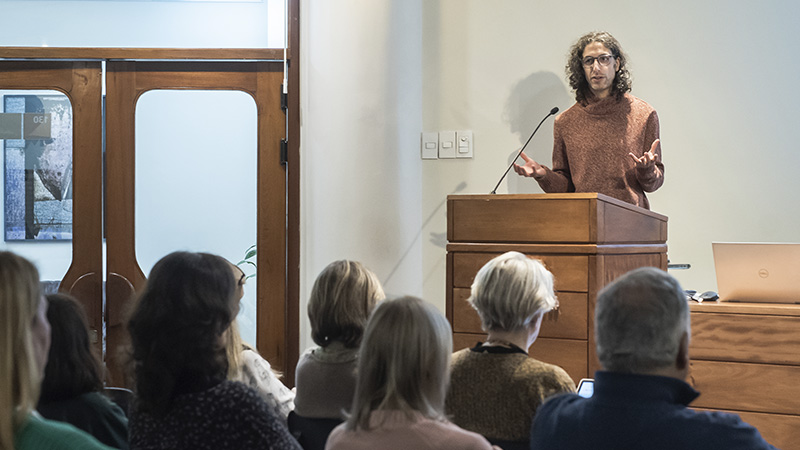
In this regard, the lack of teacher training was one of the most frequently cited issues in the interviews Sabah conducted with 10 teachers, in addition to a survey of 96 native Chinese speakers who taught Spanish using the *Español Moderno* textbook. This could explain why many tend to emulate the teachers and mentors they had when they were students, particularly when it comes to teaching methods and criteria.
The Spanish Textbook: Pros and Cons
The *Español Moderno* textbook is the official publication for teaching Spanish at Chinese universities. Nearly half of the textbook consists of exercises, primarily grammar exercises. A key feature of the textbook is that it assigns a central role to the teacher, providing clear guidelines on what the teacher should do (and what not to do).
Language textbooks are a resource widely used by teachers and, as a result, play an important role in the classroom.
When discussing the Spanish language, one cannot overlook its geographical reach, which gives rise to a wealth of dialectal and cultural diversity. Therefore, when teaching Spanish, it is inevitable to ask: Which dialect and which sociocultural content should be prioritized in the classroom?
The manual does not provide explicit guidelines for teaching the different varieties of Spanish. Nor does it specify a preference for any particular variety, although Sabah noted that the peninsular variety is the dominant one and the version in which teachers were trained.
Beyond that, the graduate of the Doctor of Education program found that teachers had a positive attitude toward teaching the different varieties of Spanish and the use of “ustedes.” In fact, in the textbook, Sabah found that “vosotros” and “ustedes” appeared with equal frequency.
“Equal importance is given to the different regional varieties: teachers instruct students in the peninsular variety, but they emphasize the importance of Latin America for China, which reveals a certain disconnect between the variety being taught and the students’ needs,” Sabah summarized.
https://www.youtube.com/watch?v=POQLlYdVnqg
Although the teachers mentioned that they had not chosen to use the textbook, Sabah’s research revealed that most of them would choose it again. What are the reasons? It is a resource created by and for Chinese people, using a traditional methodology familiar to students, and has been widely used in universities for 50 years.
The methodology and grammar are the textbook's strengths, but the texts and vocabulary are considered its weaknesses.
In any case, teachers raised several criticisms regarding the textbook. First, they felt that the vocabulary included in it was too formal and did not reflect the everyday lives of native speakers.
The textbooks were the most heavily criticized aspect, as they were described as “outdated, boring, out of touch with reality, impractical, and lacking in cultural content.” “It became clear that there is greater skepticism about the content than about the methodology, which is considered suitable for teaching,” Sabah explained.
Does the manual hinder skill development?
At first glance, the Modern Spanish textbook doesn’t leave much room for creativity, since teachers cannot add or omit activities as they see fit, for example. However, according to the graduate’s explanation, “the role of the textbook in stifling skills was somewhat downplayed”in his thesis.
The fact is that, based on the information gathered from surveys and interviews, she found that teachers were making decisions that contradicted the guidelines in the manual. They were omitting activities or incorporating outside materials to reinforce grammar and vocabulary—something the manual specifically states should not be done.
Another finding from Sabah’s doctoral research was that teachers altered the teaching sequence proposed in the textbook. They began with phonetics, grammar, or vocabulary, even though the textbook introduces texts first, which shows that they consider “deductive grammar instruction” to be more appropriate.
The Characteristics of Sociocultural Content
To Sabah's surprise, the textbook contains a"significant amount" of sociocultural content. However, the cultural material is presented in Chinese, separate from the linguistic content, and is intended to be read outside of class.
As for the content itself, the study found that it is presented in a “very superficial” and “superficial” manner. On the one hand, Hispanic culture is taught from the Chinese perspective: there is no comparison or reflection on how Latinos or Spaniards view themselves.
On the other hand, there is a“distorted image of Spanish-speaking societies”: “They are portrayed as very homogeneous and having a very positive culture. There are no controversial or negative issues.”
In addition, an imbalance was observed in the representation of Spanish-speaking countries, with Spain featuring most prominently. A“binary view of the varieties of Spanish”was also noted: that of Spain and that of Latin America, with an omission of the “immense dialectal variety of the Spanish-speaking world.”
In the communicative approach, the teaching of culture is considered an integral part of language instruction.
When asked about this, the teachers emphasized the importance of teaching culture. Although they said they “didn’t have much time to teach it,” they stressed the need for it to be given a more prominent role that is better balanced with language instruction.
According to what Sabah stated during her thesis defense, teachers also suggested that sociocultural content be introduced in the early stages of language learning.
However, when asked which language should be taught, most chose Chinese. Specifically, the proposal was to incorporate a cultural studies course, but, in the graduate’s words, “what happens is that the teaching of culture ends up being separated from that of the language.”
Image gallery

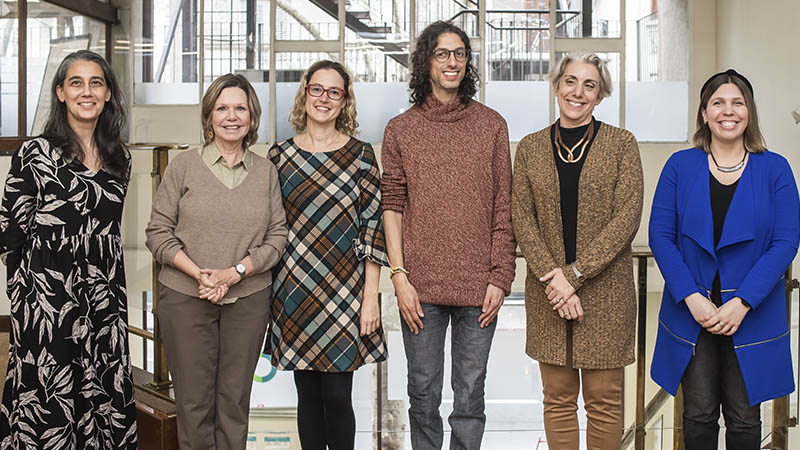
On Tuesday, August 6, in the auditorium of Universidad ORT Uruguay Downtown Campus, Sabah defended her doctoral dissertation. The committee consisted of:
- Dr. Cristina Banfi, professor at the University of Buenos Aires (Argentina);
- Dr. Lourdes Cardozo-Gaibisso, professor and researcher in TESOL and Educational Linguistics at Mississippi State University (United States);
- Dr. Mariela Questa-Torterolo, associate academic coordinator of the Master’s in Educational Management and the Master’s in Trainer Development at Universidad ORT Uruguay.
Dr. Denise Vaillant, dean of the Institute of Education, and Dr. María Azpiroz, director of International Relations at ORT, served as Sabah’s thesis advisors.