
With over ten years of experience in the industry, Azofra is a lecturer and professor at the School of Design. He is also one of the founders of Ironhide Game Studio, one of the world’s leading independent video game developers.
In this interview, he described the ongoing collaboration between the School of Design and the School of Engineering, specifically with theBachelor’s Program in Systems Engineering—a program in which students work together with upper-level students from the Bachelor’s Program in Animation and Video Games on their final projects.
The two schools have been working together for eight years, but in 2022 they took their first collaborative step by jointly carrying out the final-year project.
This is an interesting concept—one of convergence—where people from various fields collaborate on a single product. Video games are a medium that naturally lends itself to this: a multimedia technology product that brings together many disciplines, including art, sound, programming, and game design.
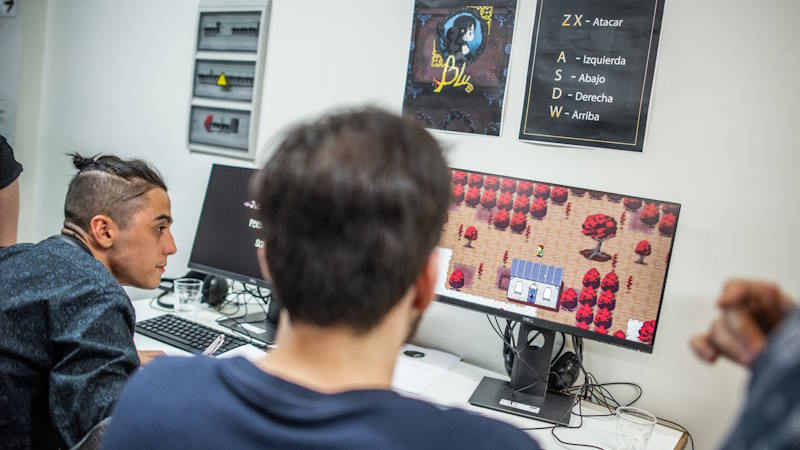
As a pilot program, you could say this first experiment “went very well.” “The collaboration was excellent; we built bridges. It’s great to see how the students exchange knowledge that applies to both fields: in Engineering, they get a glimpse of the creative side, and in Video Games, they see the more technical aspects, the deeper development of the logical side, as well as best production practices. That’s like added value, beyond the fact that the result is a better game.”
In the case of Video Games, this project is part of the Integrative Project course. Azofra emphasized that the word “integrative” is key “because it’s a team effort”: on the one hand, within the Video Games student team itself, but also in collaboration with students from the Engineering program, led by Professor Helena Garbarino, or from the Sound program, which makes the experience similar to what it’s like at major video game development companies.
The products resulting from this collaborative effort are showcased and tested at an open house event, during the video game beta testing phase:
View this post on Instagram
Since last year, the Animation and Video Games program has included a course—Production 4—that precedes the final capstone project, and students from the Sound Design Technician program have joined this course to create a final product of increasingly higher quality. “Having students who focus exclusively on sound can provide a much greater level of specialization, and they also share their knowledge,” the instructor noted.
It’s really important to communicate as effectively as possible with everyone involved, especially when you have one highly creative team and another more structured one. That collaboration between the teams is also reflected in the end result: the game they created is of higher quality.
In the industry, he noted, there are certain levels. On the one hand, there are indie teams of three or four people, where “there might not be the resources to hire sound engineers.” “In a smaller company, in the Uruguayan style, people wear many hats,” he added. On the other hand, in larger companies, there are specialized roles. “It’s good to have both roles—to be specialized within a team or to wear many hats. It’s even good to know how other areas work, even if you’re not an expert. This final project involves gaining industry experience within a university setting, which is a bit more contained.”
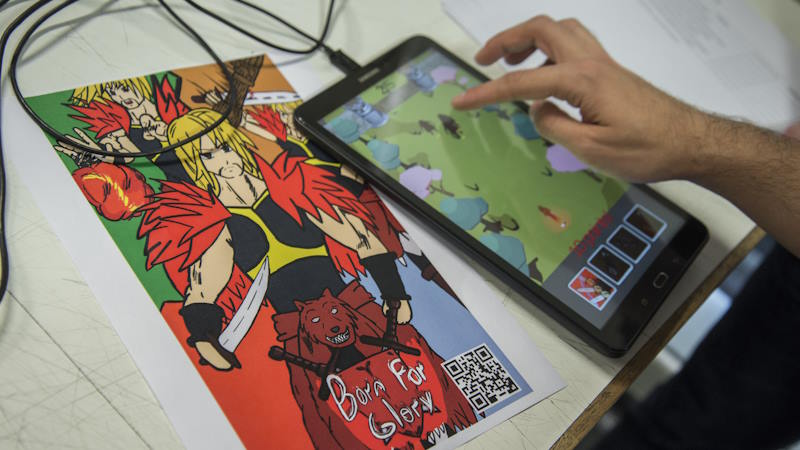
In this process, the role of teachers is to guide and try to “build that bridge of language, ” since, often, when faced with the same problem, different professionals see it from different angles: “The game designer is thinking about how to make something more fun, the artist is worried about how many frames they’ll have to animate, and the programmer is looking at how many requirements there are.” So, in that conversation, we must ensure that all parties engage in dialogue. “As you practice that dynamic, your way of thinking—or your internal creative process—begins to take into account the needs of other areas. I believe that a dynamic of collaboration between different parties is healthier: it’s key to professional life.”
- You might be interested in reading: "The Seven Most Successful Video Game Adaptations for Film and Television"
In 2022, four video game design students and two engineering students worked together on a single project, focusing on graphics and narrative. “I want to emphasize that the university’s full support and the students’ collaboration were key to making this a success, because it was like breaking new ground,” Azofra said. Currently, there are three teams hard at work: one is collaborating with the Engineering department (six video game students and two engineering students), while the other teams are programming the video game themselves, though they also received support from the engineering department.
The goal of the final project is to put into practice all the knowledge they’ve acquired during their studies, but also—in addition to gaining an experience that closely resembles the industry, as if it were a small studio, in terms of self-managing and planning the game—“to end up with a product they want to continue working on” after finishing the course. Azofra clarified that the video games resulting from this work are not “complete products” but rather “a partial product that, in industry terms, is called a vertical cut, meaning it has release-ready quality, but not all the content has been developed.” An ambitious game, he said, can take years, while “a small game” can be made in six months. “I think it’s better to aim for something ambitious that, perhaps, already qualifies them to compete for a national grant, or to use it as a flagship project for their portfolio: it’s great to be able to showcase the quality you can achieve.”
