
Ainara Obiaga is a senior in the Bachelor of Science in Animation and Video Games program; has associate’s degree in Animation and works as animator at Nimble Giant Entertainment, an Argentine company with over 20 years of experience in video game development.
Animation is close to his heart, as he has a strong connection to the cartoons he watched as a child and to his love of storytelling. In this art form, he found a new way to express his emotions.
“I liked the idea of being able to create the stories people told me. We are the stories we tell ourselves, and writing wasn’t enough—I wanted something more.”
What is animation?
“Animation really moves me; it makes it so easy for me to feel all kinds of emotions, and I love being a part of that, ”he explains emphatically. “It’s something that instantly grabs my interest and draws me in. I really love the way animation views the world. It’s a window into a very unique world.”
Animated characters are brought to life with a unique and one-of-a-kind purpose in the present, unlike actors, who can step into the shoes of different characters and contexts.
“Nothing in animation is accidental; if it’s there, it’s there for a reason. Behind every character there’s a design and a reason for it, and it’s something that’s done very slowly, so there’s plenty of time to think and make decisions. Every person involved in the process of creating an animation brings an emotion to it.”
A communication tool for the world
Animations can be found everywhere, from transitions in a PowerPoint presentation to creative applications such as Dumb Ways To Die , the famous public servicecampaign by Metro Trains Melbourne launched to promote rail safety.
“Animation has that ability to distill information. It’s a technique that allows you to take in a lot of information, distill it, and convey it easily.”
As if by magic
“In this world, you can do anything—from creating a world that doesn’t exist to reproducing reality exactly as it is.”
All the first steps on a new path are intriguing and energizing: a chef takes pleasure in finishing his first gourmet dish, a photographer sees his creations come to life when he prints them, and a teacher feels moved when she sees her students at school. When Ainara hosted for the first time, she felt like laughing and crying with emotion all at once.
“Animation is about bringing something to life, and it’s incredibly inspiring—it’s like performing magic.”
In animation, you work with immediate results. Every frame, node, and object that’s moved from one place to another creates a new action worth appreciating.“I was amazed by the power of transformation—the ability to turn rigid, static images into movement,” he said.
Every artist has their own way of working and fostering creativity. Some rely on the so-called muse (a source of divine inspiration), others stumble upon ideas as if they were falling from the sky, and some work by sketching and constantly refining their ideas, as if it were a workout routine. For Ainara, it involves a process that is more introspective than poetic:
“First, a spark—asking myself what it’s for or why. Then I look for visual references and emotional cues, and if someone has already done it, I analyze how they did it. I create a mood board with all kinds of references. It involves a lot of silence and being alone; I listen to what’s happening inside me (the ideas). Later on, I talk it through, either by writing it down or discussing it with someone and seeing how they react.”
Animation involves a lot of teamwork and task division. Once the person who initiates the project gets comfortable with the idea, they start working on it. It’s key to be empathetic toward those who will continue the process.
A world of opportunities
When asked, “What kind of jobs can a student or graduate in Animation and Video Games pursue?” he replied, “A wide variety of things—it really depends on the individual’s background. In this field, no two graduates are alike.”
Ainara highlighted the wide range of options available, depending on the professional’s personal goals. In terms of work arrangements, in addition to working for a company (as in her case), she pointed out the opportunity to work as a freelancer and build a portfolio that showcases one’s skills and past projects.
When discussing potential career paths, Ainara highlighted the following options: illustration (concept artists, character design), 2D animation (vector/pixel animation, frame-by-frame animation, puppets), stop motion, 3D animation (rigger, modeler, 3D generalist, animator , 3D artist), and video game animation (game engines, video game modeling).
“The department gives you a taste of everything, and each person gradually finds their niche.” Reflecting on the final projects, he explains:“Starting halfway through the program, you can start focusing more on Animation or Video Games by working on projects in one field or the other. Both can be collaborative projects with other students in the program or, in the case of video games specifically, with engineering students.”
“A degree gives you the tools you need and opens up a whole world of opportunities—you just have to choose which ones to pursue.”
A career for anyone interested
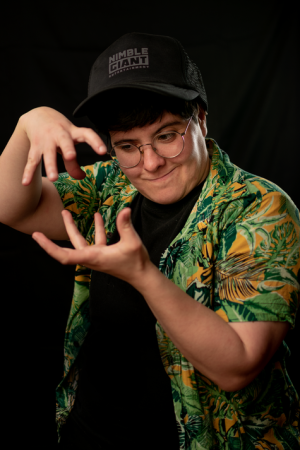
Sometimes, trying to balance our biggest hobbies with a professional career can lead to frustrations or obstacles we didn’t anticipate. Ainara offers a different perspective on the matter and stands up for those who may feel challenged by creativity, drawing, or using digital tools.
“Talent is something you work on and build up; it’s something you learn,” she says, explaining how drawing has been a challenge she continues to work on, even though she’s found other paths within the field. “There are many paths in animation, and not all of them require you to be an illustrator, for example. And even so, if you want to pursue drawing, you can learn it. You don’t need to know how to draw to animate—I wish someone had told me that sooner.”
As in any profession, there are qualities that people develop that add value to a graduate’s profile:
“I had to learn to do things like think visually, just like visual artists in general. I think an animator someone who pays close attention to detail. No two people walk the same way, and I learned to notice that by studying animation.”
Learn about the Bachelor's Degree in Animation and Video Games