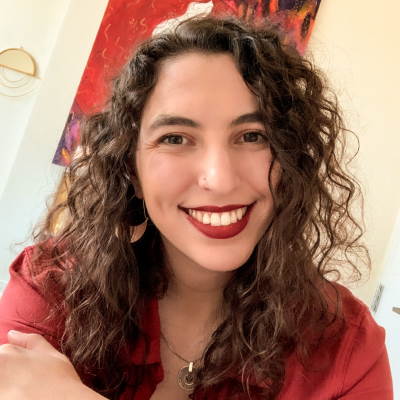
 At just 28 years old, Elu Cynovich has already has years of experience in the graphic design industry and four years teaching writing and creative expression. It is Bachelor's Degree in Graphic Design from Universidad ORT Uruguay recently graduated from the Fine Arts Certificate program at the New York Academy of Art, a title he chose specifically to grow as an artist and broaden his creative horizons.
When he was 10 years old, he discovered a computer program for editing photos and vectors. “My curiosity got the better of me,” he recalls. “It was 2003; we still had dial-up internet, and there wasn’t nearly as much information available as there is today, especially for kids.” He says he read “every guide he could find” and, above all, “explored and experimented a lot.” Before long, he was learning about pixels, composition, typography, animation, photo retouching, HTML and CSS, Adobe software, and more.
“No one around me understood what I was doing, but they shared my enthusiasm.” She even mentioned that when she was 13 or 14, her parents tried to find a workshop where she could take more technical software classes. The answer was always the same: “She’s too young; we don’t accept her.”
That 10-year-old girl, who taught herself computer skills, went on to become a professional with an international reputation. Today, she works as a Senior Designer and Creative Director for Chabad on Campus International, an organization that serves as a social and cultural hub for Jewish students on college campuses around the world.
-
How did you decide to study graphic design?
For as long as I can remember, I knew my path lay in the creative world. As a child, I dreamed of becoming an artist and later an architect, like my grandfather. I’ve always had a passion for visual expression through drawing and painting.
It wasn't until my senior year of high school that I was able to put a name to what I enjoyed so much: graphic design. To my amazement, it turned out I could study it in college—and make a living doing what I loved! What more could I ask for?
-
After graduating, you decided to move to New York. What were your expectations?
I was eager to continue studying and developing my skills, especially in illustration and art, where I felt I lacked a bit of technical foundation. That’s how I ended up in the Big Apple, thanks to a scholarship to pursue a Master’s in Fine Arts at the New York Academy of Art. It’s a one-year intensive program focusing on classical drawing, painting, and sculpture, with a specialization in human anatomy.
By delving into the mechanical study of the body—from its skeletal structure to its musculature—the program places great emphasis on developing observational skills through natural forms, always working with live models or classical sculptures.
We learned from great masters such as da Vinci, Dürer, Rubens, Michelangelo, Raphael, and others, as well as from contemporary artists who continue to explore the realistic depiction of the human figure today, where there is more room for exploration and creativity.
Personally, in addition to drawing, I come from the world of dance, of exploring movement and the emotions embedded in the body. I found it truly fascinating to learn how this machine I live with works: the greatest feat of engineering that exists. Being able to do so from the perspective of artistic creation helped me develop an even more critical way of thinking. Nothing is what it seems at first glance; everything is relative to another element, and there is a degree of complexity in what I observe that I can access and decipher if I know how to ask the right questions.
And that, I realized, is part of being an artist: constantly questioning yourself and asking questions, exploring, discovering, and being amazed.
-
What is your role at Chabad on Campus International?
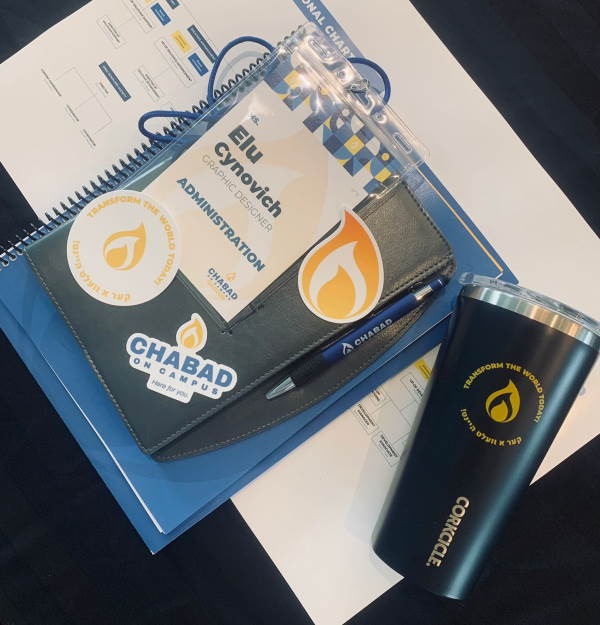
With more than 260 locations across the country, I am responsible for implementing the new brand identity that the organization adopted in late 2020: editorial design, advertising design, social media and digital communications, internal corporate communications, packaging design, and newsletters.
It is one of my most important clients and one of the largest and most diverse projects I have had the pleasure of working on. A professional dream come true as a designer.
-
Recently, you've ventured into the world of illustration and lettering. How do you feel about your role as a teacher?
Teaching is a role that brings me great satisfaction. Sharing all the knowledge and techniques I’ve learned throughout my life, making them accessible and relatable to those who come from fields other than design, and seeing them enjoy the process and tap into their senses and creativity is truly amazing.
I teach classes for children, teens, and adults. I’ve given private lessons and group workshops, as well as one-off workshops and year-long courses. My foundation is teaching lettering and illustration, and from there I expand based on what the students want. As a bonus, my classes include moments dedicated to writing, movement, stretching, meditation, games, and improvisation—anything that stimulates ideas and connects us with our creativity. Because you can’t create with a body and mind that are asleep.
-
How was teaching Hebrew lettering?
It was one of my favorite workshops—what a wonderful challenge! Preparing that workshop was a lot of fun because I had the chance to thoroughly research and study the typographic composition of the language, something I had never done before. Thanks to all the knowledge I gained on the subject at ORT, I was able to put it together with the quality and care I wanted.
I enjoy teaching technique as a way to connect with emotion, creativity, and each person’s personal story.
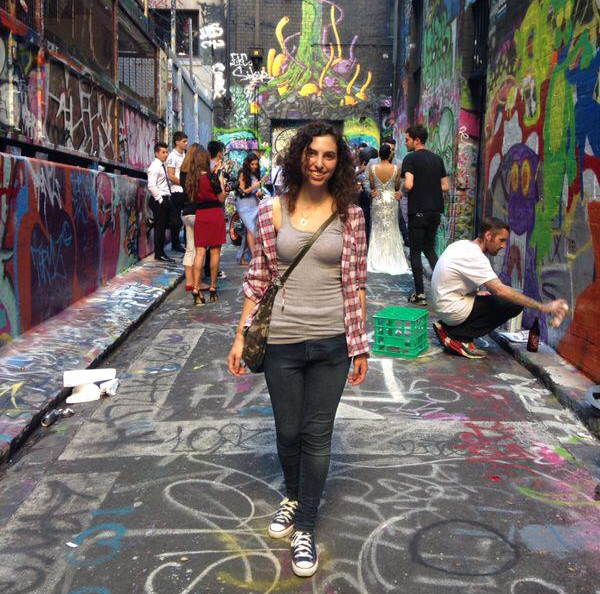
In 2014, at the age of 20, she moved to Australia. “It was an unexpected turn of events. I’ve always been a meticulous, perfectionist person who likes to plan and know exactly what steps to take; Australia taught me the exact opposite: it taught me to let go, to enjoy improvisation, and to understand that the best things happen when you least expect them.”
Originally, she applied to spend a semester abroad at the Bezalel Academy of Arts and Design in Israel, but at the last minute she found out there were no more spots available for international students. “Suddenly, my dream of studying abroad fell through. A few weeks went by before ORT called to tell me I had a spot at Macquarie University in Sydney. Australia wasn’t part of the plan.”
-
What did you take away from your experience of living and studying in Australia?
It turned out that everything fell into place in Sydney: I surrounded myself with a wonderful family of international students; I was “adopted” by an Australian family as one of their own (now I have a sister, brother-in-law, parents, grandparents, and nieces—all Australian!); I took amazing courses that helped expand my academic horizons beyond design (screenwriting, creative writing, sound culture, and dance, to name a few); I traveled around the country exploring new landscapes; and I had the opportunity to work at a renowned advertising agency.
All of that in just six months. How could I not make the most of it? Once I was there, I decided to stay for another six months, splitting my time between college and the agency.
-
What was it like working at an advertising agency there?
I worked at MJW Advertising as one of their first designers specializing in social media—a new area for them.
MJW, formerly part of Hakuhodo Global, had established itself at the forefront of the country’s advertising industry, winning major awards for its traditional media campaigns; however, the world of social media was still uncharted territory.
I had been working at a boutique studio where there were just three of us and we were very focused on social media, so my experience was exactly what they needed. It was a big leap to go from a small studio to an agency with over 30 professionals, with various departments and sectors. It was another leap to go from having small local clients to working with major international brands like Mentos, Bertolli, and Valvoline—some of the clients I was assigned.
I experienced the fast-paced environment of an agency, worked closely with strategy coordinators, learned to create content for large audiences while staying on top of trends and striving to be at the forefront of design, and my contributions helped drive positive brand positioning.
-
In which area of graphic design do you feel most at home?
I really enjoy working with culture and ideas, as well as conveying stories and emotions through visual experiences. In practice, I’ve found that this translates into institutional or corporate design, especially with projects or clients that have a more human focus.
For several years, I worked in and specialized in social media design and digital communication, and while it’s a field I enjoy and find really fun, I’ve decided to explore other paths.
-
If you had to highlight one thing from your entire career, what would you say?
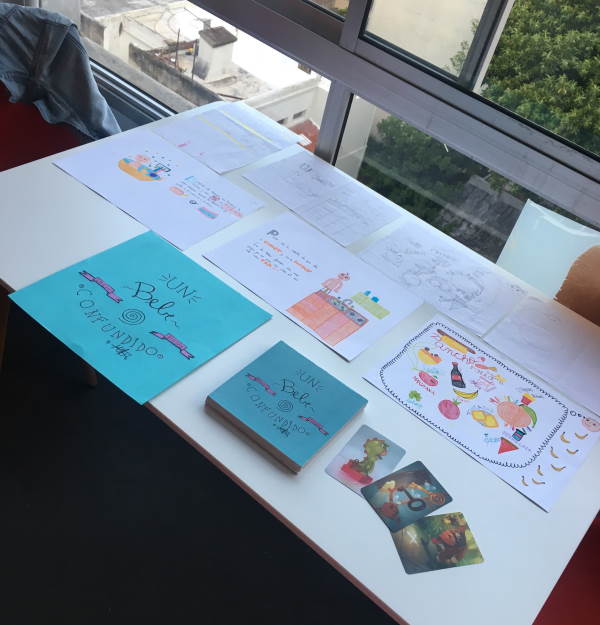
I would highlight the opportunity to work on projects and with clients that I’m passionate about. Finding creative ways to leave a little bit of myself in those projects: custom illustrations for Mentos Australia, revamping Hillel Uruguay’s branding with empathy, clean and clear designs for Santillana Uruguay, guiding others to connect with creativity through classes, and implementing a cohesive, modern design for Chabad on Campus International.
-
What qualities does a designer need to step outside their comfort zone?
Curiosity; enjoyment; the freedom to explore, try new things, and make mistakes; keen observation skills and attention to detail.
-
What are your career plans for the coming years?
I’d love to further develop my skills in creative teaching and take on more projects related to illustration and lettering. In terms of clients, I’d like to continue working in the cultural and publishing sectors.
I've been working exclusively in graphic design for almost 10 years, so I think it's a good time to explore other areas.
As designers, as creative people, we’re here to translate the invisible world of ideas into something tangible. To do that, we have to understand that there are no shortcuts: it’s a constant journey of learning and exploration. And if we have fun along the way, so much the better.