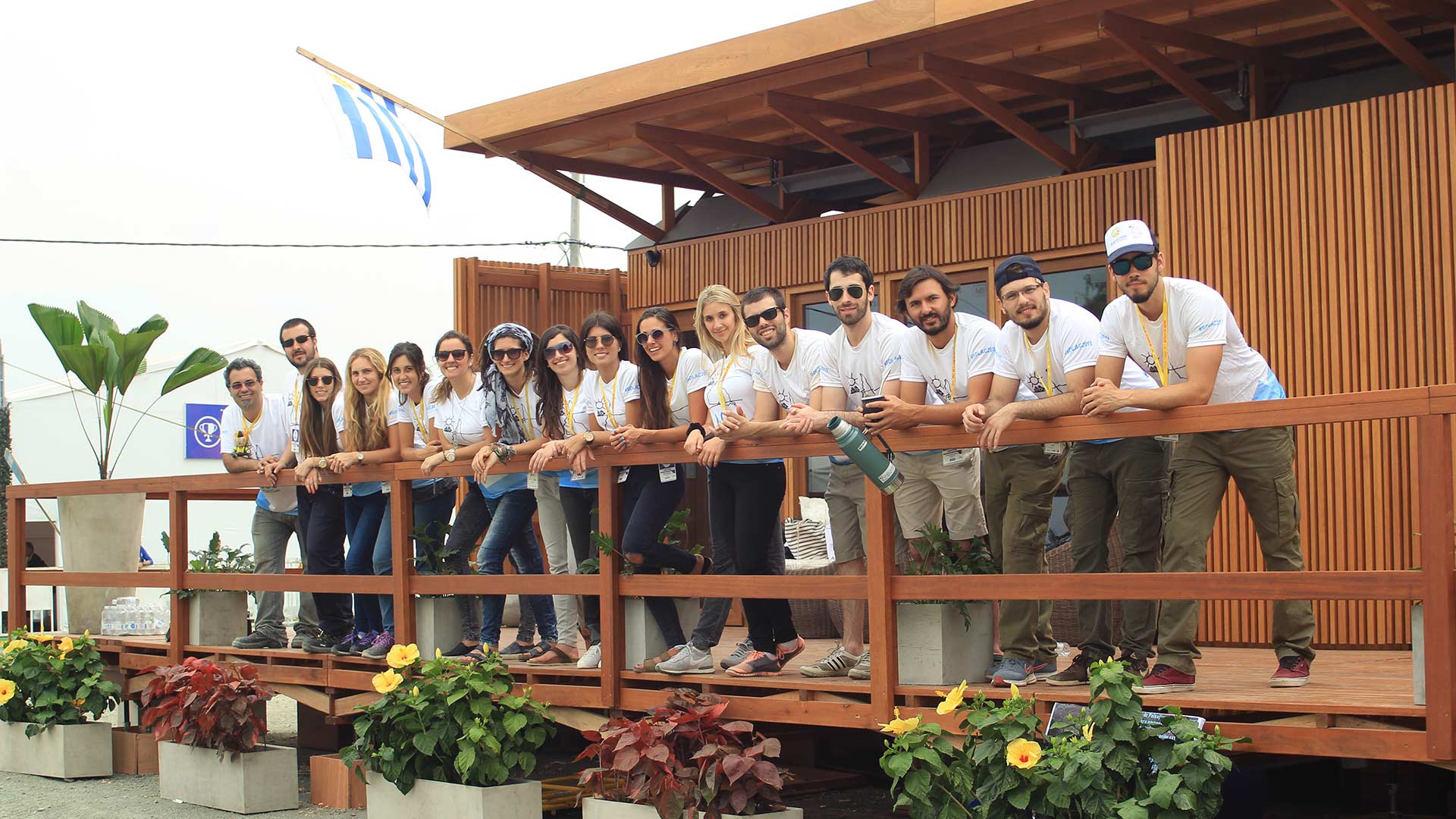
In Nairobi, more than 4,700 heads of state, ministers, business leaders, senior UN officials, and civil society representatives gathered at the United Nations Environment Programme (UNEP) assembly, the world’s highest-level environmental body. As is typical at such events, the goal was to make decisions that would steer global society toward a more sustainable future.
Prior to that meeting, in an article published on the UNEP website, the organization highlighted the contribution of La Casa Uruguaya. The article describes how the house was built according to bioclimatic and technological criteria designed to reduce energy consumption. The home’s insulated structure maintains a consistent temperature, and the windows are strategically placed to maximize natural light.
It also highlights that La Casa Uruguaya entirely powered by solar energy, has water recycling system, and uses sensors to control temperature, humidity, and lighting.
Another project highlighted by the UN was Biofase, a company founded by Scott Munguía, a Mexican entrepreneur who designed a system to produce bioplastics from avocado seeds. The material decomposes in just 240 days, making it a sustainable alternative for items such as straws and cutlery.
Plastic and its potential to pollute were also a cause for concern for Ecuadorian Inty Grønneberg, who designed turbines to filter and trap plastic in rivers before it reaches the ocean. These turbines are capable of trapping up to 80 tons of plastic per day.
Along the same lines, Roberto Astete and Cristian Olivares, from Chile, founded Solubag, a startup that creates water-soluble plastic bags. The founders claim that the water in which the bag dissolves remains uncontaminated and is even safe to drink.