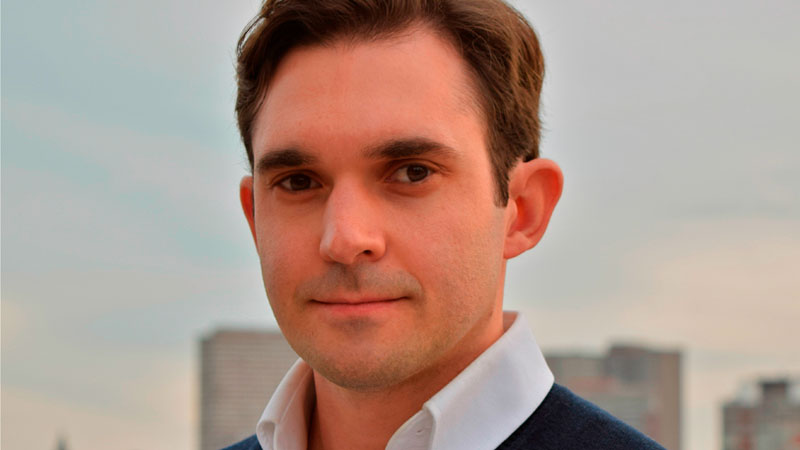
Through trial and error, Diego Feijer and his team laid the groundwork for Facebook, the tech giant that, during the pandemic, surpassed 2.6 billion monthly users.
Shaping the way billions of people communicate around the world is one of the greatest sources of satisfaction for graduates of Electronics Engineering from Universidad ORT Uruguay. Specifically, their role involves defining products or business strategies using tools such as machine learning.
Reflecting on his time as a student, Feijer says that the scholarship he received from ORT was essential to his professional development and that the knowledge he gained along the way gave him a competitive edge on several occasions. After earning his degree and moving to the United States, the engineer faced his greatest challenge with the PhD in Electrical Engineering and Computer Science he pursued at the Massachusetts Institute of Technology (MIT), which he describes as “a roller coaster ride” at the place where he had always longed to study.
Today, "A Step Forward" shares its experience in this interview.
-
What are your responsibilities, and what is it like to work at one of the world's leading tech companies?
 I have been working as a research scientist at Facebook. On my team, we use statistical inference and machine learning to help the various product teams achieve their goals. It’s a highly specialized team, as we all hold PhDs in different fields.
Since decisions at Facebook are data-driven, our projects always start with a hypothesis that we seek to validate. To do this, we develop mathematical models, build prototypes, analyze available data, and conduct experiments that allow us to confirm or refute the initial hypothesis.
One of Facebook’s major advantages is its internal infrastructure, which allows us to focus on our work without having to deal with peripheral issues. The company culture also encourages creativity, discussion, and the exchange of ideas, as well as the freedom to express oneself both personally and professionally.
-
What do you enjoy most about your day-to-day work?
In my role, I work closely with data scientists, engineers, and product designers. It’s one of the things I enjoy most. It’s also very rewarding to know that my work has the potential to influence how millions of people around the world use the platform to connect with their family, friends, and communities of interest.
-
How much did your undergraduate degree at ORT help lay the groundwork for your continued academic development?
My degree program at ORT provided me with an excellent academic education that struck a balance between theory and practice, which has, at times, given me a significant competitive advantage. In many ways, I felt that the quality of my education was superior to that of most of the students who entered the same program at MIT with me. Midway through my degree, I also had the opportunity to get my start in research and work with Fernando Paganini (currently the Vice Dean of Research at ORT’s School of Engineering) on cutting-edge topics related to the analysis of distributed control algorithms in networks. The knowledge, tools, and ways of thinking I acquired under his guidance have served me well in every field I’ve worked in.
-
You received an 80% scholarship to pursue your degree. How much did this benefit contribute to your ability to achieve your goals?
The scholarship I received was essential. Without it, I wouldn't have been able to study at ORT, and I wouldn't have had the good fortune to have Paganini as my mentor, who has been a major influence on my professional career.
-
How would you describe your experience studying at MIT?
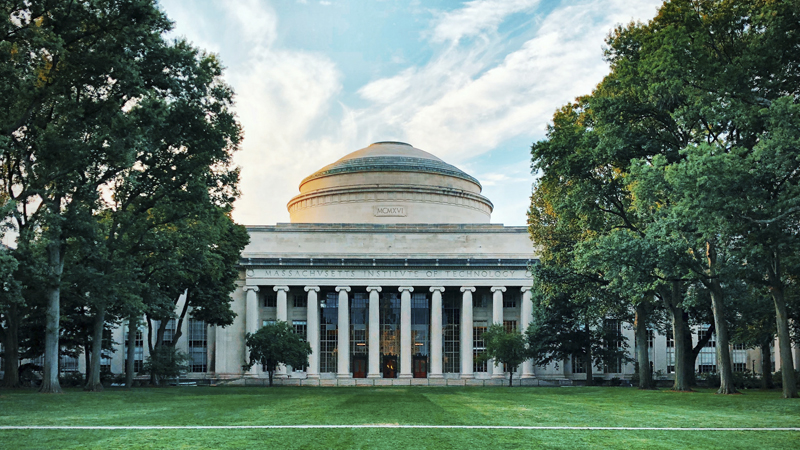 Ever since I found out about the MIT When I was in high school, I knew I wanted to study there. I was always excited by the idea of living and studying in another country. The decision to pursue a doctorate came quite naturally; I saw it as a continuation of my academic training and the line of work I had begun in the Group for Applied Mathematics in Telecommunications and Energy (MATE) at ORT's School of Engineering. Even today, I really can't imagine having done anything else.
I received the news that MIT’s Department of Electrical Engineering and Computer Science (EECS) had accepted me into the Ph.D. program while I was working on my thesis in the office shared by all members of the MATE group. It all happened quite quickly; I defended my thesis in May, and by early September I was already taking classes at MIT.
I remember that it was during the flight to Boston that I first realized just how far away I would be from home and my family. The experience was incredibly rewarding and enriching, both academically and personally. I had the opportunity to learn from brilliant professors, interact with students from other cultures, make lasting friendships, and live in a beautiful and vibrant city (though quite cold in the winter).
-
What challenge do you remember as the one that had the biggest impact on your career?
Without a doubt, the biggest challenge I've faced so far was pursuing my Ph.D. at MIT. It was very difficult; it pushed me to my limits.
I’d compare it to a roller coaster because of the ups and downs. When you’re doing research, it’s hard to predict which paths will lead to a road full of good results or to a dead end. That uncertainty is what generates a lot of excitement and, at the same time, doubt and frustration.
-
What advice would you give to a student who has decided to pursue a degree in electronic engineering?
My best advice to any engineering student, in general, is not to settle for just passing your courses, but to always try to go the extra mile and learn a little more.