How did the idea of pursuing a master's degree in China come about?
There were several reasons that led me to make that decision. For one thing, I was studying Chinese and learned about a bilateral agreement between Uruguay and the Chinese government that would allow me to pursue a master’s degree in China on a full scholarship.
In addition, I wanted to experience studying abroad again, since I had participated in an exchange program in Manchester, England, when I was a student.
On the other hand, I was working at a software company in the business side of things and started to miss the more technical aspects.
I applied to two universities and was accepted to Tsinghua University with a full scholarship, which covered tuition, living expenses, housing, and a monthly stipend.
How was the experience?
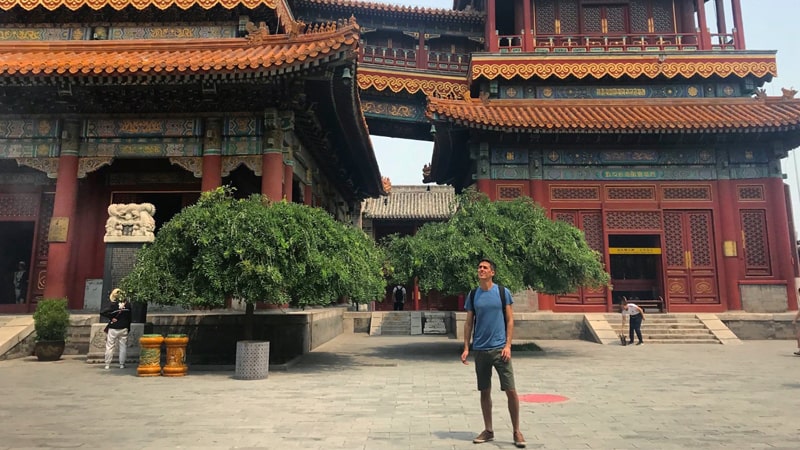
The experience was amazing. The campus is like a small city—you have everything you need, and there’s a great international atmosphere. I lived there for a year and a half, until the pandemic started, and I finished my master’s degree from here.
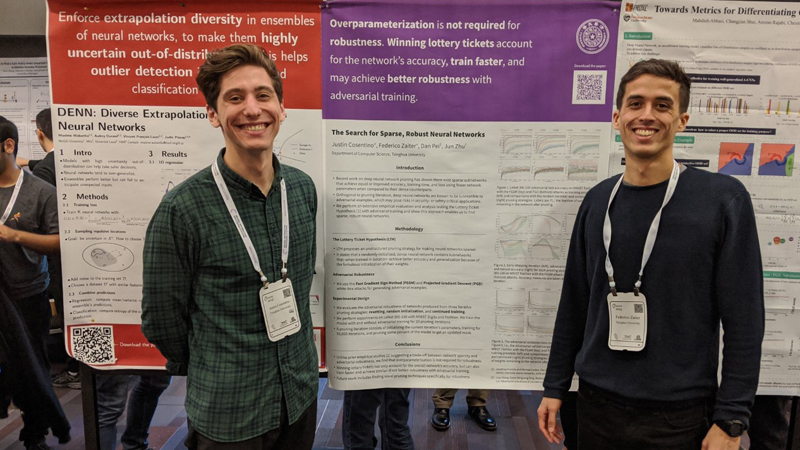
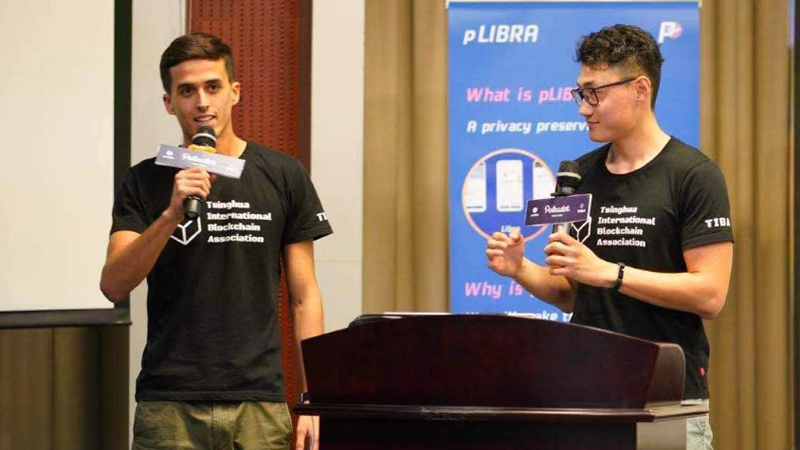
There were tons of activities at the university. For example, I joined an international student association focused on blockchain; I remember we invited one of the founders of Ethereum (an open-source platform based on blockchain technology) to come speak with us, had lunch with him, and talked about Uruguay. Later, I started an association focused on artificial intelligence—my area of research—which is still active today.
What’s more, the academic standards are very high; millions of Chinese students take entrance exams to get into that university, but only a few thousand succeed—I felt truly privileged.
What was your master's degree in?
The research focused on AIOps, which is artificial intelligence for IT operations. In other words, we were working on how to automatically prevent, detect, and resolve system failures.
The lab I was part of received research projects from huge companies like Huawei and Bytedance (the creators of TikTok), and if they found the solution useful, they would put it into production.
The good thing is that, as a student, you have data to work with, and it’s useful to the company because it solves problems quite cost-effectively.
Where does your interest in artificial intelligence research come from?
This journey began with my thesis. My advisor, Eduardo Mangarelli, was the one who encouraged me to work with AI. I clearly remember what he said during the final project we should make it our mission to learn something new.
What do you remember about your time at the School of Engineering? What skills do you feel it helped you develop?
It gave me a mathematical foundation that you don't always get to use in your work, but I can say that thanks to that foundation, I was able to get by while studying in China.
From a technical standpoint, since the master’s program had a research focus, I feel that studying Systems Engineering allowed me to provide that additional support to the lab through software engineering.
But above all, from day one, the school instills in you an entrepreneurial spirit—and I don't just mean the idea of starting a business, but the ability to challenge the status quo and pursue your ideas, whatever they may be.