 What is it about?
“How is it that children make films, given that they are such complex audiovisual productions? What is the purpose of these films, and why do they make them? What is the point? Do they make them because technology is more accessible today?” These were just some of the questions that prompted the author to begin her research.
Although he noted that many people were making films featuring young children, it was “a very practical activity” in which “there was very little academic research.”
For this reason, a study was proposed to examine programs and projects that produce audiovisual content with children aged 3 to 11. The study analyzed the objectives, educational strategies, and organizational methods. It also examined the role of adults, the identities of the teachers, and the resulting productions. Over the years, the researcher viewed hundreds and hundreds of films made by children.
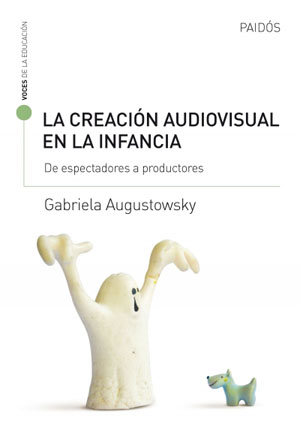
All of that work culminated in her dissertation, which was part of the doctoral program in Applied Creativity at the Complutense University of Madrid. *Audiovisual Creation in Childhood* summarizes the main findings of that research.
Films made by children
“A hundred years ago, pedagogues, educators, teachers, instructional specialists, and psychologists had to learn that those scribbles children made weren’t just poorly drawn pictures, but rather what came to be known as ‘child’s drawing,’” Augustowsky said. In his view, it is important to recognize that audiovisual works created by children are “very unique” creations.
He explained that these are not finished products created by adults: “They have gaps and inconsistencies, and the stories are unusual.” He also noted that playfulness, fun, and irony are recurring themes in his work.
“The book helps to organize—conceptually and theoretically—a practice that has grown enormously and is evolving at a breakneck pace,” added Augustowsky, even though its origins date back to the 1980s, with the advent of video.
At the same time, as he pointed out, “it’s a book you read by looking at,” since it offers countless visual cues to explore.
A necessary topic
The book is part of the “Voices of Education” series published by Paidós: an educational series that explores emerging topics in education.
According to Augustowsky, in the field of education, there are classic topics, urgent topics, and those that, once you begin to research them, start to appear as “necessary.”
In her view, this is true of school design: “Many of the issues that are overlooked from a more traditional perspective end up being part of the solution to some of the problems.”
“Of course, making films isn’t going to solve the extremely serious problems facing the education system,” he clarified. “But incorporating new forms of expression, reflecting on what educational spaces are like, and considering the role that art plays—and should play—in fostering a fuller, more just life is essential,” he asserted.
The book is intended for teachers in training or those currently practicing the profession. It is also aimed at filmmakers or film producers who decide to teach; however, as the author noted, it can be read by anyone interested in the subject. It is available at the Universidad ORT Uruguay library.