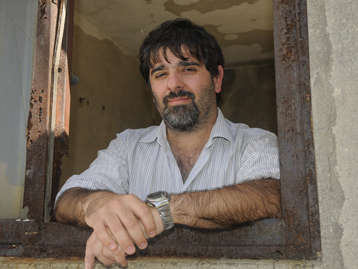
When did your interest in writing about Hugo Batalla begin?
Given my interest in history, particularly recent history, Hugo Batalla is a figure of colossal stature in the resistance against the dictatorship. He was often spoken of at home, particularly by my mother, and when I began to take an interest in the world of recent history, he was a figure I found fascinating: his time in three political parties, his courageous actions during the dictatorship, and the fact that while he was always recognized for his people skills, he was criticized for switching parties. He was like a hero and an antihero at the same time.
So how did the idea for the book come about?
A dear friend and colleague of mine who worked at the publishing house Ediciones B, Caterina Notargiovanni—an excellent journalist and an even better person—suggested that I write a book about “profiles.” That was late last year. And among the ideas that came to mind was the one about Hugo. That was the idea that finally took shape and brought me here.
There was also a personal aspect to it: I’ve been working as a journalist for twelve years and have never written about party politics. This was also a personal challenge for me.
If you had to briefly describe Batalla, what would you say?
It would take years to answer that question properly. I can say that he was, above all, a man of exceptional human stature. So much so that if there is one thing I feel this book reflects—and several people have told me this—it is the contrast between the political world, rife with intrigue, speculation, and pettiness, and Hugo Batalla’s unique human qualities. No political party is exempt from this.
Batalla made highly controversial decisions, some of which were the result of collective rather than personal choices, but he was always convinced he was doing the right thing. Examples, the obvious ones: leaving the Colorado Party, creating the Frente Amplio, leaving the Frente Amplio and creating the Nuevo Espacio, forming an alliance with Julio María Sanguinetti, and returning to the Colorado Party. As if by a cruel twist of fate, almost every political decision he made had a negative impact on his image and his voter base.
Hugo had a remarkable ability to build bridges: he served as the defense attorney for Raúl Sendic and Líber Seregni—at a time when lawyers for political prisoners were few and far between—yet he was also able to support a decision made by a government he did not align with when it appointed Hugo Medina, a hard-line military officer, as Minister of Defense. In a completely different world—the AUF (which, unfortunately for him, would prove utterly foreign to him)—he also tried to bring together the opposing sides: the very uncompromising coach Luis Cubilla and the so-called “repatriates.” In short, he believed in the noblest purpose of politics, which is to build a better society.
What is the book about?
 I tried to be as thorough as possible. The book begins with Batalla’s birth into a very humble home, as the fifth and youngest child of illiterate Italian immigrant parents, whose hard work, sacrifice, and public education allowed them—and the next generation—a better future. It discusses him as a student and union leader and his rise as a political figure. It continues with his first steps in politics up to the creation of the Frente Amplio; this is where the line between the person and the public figure begins to blur, and navigating both worlds was another challenge. It then moves on to his most brilliant period, which paradoxically coincided with the country’s hardest years. Why? Because he was a source of support, a shoulder to lean on, and a source of comfort for all who needed help, whether tenants on the verge of eviction or political prisoners like Seregni. He endured surveillance, arrests, and even an alleged assassination attempt that was never resolved. It is no wonder his party performed as it did in the 1984 elections and his popularity soared at that time. But none of that saved him from the subsequent political intrigues and pettiness, from friends and foes alike. He left the Frente Amplio in a long-announced split, created the Nuevo Espacio with expectations that were not met and that later contributed to what ultimately happened: the agreement with Sanguinetti and his return to the Colorado Party.
His final years found him in no less a position than the vice presidency of the Republic, yet—in yet another paradox—those were the years when he shone least brightly in the public eye. To make matters worse, he, who had stood firm against the dictatorship without going into exile, was forced to leave his beloved La Teja because of the intolerance that a political decision provoked in some (rightly) intolerant people.
He had always wanted to be in a position that would allow him to accomplish things, but—undoubtedly for various reasons detailed in the book—he came to accept the decisions he had made, though—and this is just my personal opinion—he was left with the feeling that he could have achieved more. His final battle—one of many—against cancer was all too brief.
The back cover says that Batalla has been forgotten. Why do you think that happened?
It may be because, having passed through three political parties, none of them has ever claimed him as their own. It may also be because today is not the best time to remember him: the Frente Amplio—for which Hugo was a dissident (at best) or a traitor (at worst)—is in power, and the more traditional Batllist faction is now a minority within the Colorado Party.
There are also things that are completely inexplicable: recent history is constantly being revisited and reexamined—which I think is perfectly fine, mind you—yet Hugo Batalla’s actions during the dictatorship are dismissed, silenced, downplayed, and minimized… And if there was ever a time that defined him and brought him prestige, it was that one. That chapter, in fact, is called *Brillo en la oscuridad*.
This is your first book. How did you find the process of writing it?
It was an exciting yet exhausting experience. I interviewed 75 people, spent hours and hours reviewing transcripts, in newspaper archives, and on the phone—leaving little time for family or rest… In other words, I didn’t want to paint a picture that was more stoic than reality; it was simply a matter of telling a story and trying to tell it well. Whether I succeeded or not is up to the reader to decide.
Hugo Batalla. *Las luchas más duras* (Ediciones B) is now available in bookstores. The author, Leonel García, holds a degree in Journalism from Universidad ORT Uruguay currently works as a journalist for the *Domingo* supplement of the newspaper *El País* and as a professor at the School of Communication.