Six student teams from the participating academic institutions took part in this edition (in addition to students from the Bachelor’s programs in Communication, Fashion Design, and Industrial Design at ORT, Integra Escuela, the Catholic University of Uruguay, and the Escuela Universitaria Centro de Diseño), and 14 brands were involved (Forever 21, Rotunda, H&M, Aldo, GAP, Magma, Daniel Cassin, Kaunas, Arredo, Manos del Uruguay, Levi’s, New Balance, SEMM, and Movie).
The products will be on display through June 20 on the second floor of Montevideo Shopping.
Award-winning projects
The ¡TÁ! Kit and Renómade were the ORT projects selected as winners at the Pop Up Rediseña Home event.
Drawing on the concepts of upcycling and recycling, they created products from discarded materials to demonstrate that it is possible to transform the textile industry and produce marketable garments with high design value, all while adhering to sustainable ethics and responsible consumption.
View this post on Instagram
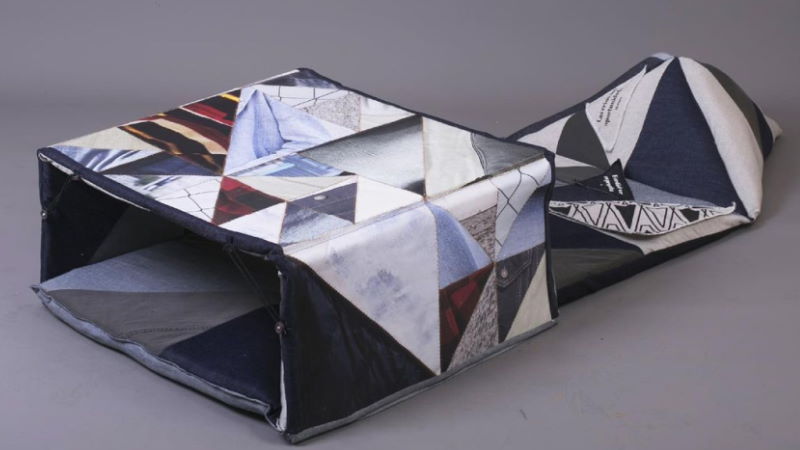
- The ¡TÁ! Kit is a set consisting of a mat and a table that allows users to become part of the product’s creation process by manually customizing it.
- It arose from the need created by the pandemic for a space for relaxation and self-reflection, one that draws a line between work and leisure time.
- This mat comes with decorative appliqués that feature various designs to add to the base product. These include embroidery patterns, prints, and quotes written by people going through similar experiences, which are passed from one user to another to build a community that expresses itself through messages of support.
- Members: Camila Zerbino, Lucía Nazur, Victoria Gkazarian, Valentina Blanco, Yannina Guerra.
We view sustainability exclusively through its social lens. As designers, we strive to create innovative, aesthetically pleasing, functional, and environmentally friendly solutions using surplus materials. What sets us apart as a brand is our constant effort to build relationships with—and among—people, by engaging in conversations and fostering genuine connections.
View this post on Instagram
- Renómade designed a bag specifically for remote work.
- Their mission is to bring freedom back into our lives. With that in mind, they sought to redefine remote work, approaching change with optimism and hope.
- Members: Florencia Calo, Julieta Irazusta, María José Yáñez, Pia Jackson, Antonella Battagliese
We are inspired to help a new generation consume in a more conscious and sustainable way. The products we consume have the power to make a difference. Let’s do our part to ensure that impact is positive.
All projects
In addition to Kit ¡TÁ! and Renómade, four other teams participated on behalf of the university:
-
Uniq
A collection of customizable accessories designed for the new normal in the workplace, grounded in sustainable values. The primary focus is on product functionality and artisanal craftsmanship, aiming for zero waste.
“Our mission is to celebrate the value of craftsmanship, highlight the consumer’s originality and personality, and honor our land.”
“At Uniq, we view design as a quest for solutions to social issues. The textile industry is one of the main drivers of harmful processes, both in terms of pollution and dehumanization. We believe it is essential to be part of the change and to begin our journey from a place of empathy.”
Members: Manuela Victorica, Florencia García, and Yannina Guerra.
-
Imago
It represents a new chapter and the moment we’ve all been waiting for: the final phase of the pandemic—freedom. Through this collection, they also seek to draw a parallel between human beings and butterflies, and between the pandemic and a period of transformation, much like metamorphosis.
They created a garment that allows consumers to experience the comfort of freedom while wearing it like a second skin. They used a vibrant color palette to convey “the strength we need to get through this situation.”
“We believe it is our responsibility as students and designers to introduce customers to sustainable products, help them understand the importance of reusing clothing, and show that textile waste can be transformed into a great new and innovative product.”
Members: Inés Godoy, Florencia López, and Giuliana Maglione.
-
Patchouli
A product line focused on the physical well-being of remote workers, which also allows for the reuse of discarded textiles to give them new value and a second life.
On the one hand, it consists of a desktop stand for monitors or laptops that raises them when in use, improving the product’s ergonomics and the user’s posture, thereby preventing neck pain.
In addition, there is a bedside table that not only allows you to use a laptop but also serves as a surface for working comfortably from bed.
“As designers, we must consider the impact our creations will have. Will we continue to contribute to environmental degradation, or will we change the system and propose something new—something that helps, that improves, that represents the future we want and need?”
Members: Diana Ramírez, Alicia Muniz Berni, Nicolás Monteverde, and Stephanie Portugal.
-
Muteate
Stackable acoustic panels were developed in two sizes (40x40 and 40x20 cm). Users can arrange them as they wish, depending on the space they need to partition off or soundproof, to carry out their virtual activities, creating the necessary privacy and promoting concentration.
After use, they can be taken apart and stored so they don't take up too much space. They are held together by magnets and are made of felt crafted from carded wool scraps.
“As designers, it is our responsibility to do our part to reduce the environmental impact of our designs by using materials that are less harmful to the planet and by reusing them; at the same time, we aim to promote smart consumption by creating high-quality, durable products made from premium materials or recycled materials.”
Members: Dana Tinsky, Tatiana Lev, Sofía García, Sofía Piana, and Pedro Páez.
Rediseña has not only succeeded in bringing its products to market—thereby re-establishing itself in the marketplace and perpetuating the cycle of design processes—but has also evolved into a program that organizes activities promoting an ethical, sustainable textile industry and responsible consumption.