Uruguay and Renewable Energy
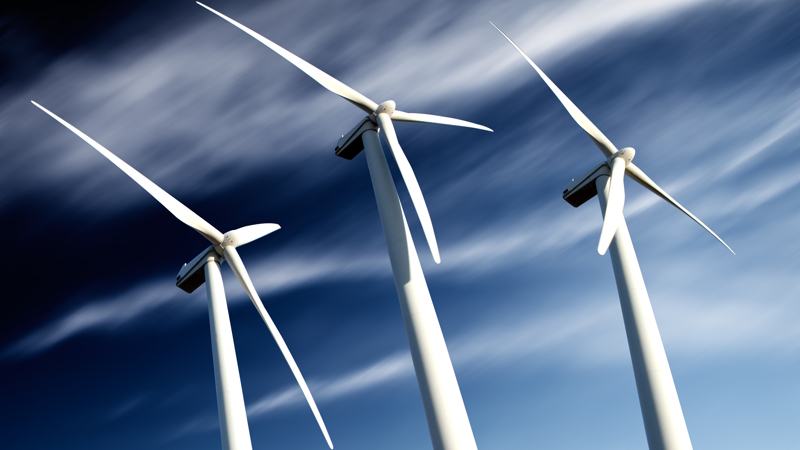
When it comes to renewable energy, Uruguay is always mentioned as one of the leading regional and global players in the field.
"The impressive 97% share of electricity generated from renewable sourcesmakes it 'a model even for leading European countries,'" said Enrique Briglia, a professor in the Electrical Engineering program at ORT and head of Green Hydrogen projects at UTE since 2020.
For example, in recent weeks, Ocean Science & Technology—an observatory tracking innovation and advancements in engineering within the marine and offshore sectors—published a global renewable energy innovation index inwhich Uruguay ranks among the top 10 countries worldwide.
In that ranking, Uruguay trails behind some South American countries (Chile and Ecuador), a point with which the professor does not entirely agree because "none of them—not even those in the top 10—has 97% renewable energy in the electricity sector, as Uruguay does."
"In the wake of the conflict with Russia, its long-standing major supplier of fossil fuels, the European Union (which also added an energy diversification goal to its initial decarbonization objective) began to accelerate the development of green hydrogen, which requires a renewable energy system that is difficult to manage due to the variability of wind and solar resources," he explained.

Briglia explained that this is a system Uruguay successfully implemented and put into operation with "great competence" since its first energy transition in 2010, based on a national strategy stemming from an agreement among all political parties with parliamentary representation at the time, as part of the path toward decarbonization.
However, in the study—which analyzes the number of renewable energy patents per country between 2000 and 2021 in relation to factors such as population size, wealth index, and total number of projects—Uruguay ranks eighth, behind less developed countries.
And at the Davos Forum (which ranks the countries best prepared for the energy transition needed to address climate change), Uruguay fell 10 places, from 23rd to 33rd, which now places it behind Brazil (12th) and Costa Rica (30th) in Latin America.
However, there are several economic nuances to this, and this is because "many of the patents mentioned are associated with announced projects rather than projects for which a final investment decision has been made, or that are under construction or in operation."
Green Hydrogen
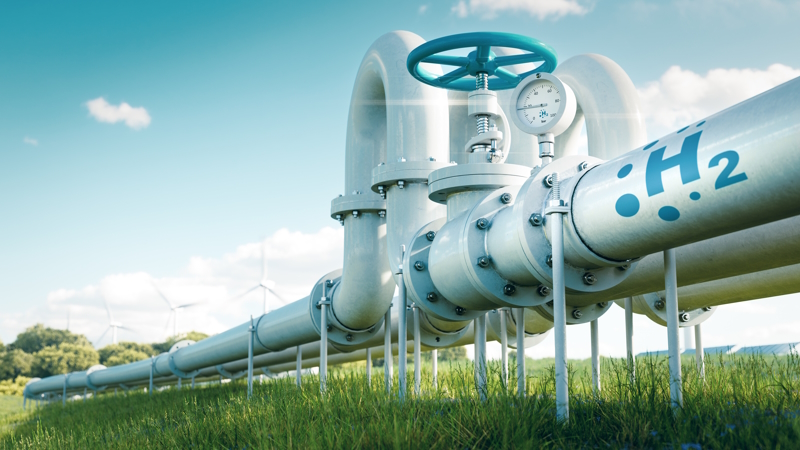
According to the scholar, the green hydrogen sector is currently in the process of establishing its ground rules, with regulations emerging in the European Union and the United States to define what constitutes renewable hydrogen.
The first economic mechanisms are emerging that bridge the gap between the high production costs of green hydrogen and the willingness of consumers to pay for it.
"Our first transformation is now evident and serves as a model, even for first-world countries. Our first transformation was based on economic rationality: the cost of your energy is determined by how cheaply you can obtain fossil fuels. When you don’t have easy access to fuel, the solution is renewable energy, which doesn’t require it—but it does require an investment," he said.
"Uruguay had to do this because it was more cost-effective than importing diesel at exorbitant prices. At the time, tenders were held in which the government guaranteed to purchase all the energy produced by private companies; that was the foundation of the first energy transition."
Outlook
"But these contracts were signed several years ago, and as technology advances, the cost of generating renewable energy is falling," he added.
In this regard, he noted that Uruguay’s key strengths for the future include its existing system—its greatest asset—as well as its strong institutional framework, which instills a high degree of confidence in potential investors.
Uruguay is likely to be one of the first countries able to export methanol or other synthetic fuels, and that would undoubtedly be a major advantage in leading the second energy transition.
"That puts him at the forefront of the second energy transition, which will yield economic benefits in both the short and long term," he said.
He concluded: "The most interesting thing about this is that it represents the future for coming generations. Uruguay has already undergone its transformation and gained the experience needed to move forward."
Training in renewable energy is the future
Given that Uruguay is "objectively one of the world's leading countries in terms of renewable energy," as the professor noted, academic training in this field is essential.
"In the electrical engineering program, we have a course called Renewable Energy Generation, where we study and work on all the related concepts," he said.
"There is also another course called Economics and Energy, which examines optimal systems for minimizing the cost of energy supply, taking into account different sources—such as renewable and thermal energy, among others—as well as fluctuations in demand."
This is a key insight for understanding how renewable energy enters various international markets.
He also highlighted the knowledge students gain in the course on Energy Transmission, which "examines power generators and their integration into the power grid, taking into account the constraints inherent to the model."
For the teacher, these are three key concepts for understanding how renewable energy works, from its generation to an understanding of the market and transmission.