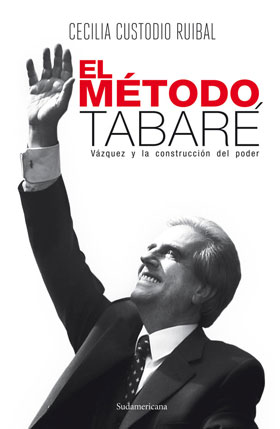
How did the idea to write a book about Tabaré Vázquez come about, given that several books about him as a political figure have been published in recent years?
I have to correct you on this point because, if there’s one politician who lacks a body of written work, it’s Vázquez. In fact, the lack of literature, studies, and research on his political career was one of the reasons that led me to undertake this research.
Because of my academic background, I always strive to contribute to the academic community, regardless of my personal interest in a particular subject.
Vázquez is a highly significant figure in Uruguay’s recent history, and there is only a limited body of literature available on him up until he became president; from that point on, there is nothing until this book.
The other reasons that drew me to Tabaré Vázquez were my curiosity about how someone with no political background managed to bring the left to power in the capital and then at the national level (and now for the second time).
That person, who, moreover, lacks a strong ideological foundation or the specific backing of any faction within the FA. And also because they are a figure who always raises more questions than answers.
What was it about Vázquez that appealed to you most, intellectually and politically speaking (not from a partisan standpoint)?
What caught my attention most was the way he exercised power—his "method"—and that's where the investigation led.
Interestingly, the book’s title refers to “Tabaré” rather than “Tabaré Vázquez.” Was that a conscious decision, or did it just turn out that way? Do you think that using just his first name—without a surname—symbolizes the political figure he represents? In other words, a Tabaré who doesn’t offer explanations for many of his decisions, and for whom no explanation is needed—it’s enough simply to call him by his first name.
We decided on the title and tagline as a group with the publisher. There were lots of ideas.
Without a doubt, the name "Tabaré" carries its own weight and has left an indelible mark on recent history.
However, the surname couldn't be left out either, so it was included in the lead-in, along with the core focus of the research, which is "the construction of power."
In the book, you spoke with Vázquez’s former advisors, colleagues, political scientists, and journalists, among others. Were you surprised by how these people from different fields interpreted the former president’s modus operandi?
The interviews I conducted were intended to build a profile of Vázquez based on the various accounts and perspectives of the interviewees.
What struck me most was the consistency evident among his ministers when they explained how Vázquez works. All the ideas expressed by each of them—despite being very different individuals—were in complete agreement.
If you had to briefly describe Vázquez, what would you say?
He is a great performer and a skilled strategist.
This last question is related to the first one I asked you. What do you think are the contributions of *El método Tabaré* to the already extensive body of literature on him in Uruguay?
This book examines his political profile, how he has shaped his public image, and his approach to exercising power.
The approach involves reconstructing situations and issues; drawing on testimonies; and examining key events that took place during his presidency, as well as those that lie ahead in the coming term, to see how they will be resolved.
It is the only one that traces Vázquez’s career from his entry into politics (as a mayoral candidate) to his place among the select group of presidents serving a second term, combining an analysis of his profile with specific events and how he addressed and resolved them.