In this interview, the founder explains what has changed for the company, how that opportunity came about, and why he believes that “great things take 10, 15, or 20 years to build.”
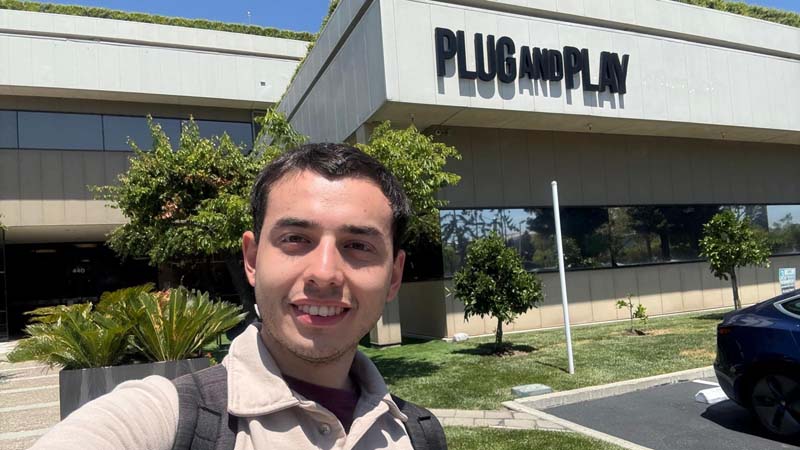
The incorporation of Plug and Play as an investor meant more than just financing for Viatik. According to Renzo, it was an international validation of the project, a key factor for a Uruguayan startup that aspires to grow and scale in other markets.
For Renzo, the funding he received confirms two things: that the model works and that the project has the potential to grow significantly.
"Users are showing us: more and more people are using the app," he explains. But he also acknowledges that, in order to multiply that impact, "projects like ours require large amounts of capital, usually from abroad, because in Uruguay there are not always sufficient funds to accompany all stages of growth."
Validation with international investors
Beyond pride, Plug and Play's entry adds a strategic element: credibility for future rounds. "We think it's great that they chose us, and it validates us when it comes to approaching other investors," says Renzo.
He emphasizes that raising venture capital is a demanding process: it’s not just about scheduling meeting after meeting; it also requires demonstrating consistent progress and a compelling vision. “The project has to show that it has the potential to be truly significant.”
An unexpected email and a high-profile demo day
The relationship with Plug and Play did not begin with an introduction through contacts. According to him, one day a direct email arrived: they were invited to a program with a demo day.
"It just came to us, without anyone telling us," recalls Renzo. At that first event, Viatik was still in its infancy: "We only had a few users and no capital raised." Around them, the scale was different: "The one that had raised the least capital had raised a million. And there was one that had raised up to $90 million."
That experience, however, served as a starting point: meetings, initial questions, a relationship in the making. A year later, things had changed.
The turning point: more traction, more robustness
Between one demo day and the next, Viatik closed its first funding round and experienced strong growth. “We had already closed a round: $70,000 from the National Agency for Research and Innovation and $180,000 from angel investors.” And in terms of business activity, they were in a completely different league: “We were selling 15 times as many trips per month.”
The difficult questions also arose: "How are we going to become truly great?" "What happens if another competitor comes along?" For Renzo, part of being an entrepreneur is anticipating scenarios and preparing for them.
“It seems the answers were convincing enough, because they ended up investing.”
What did they see in Viatik?
Renzo doesn't believe there's a single reason why an investor makes an investment. “Investors vary; some look at credentials, corporate experience, or titles; others look for conviction, results, and energy.”
In his case, he believes that the team waswhat caught their attention. "Mainly, what caught their attention was the team," he says. He talks about progress, about "fighting spirit," and about an idea that he considers central to growth: "Being humble."
“Entrepreneurship is a long journey, and the only way to succeed is to have the humility to constantly ask yourself whether what you’re doing is right.”
More than money: network, programmes and open doors
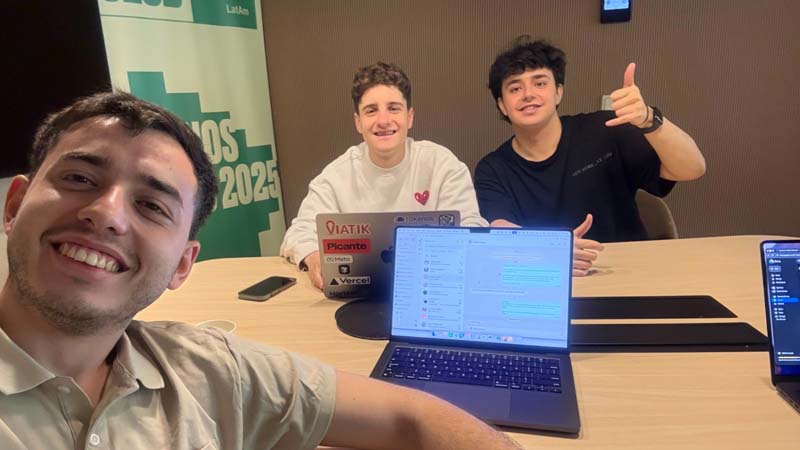
The impact of the investment goes beyond just funding. Viatik participates in a program where Plug and Play connects them with other players in the ecosystem. “They introduce us to other investors so we can start building relationships.”
For a growing startup, that foresight matters. “The chances of securing investment in the future, having met with 20 investors beforehand, are much higher,” he notes.
He also mentions the value of belonging to a network connected to Silicon Valley: a territory the team sees as key for continuing to raise capital and build innovation in the future.
Carpooling as a first step
In the interview, Renzo repeatedly returns to his vision for growth and cites examples such as Mercado Libre.
While Viatik is currently a platform that connects people to share long-distance travel and expenses, in the future, imagine a more comprehensive solution.
"We want to have the option to book carpooling, bus, and train (in Argentina) in one place, and add tools for getting around new cities. This includes incorporating functionalities such as recharging transport cards, paying tolls, or Gestión vehicle-related procedures."
Sustainability
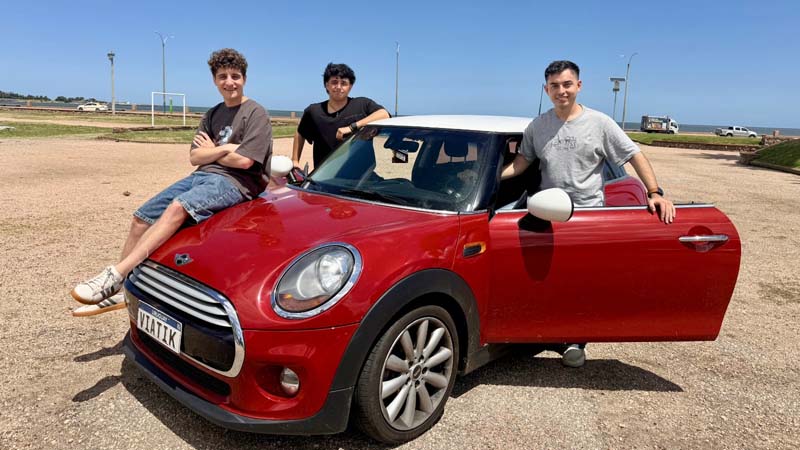
For Viatik, the environmental aspect is not an afterthought. “It’s one of the three main pillars.” The argument stems from an everyday scene: cars with empty seats traveling long distances.
"If you go on the road, you'll realise that 70% or 80% of cars have all their back seats empty," he says. For him, this indicates an unoptimised system, and although he values the role of electric vehicles, he understands it is not enough: "They currently reduce the carbon footprint fourfold, and that is not enough to reach net-zero carbon."
In terms of numbers, he claims that the regional average is around “1.2 or 1.3 people per car” and that Viatik is managing to raise it to “2.2.”
Leading as a Young Person
Renzo acknowledges that the beginnings were tough, and while some investors saw youth as a positive, others viewed it with distrust.
He also mentions a challenge that arises as the team grows: hiring the right people. “Make sure they’re fully aligned with the company’s goals and work just as hard as you do,” he says, admitting that it’s one of the most difficult decisions along the way.
Advice for Aspiring Entrepreneurs
When he talks to students or young people eager to start a business, Renzo gets right to the point:
Get started as soon as possible; if there’s an idea that really inspires you, you have to take the plunge.
He makes it clear that the road ahead will be much more demanding than it seems: “It won’t be three or five times harder—it will be twenty or thirty times harder, and it will take much longer.”
For this reason, he insists on one condition:
To have a deep sense of motivation that goes beyond the novelty of being an entrepreneur or the money.
A Mental Shift
If he had to choose one lesson that changed the way he thinks, Renzo says,“realizing that building something great takes time.”
He speaks of benchmarks like PedidosYa and Mercado Libre, and a message he heard from people connected to the regional entrepreneurial ecosystem: