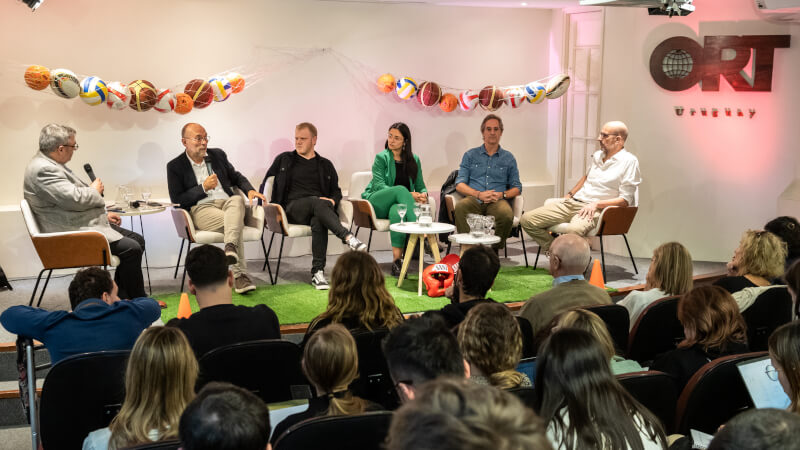
Is the prevalence of violence in sports amplified, for example, by media coverage? Building on this question, the conference “Offside: Violence, Sports, and the Media” brought together experts from various disciplines to discuss the role of the media in this issue.
The event took place on May 16 in the Auditorium of the School of Communication and Design at Universidad ORT Uruguay. Participants included Prosecutor Fernando Romano, Alejandro "Lali" Sonsol, Gabriel Gutiérrez, Felipe Arocena, and Dr. Claudia Umpiérrez, with journalist Jaime Clara—who holds a degree in Social Communication—serving as moderator. Below are some of the highlights and key concepts from this panel discussion.

Violence in Sports in Uruguay: Historical Background and Social Transformation
The discussion began with a presentation by sociologist Felipe Arocena, who provided an overview of the history of violence in sports in Uruguay and how it has evolved over the years.
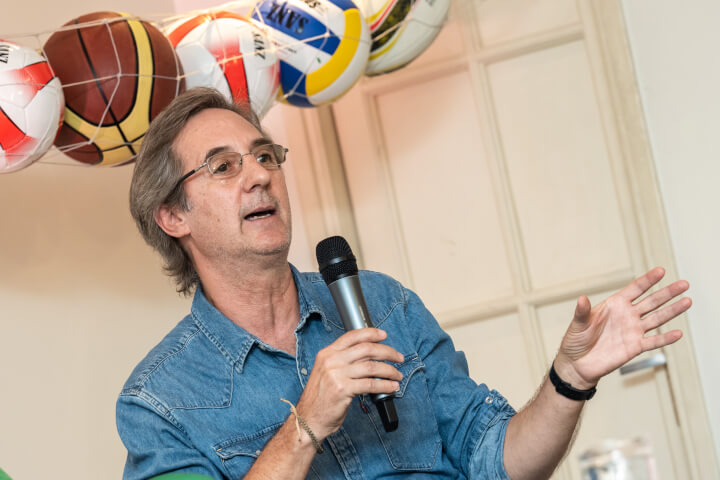
In this regard, Arocena highlighted several key dates and moments that shaped the context and narrative of acts of violence in Uruguayan soccer, the origins of which date back to the very beginnings of the first competitions in our country’s most important and popular sport.
Violence in soccer has always existed and is not just a problem of the present. As early as 1905, a classic match between Nacional and CURCC had to be suspended because fans stormed the field (...), in 1924 we saw the first fatality in Uruguayan soccer (...), and throughout history there have been various instances of extreme violence.
In light of the data presented by Arocena, it can be said that violence in sports has always existed. However, as the sociologist points out, it is not the same violence that has historically persisted; rather, various factors have come into play to transform these acts of violence into a system of organized perpetuation based on hostility, aggression, and brutality.
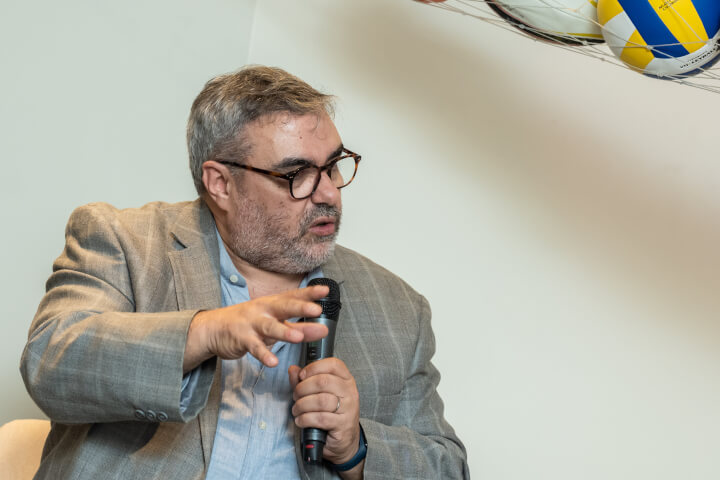
In this regard, Arocena noted:
In the past, violence in soccer was much more closely associated with spontaneous, unorganized incidents. Today, violence is much more organized, linked primarily to hooligan groups and drug trafficking, and it occurs much more frequently outside of sports venues.
Furthermore, Arocena also highlighted the dire state of sports events, which are caught up in this situation; the challenges involved in identifying those responsible for these incidents and the sources of such acts of violence; and, finally, the role of the Ministry of the Interior, the authorities, and the media.
The Nature of Violence in Sports from a Psychological Perspective
Beyond the influence that various social actors exert on society as a whole, in this context, it is worth asking whether violence is perhaps part of the very nature of the human beings who make up that society.
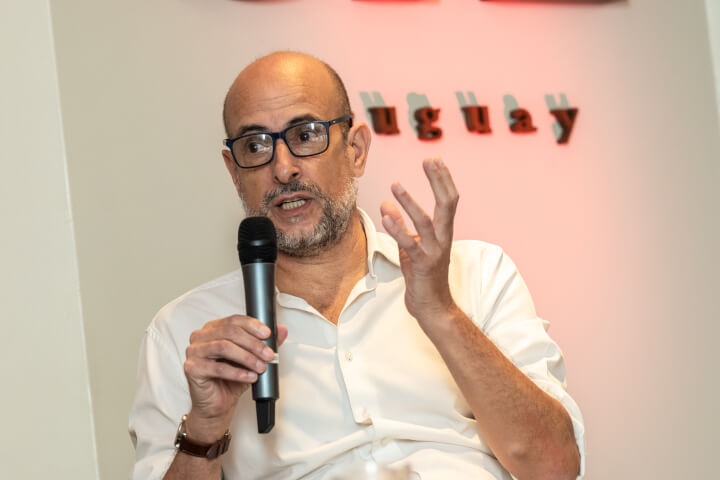
In this regard, psychologist Gabriel Gutiérrez stated:
From a psychological perspective, it can be said that violence is inherent in us. We have a part of the brain that has remained unchanged for thousands and thousands of years: the reptilian brain (or amygdala), which is where our fight, flight, reproduction, and feeding responses are located (...). Aggression in sports is called agonistic aggression, which is aggression channeled toward the sport.
According to Gutierrez, competitive aggression is a necessary element in competitions and a factor that influences a team’s ability, for example, to secure a victory. However, it is important to distinguish between this type of aggression and other types or forms of violence in sports.
In this regard, Gutiérrez stated:
Psychology clearly shows that a person who is aggressive and violent is a frustrated person. It’s a rather different perspective: behind every aggressive act lies an act of weakness, and whoever is experiencing that moment of power (...) feels as though they are letting off steam. They don’t realize that they are projecting a very sad image.
In this regard, Gutiérrez agreed with Arocena that violence is a part of society and that the responsibility does not lie with the media, but rather has much to do with the actions of the authorities and their management mechanisms. Finally, among other points, he emphasized that education must play a leading role in finding a solution to the problem of violence in sports.
The Role of Education in Addressing Sports Violence and the Permissiveness of the Code of Conduct on the Field
Dr. Claudia Umpiérrez, a lawyer and former referee, also agreed that the situation regarding violence in sports in Uruguay is alarming and that, while the authorities bear a significant share of the responsibility, education is at the heart of the problem.
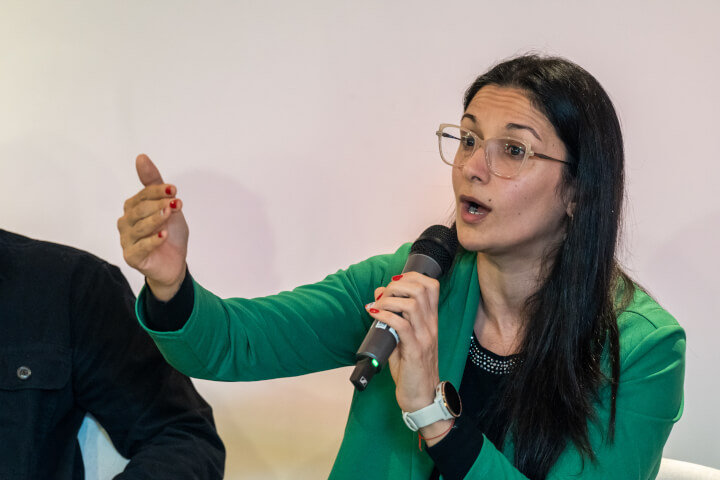
For Umpiérrez, it all begins at home and in the ways in which children’s psyches and behaviors are shaped. At the same time, Umpiérrez emphasized how sports settings, such as soccer fields, reshape the personalities and actions of many individuals through the acceptance of a hostile code of permissiveness in which, precisely, it would seem that anything goes. In this context, he noted:
(...) On the field, over time—from the youth leagues all the way up to the top division—it’s as if everything is just accepted. I’ve come across people—colleagues, friends—who are completely different on the field. There are young kids whom we don’t let swear at home, but on the field, it’s “no big deal” to yell at the referee. It’s accepted.
On the police and the role of the authorities
In his opening remarks, Alejandro Sonsol took a moment to reflect on the role the police play in addressing violence at sporting events.
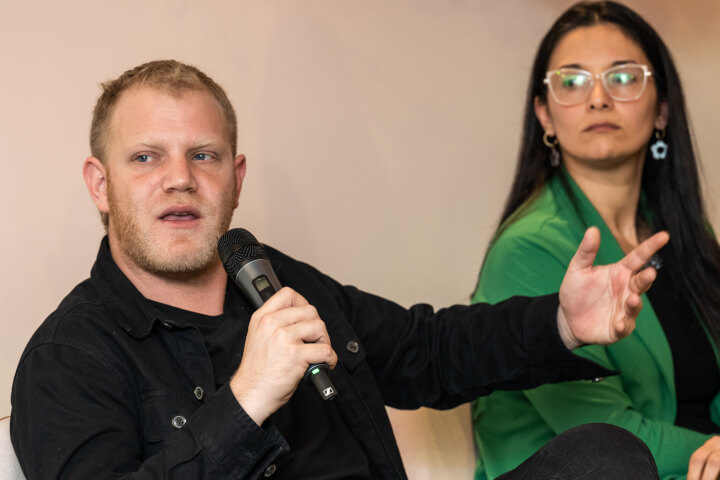
In this regard, Sonsol described how, in his experience, authority figures reshaped the circumstances:
It’s strange, and I don’t know why, but the moments when I felt most unsafe in the stadiums were when the police showed up (...), who have stopped going to the stadiums—which, on the one hand, seems to be the cure, but on the other, seems to be the problem—and when they arrived at the section where I was sitting, a sense of tension would build. It felt like at any moment a “battle” could break out between the police and the fan clubs, and you’d be left there as a hostage.
With this image, Sonsol and Clara agreed that, in some ways, certain segments of society have lost respect for authority figures.
Furthermore, speaking as a sports journalist and broadcaster about the role the media plays in relation to violence in sports, Sonsol noted that the responsibility is immense.
Justice and Digital Media
Building on the concepts mentioned by Sonsol, Prosecutor Romano discussed the role of the justice system in this context and brought up the issue of digital media, noting the challenges these technologies present and how they also amplify messages of violence.
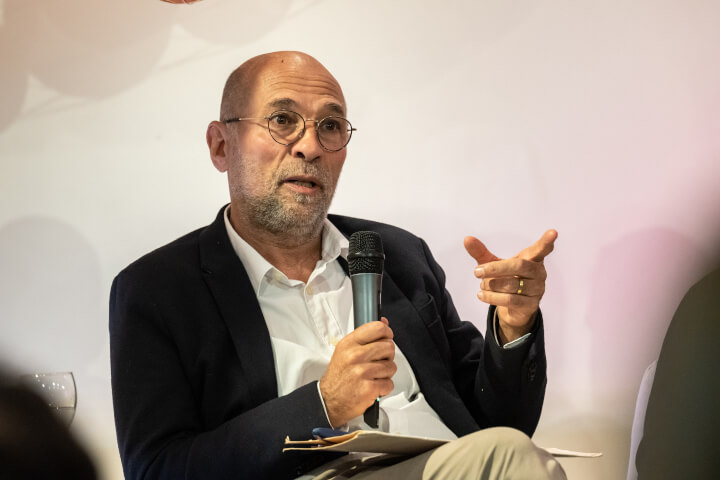
The issue of violence in sports also reflects the state of society. We’re in a bad place, but, paradoxically, there aren’t as many incidents of violence in the stands these days; rather, they’re happening outside.
https://www.youtube.com/watch?v=UmDqFk7Ck9g