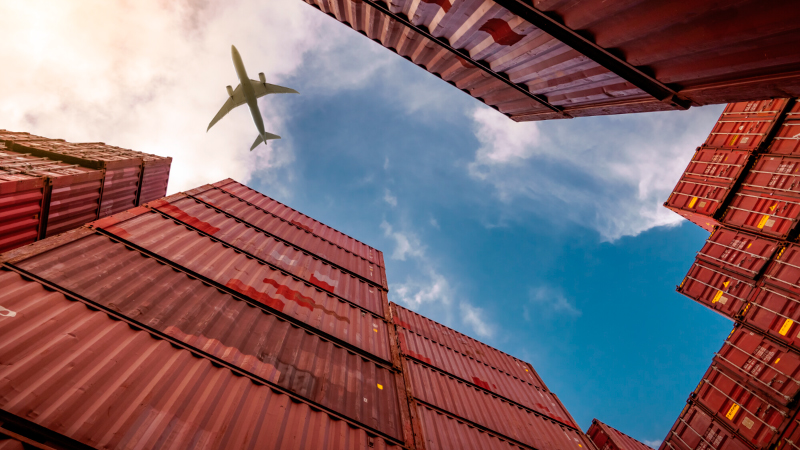
According to a report by the United Nations Conference on Trade and Development, following the decline in trade in goods and services in 2020 due to the COVID-19 pandemic, global e-commerce has experienced exponential growth, which has a direct impact on both general and specific supply chain management (SCM) operations.
In this complex context, where a culture of immediacy prevails among consumers, and companies and governments are attempting to shorten supply chains through a process of relocating their operations, according to Guimaraens,“the focus is on a shorter logistics chain with fewer intermediaries, because the fewer links there are in the supply chain, the more difficult it will be for interconnected business networks to fragment.”
The truth is that global trade is facing a series of macroeconomic events that threaten a full recovery following a crisis caused by a combination of factors centered on the COVID-19 pandemic. So extensive, in fact, that the Director-General of the World Trade Organization, Ngozi Okonjo-Iweala, stated that, while they believe supply chain disruptions are temporary, they are taking a long time to resolve.
Zero Covid
“Ironically, when the pandemic struck, China—where COVID-19 originated and which is a key player in the international logistics chain—shut down its economic activities due to its ‘Zero-COVID’ policy, causing goods to be held up in its ports. This situation affected delivery times and, consequently, the final cost of products in general,” explains Guimaraens.
According to the professor, these delays—along with longer delivery times, a shortage of containers, the collapse of warehousing and distribution centers, and operational and commercial difficulties across various modes and means of transportation, among other factors—have led to the current global, regional, and local logistics crisis.
“These ‘bottlenecks’ tend to slow down the recovery of the logistics sector. They lead to higher ocean freight rates and a restructuring of companies’ costs, which in turn has negative consequences for consumers,” he says.
The supply chain crisis has led to shortages of goods, resulting in higher prices for both retail consumers and manufacturers. It has affected nearly all productive and commercial sectors, such as the automotive industry, where a barely noticeable indicator is the shortage of microchips and semiconductors used to manufacture electronic circuits for modern vehicles. “Microchips are found in all kinds of goods: cell phones, credit cards, machinery, and appliances. Today, everything is electronic,” says Guimaraens.
The Reinvention of Supply Chains
“In this disruptive post-pandemic context, with an ongoing armed conflict and in light of future developments in the global supplychain, it is important to reinvent global supply chains, because the effective flow of goods and services depends on restoring balance, ”he notes.
However, the professor notes that a problem is looming on the horizon: “Logistics companies have realized that the disruptions described and changes in consumer habits have caught them off guard, leaving them without sufficient logistics assets and services to meet the increase in demand, resulting in delivery delays.”
This “new normal” in logistics, he explains, creates an urgent need for supply chains—both domestic and global—to quickly reinvent themselves: redesigning logistics processes, establishing safety and health protocols (for workers and goods), and reassessing the outsourcing of their logistics operations.
“Restructuring the logistics ecosystem, which will once again be driven by the relationship between supply and demand.”
Experts believe that the logistics and transportation sectors will have to adapt to this new normal, which is set to become the standard. “Therefore, the need to reinvent the logistics ecosystem is imperative, always keeping in mind the three-pronged logistics equation: optimizing costs, designing a profitable strategy, and meeting consumer demand, ”says Guimaraens.
Uruguay: A logisticshub?
As the professor explains, over the past 35 years, global trade has increased by nearly 600% with the creation of increasingly complex global supply chains. To support this new structure within global sourcing strategies, each country has established various logistics hubs to centralize operations and streamline processes as much as possible.
“Uruguay offers compelling and attractive features that position it to become a regional logistics hub, including: a high level of security; political and social stability; a regulatory framework that safeguards investments; a robust and specialized legal system; legal certainty for various operators and investors; and an effective investment promotion regime for both domestic and foreign investors,” he notes.
Becoming a logistics hub would bring benefits such as:
- Promote and increase private-sector investment.
- Improve public infrastructure while minimizing the use of public funds.
- Create jobs in local and/or regional communities.
- Boost economic activity and, in turn, the economic and social impact.
- Achieve a positive fiscal impact.
- Improve the efficiency, quality, and affordability of the services provided to users across various sectors.
- Create hubs for industrial, scientific, and technological development.
However, Uruguay ranks 85th on the World Bank’s Logistics Performance Index (LPI), placing it even below some other countries in the region. “It is therefore crucial to climb to higher positions on the LPI, and to do so, it is essential to achieve effective synergy between the private sector, academia, and the government. This synergy will ultimately facilitate the development and sustainable growth of Uruguay as a logistics hub.”