In this lecture, Dr. Moya presented her views on the national and international context of wood construction, highlighting the advantages and challenges associated with this construction method in Uruguay.
Below is a brief overview of some of the topics Moya covered in his presentation, why wood is key to sustainability in construction and how studying timber architecture can transform your career.
Wood and Construction in Uruguay
Laura Moya, an architect with a PhD in Natural Resources Science and Management (Forest Products) from the University of Minnesota (United States) and a Master’s degree in Wood Construction from the University of Bío-Bío (Chile), is a professor, researcher, and academic coordinator of the first Master’s program in Wood Construction in Uruguay. She began her presentation by placing the country in the context of its vast forest resources.

With a total area of 17 million hectares—87% of which is used for agriculture, livestock, and forestry— Uruguay has timber has .
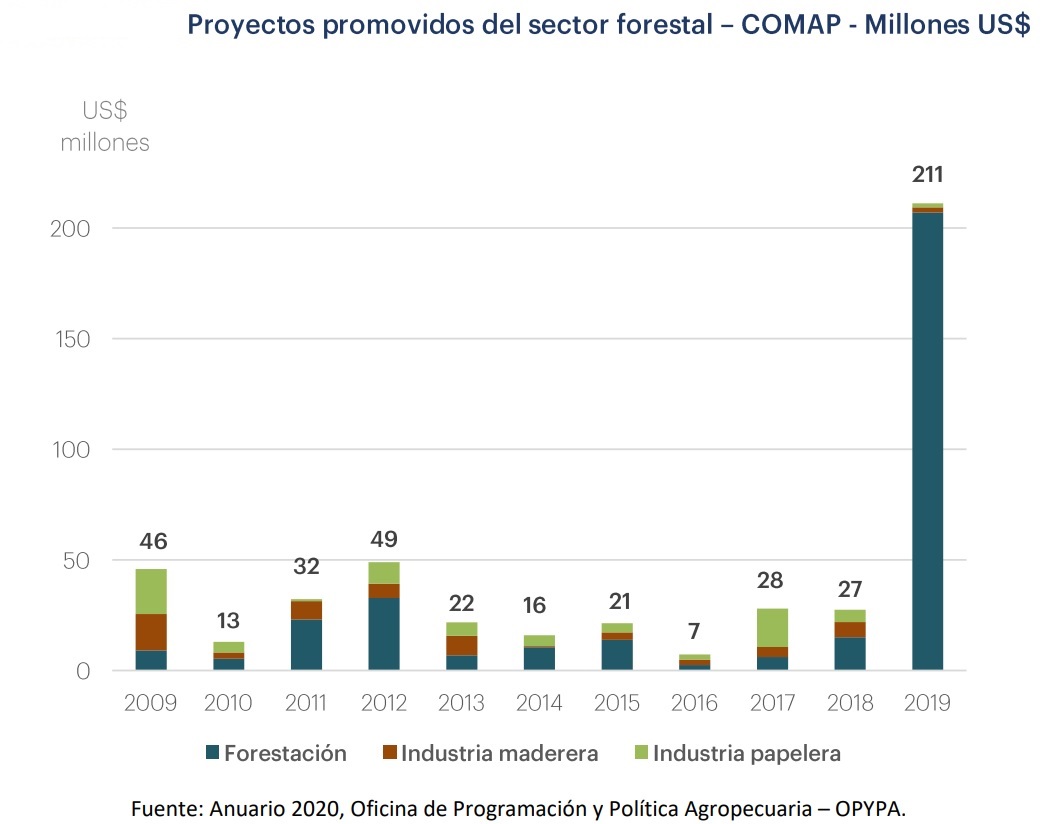 Despite this, Wood construction in Uruguay accounts for less than 1% of total construction, in contrast to countries such as Chile, where, according to the report Database and Indicators for Monitoring the Construction Industry in Chile, published According to data released in 2023 by the Ministry of Housing and Urban Development (MINVU), 13% of construction is carried out using this material. During the discussion, the professor and researcher emphasized the importance of understanding and harnessing the value of domestic timber, noting that the growth of forest biomass over the past 30 years has been driven by policies such as the 1987 Forestry Act.
This law not only promoted the growth of fast-growing species, such as eucalyptus and pine, but also enabled the attainment of international certifications (FSC and PEFC) that attest to the quality and sustainability of Uruguayan forest products.
Dr. Moya’s remarks invite us to reflect: despite having abundant resources, wood construction in Uruguay still faces cultural and regulatory challenges that limit its application. In this regard, it is essential to support projects that transform the sector and promote the use of wood in high-performance buildings.
- You might also be interested in reading: “Why Studying Wood Architecture and Construction in 2025 Will Transform Your Career”
Advances in Wood Construction
The professor did not limit herself to discussing the national situation. She also placed Uruguay within the global context, where the use of wood in construction has experienced a notable resurgence. She mentioned, for example, the concept of Passive House —or passive housing—which sets high standards for energy efficiency through superior thermal insulation, high-performance windows, and the absence of thermal bridges. These principles, applied to modern buildings, make it possible to achieve structures with low energy consumption and excellent comfort levels.
Dr. Moya also referred to the industrialization of the timber sector, citing relevant figures: in 2022, thousands of cubic meters of timber were harvested and exported, with a significant percentage destined for mechanical processing and pulp production. These figures demonstrate Uruguay’s capacity to add value to its forestry production and position itself in the global market, provided that cultural and regulatory barriers that still hinder wood construction can be overcome.
One crucial point he highlighted was the presence of emerging companies and technologies in the country dedicated to producing engineered wood products such as plywood, structural glued laminated timber, and CLT (cross-laminated timber). However, Dr. Moya emphasized that, for these materials to be used in large-scale architectural projects, it is essential to have updated regulations and greater awareness of their technical and environmental benefits.
- You might also be interested in reading: “Carolina Dovat, an ORT architecture graduate, won the National Energy Efficiency Award”
Dr. Moya's presentation
Dr. Moya's participation in the seminar was extensive and covered a wide range of topics. Watch Moya's full presentation:
https://www.youtube.com/watch?v=N8-0JspPvDc
Here are some of the key points from his speech:
Forest Resources and Timber Production in Uruguay
- Key facts and figures:
The professor explained that Uruguay has million hectares, of which a small percentage is used for afforestation. She noted that only about 6% of the country’s land is used for planting timber species, mainly eucalyptus and pine. - Certification and Quality:
More than 90% of plantations are FSC-certified, which is a significant achievement for the Uruguayan forestry industry. This ensures that the wood produced is of high quality and is obtained through sustainable practices.
Wood Processing and Manufacturing
- Processing:
The presentation included data on the production and export of roundwood, distinguishing between coniferous and hardwood. Industrial processing allows the raw material to be transformed into products such as plywood and glued laminated timber. - Technological innovation:
Mention was made of the recent installation, in mid-2023, of a CLT production plant in Uruguay, which opens up new opportunities for the development of buildings using structural timber.
Wood Construction: Benefits and Challenges
- Efficiency and sustainability:
Building with wood offers advantages in terms of energy efficiency and a lower environmental impact. The professor emphasized that, unlike concrete and steel—materials that involve high energy consumption and CO₂ emissions—wood captures carbon as it grows, making it an ally in the fight against climate change. - Regulatory and cultural challenges:
One key issue was the limitation posed by the lack of specific regulations in Uruguay for structural timber. Furthermore, it was noted that the traditional mindset in construction favors the use of conventional materials, which slows down the widespread adoption of timber construction. - Case studies and tests:
During the presentation, a comparative test was presented between a glued laminated timber beam and a rolled steel section, demonstrating that wood, by charring on the exterior, can insulate the interior and maintain structural integrity.
The Application of Technology in Construction
- Prefabrication and Modularity:
Dr. Moya highlighted the importance of industrialization and prefabrication in wood construction. These techniques help reduce construction timelines and optimize costs, in addition to facilitating the transport and assembly of building modules. - Use of BIM and digital tools:
Emphasis was placed on the incorporation of BIM methodologies, which enable precise structural design and calculation, allowing complex projects to be completed in a shorter time frame.
Future Outlook and the 2030 Agenda
- Environmental Impact:
One of the most critical points of the discussion was the comparison of the carbon footprint of wood construction versus other materials. Graphs and data were presented showing how wood construction can help reduce emissions and meet the commitments of the Paris Agreement. - Action Plan for Transformation:
The professor emphasized the need for the government and institutions to become drivers of change. This includes incentivizing wood construction projects through public policies, streamlining the permitting process, and promoting awareness campaigns to change cultural perceptions regarding the use of this material.
Learn about the Master's in Wood Construction
The Importance of Wood Construction for the Future
Dr. Moya’s presentation also invites us to rethink the future of construction in Uruguay.

Wood, as a renewable resource, is key to:
- Reducing the carbon footprint:
With its ability to capture and store CO₂, wood is an essential material in the fight against climate change. - Improving energy efficiency:
Its excellent thermal insulation properties reduce reliance on heating and cooling systems, optimizing energy consumption in buildings. - Speeding up construction:
Prefabricated and modular systems allow for faster construction with less environmental impact, which is particularly useful in addressing the housing shortage affecting the country.
These benefits are in line with international trends and underscore the importance of professionals and future leaders specializing in this field.
- You might also be interested in reading: "Wood Construction and Sustainable Housing: Innovative Solutions for Urgent Needs"
Academic and Professional Perspective
In light of this transformative landscape, the Master’s Degree in Wood Construction at Universidad ORT Uruguay is the ideal way to train at the forefront of sustainable construction.
https://www.youtube.com/watch?v=kah9_72Me4c
This academic program, which begins on April 7, 2025, aims to train professionals who are capable of:
- Master the design and structural analysis of wood-frame construction systems.
- Manage industrialized wood construction projects, optimizing timelines and reducing costs.
- Assess environmental impacts throughout the life cycle of buildings, contributing to the sector’s sustainability.
- Lead teams and innovative projects, integrating cutting-edge technologies such as BIM.
The program is designed for architects, civil engineers, and professionals in other engineering fields who wish to specialize in a field that combines traditional construction methods with the demands of the 21st century.
https://www.youtube.com/watch?v=BM1ct_s1gl4
- We also recommend reading the article: "Why Wood Is the Building Material of the 21st Century"
Dr. Laura Moya’s presentation at the International Seminar on Sustainable Industrialized Housing in Ñuble sends a clear message: wood is the material that will revolutionize the way we build. With its ability to reduce the carbon footprint, improve energy efficiency, and speed up construction processes, wood is emerging as the solution for a more sustainable future.
This transformation requires highly trained professionals who are committed to innovation. This is where ORT’s Master’s in Wood Construction plays a crucial role. By specializing in this field, you will not only be at the forefront of sustainable construction, but you will also contribute to positive change in society and the environment.
If you're interested, you can also watch the full webinar:
https://www.youtube.com/live/zr_KPHKDyB0