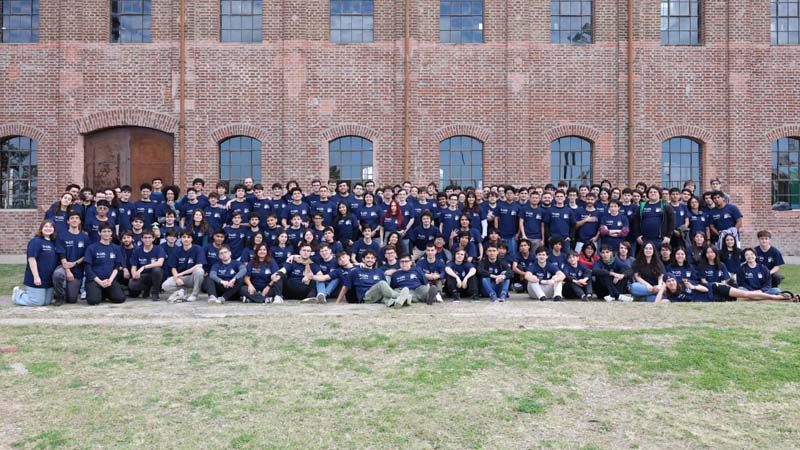
The Training Camp is a two-week program where students from different universities train in competitive programming. Each day includes classes, five-hour mock competitions, and opportunities for academic and social interaction.“It’s like an intensive course where the common theme is problem-solving,”Joaquín explained.
First Steps and Motivations
The three students began competing more than two years ago, after discovering the school’s programming contest. Since then, they’ve formed a steady team and decided to participate in international camps. “We wanted to improve our skills and learn from those who had already made it to the world championships. The first time, we were shocked by how demanding it was, but we came back better prepared and more motivated,” Joaquín recalled.
Training Challenges
The pace of the training camps is demanding: daily sessions of study and competitions that test mental endurance and teamwork. “At first, we had a hard time maintaining our performance after the first few hours, but this year we feel like we’ve made progress: we were able to solve problems during the fourth and fifth hours of the competition,” said Juan Manuel.
Technical and personal lessons learned
In addition to honing advanced algorithms and problem-solving techniques, students emphasize the importance of soft skills.
“Communication and organization are just as important as the technical aspects. Over time, we’ve come to understand how each person thinks, and that gives us a huge advantage as a team.”
A global community
The students highlight the sense of community that these gatherings foster. “We all share the same passion for programming. During the competitions, each team works on its own, but once we’re done, we’re friends again—we exchange ideas and learn from one another,” Joaquín said.
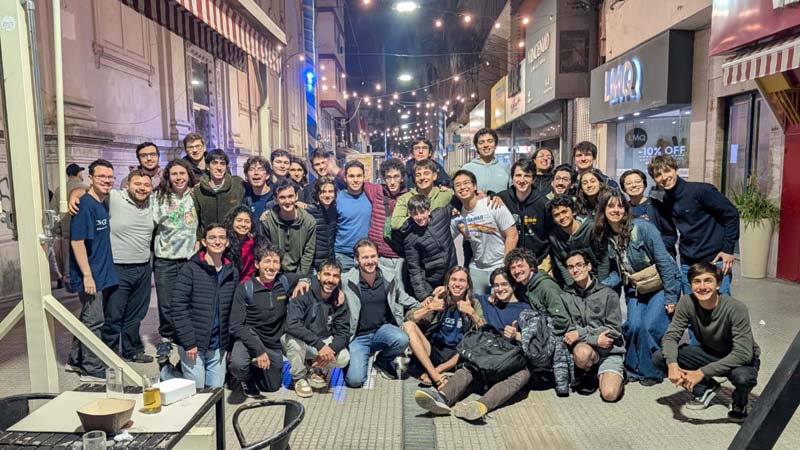
Winners on ORT
The team won first place in the ORT Programming Contest, which will allow them to represent the university in Argentina.
“Competing in ORT is the first step in a cycle that continues with the regionals, the super-regionals, and, finally, the world championships,” Juan Manuel explained.
Outlook and Future
The team’s goal is clear: to keep moving forward until they reach the International Programming Contest. “These competitions are crucial because they prepare us academically, but they also open professional doors for us,” Nahuel noted.
The students explain that the competitions serve as a showcase for talent: they provide an opportunity to practice solving complex problems under pressure and as part of a team—exactly what major tech companies are looking for.
“Many international companies sponsor the training camps and recruit participants directly. We know of colleagues who now work at Google, Microsoft, Amazon, or Huawei thanks to these opportunities,” said Juan Manuel.
For them, the experience not only improves their technical skills in algorithms and computer science, but also equips them with transferable skills for the workplace. “Solving a competitive programming problem is very similar to a coding challenge—the kind of technical test companies use to hire engineers. Having trained in this environment gives us a real advantage, ”Joaquín summarized.