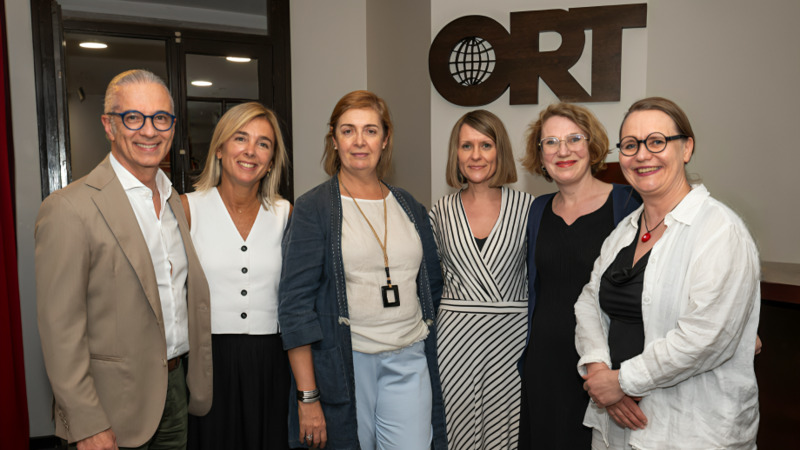
On March 25, 2025, the School of Architecture and the Institute of Education at Universidad ORT Uruguay the seminar “Spaces that Foster Learning in Finland,” which brought together specialists from Finland and Uruguay for an academic gathering focused on the relationship between space, learning, and well-being.
The event took place in the Auditorium of the School of Communication and was part of the activities of the international project MultiLED – Multidisciplinary Perspectives on Learning Environment Design, approved by the Team Finland Knowledge (TFK) program of the Finnish National Agency for Education.
International Research in Educational Architecture
The opening of this seminar on educational architecture was led by Dr. Andrea Tejera Techera, academic coordinator of the Institute of Education and researcher with the National System of Researchers (SNI), who thanked the authorities, teachers, and specialists for attending.
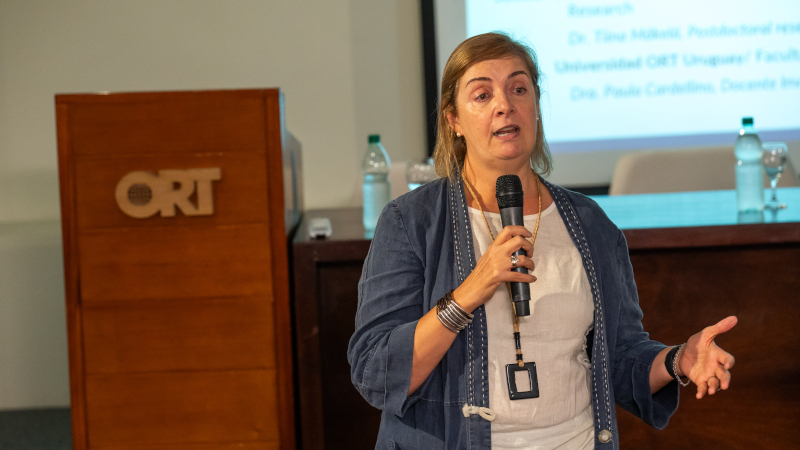
In his remarks, he emphasized the relevance of the issue to the Uruguayan context:
“It’s an issue that concerns us deeply and occupies our thoughts in Uruguay, but it’s not one we talk about very often. We have a lot of work to do in this area and need to incorporate it into our practices and reflections.”
The seminar was part of the project MultiLEDproject, led in Uruguay by Dr. Paula Cardellino, Architect, a faculty member and researcher at the School of Architecture at Universidad ORT Uruguay in Universidad ORT Uruguay a researcher with the SNI. Cardellino is part of the coordination team alongside Dr. Pirjo Sanaksenaho, dean of the Department of Architecture at Aalto University, and Dr. Tiina Mäkelä, a postdoctoral researcher at the Finnish Institute for Educational Research (University of Jyväskylä).
- You might also be interested in reading the article: “Project by Dr. Paula Cardellino, Architect, Approved by Finland’s TFK Program”
Project: Multidisciplinary Perspectives on Learning Environment Design
The MultiLED project represents a strategic collaboration between three institutions of higher education: Aalto University, the University of Jyväskylä, and Universidad ORT Uruguay. As Cardellino explained, it aims to foster an international and multidisciplinary perspective on the design of learning environments (Learning Environments, LE), integrating architecture, pedagogy, and technology. Activities include faculty visits, hybrid seminars, the development of open online materials, and the documentation of best practices, both in Finland and Uruguay.
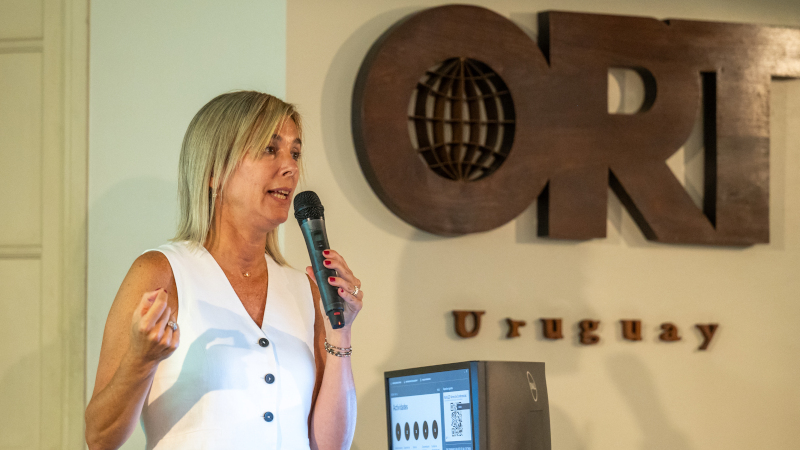
As part of this project, Dr. Cardellino made an academic visit to Finland from May 20 to June 4, 2024, participating in seminars at Aalto University and the University of Jyväskylä, and visiting leading educational institutions. In this regard, Cardellino stated:
“The idea is to work toward this multidisciplinary approach—this shared vision between us, the architects and designers, and the users, who are the ones who truly make the most of this space.”
This initiative is part of a broader international agenda led by the researcher at ORT, which is aligned with her lines of research on collaborative design and post-occupancy evaluation of educational infrastructure.
- You might also be interested in reading: “Architecture and Education: Spaces Should Allow Us to Learn from Each Other’s Experiences”
Learning to Design Spaces for Education
The Architect Pirjo Sanaksenaho curated the first exhibition. An associate professor at Aalto University and a partner at Sanaksenaho Architects in Helsinki, she presented the Finnish experience in architect training and in the design of schools that meet new educational demands.
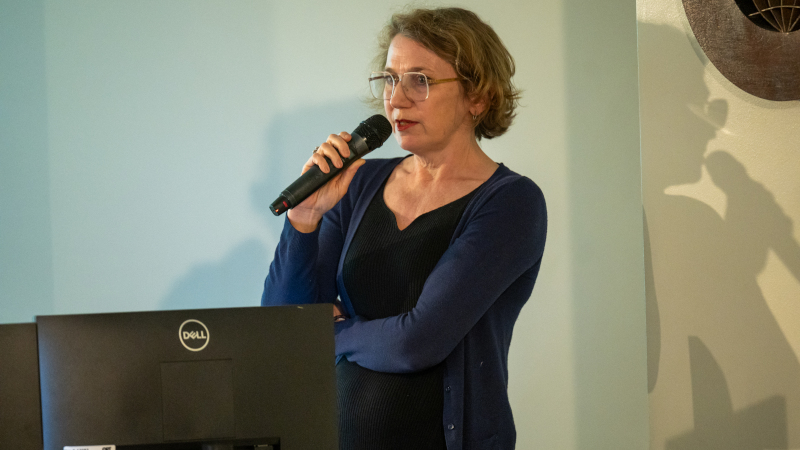
In this regard, Architect Sanaksenaho explained:
“Our master’s students develop projects that often involve schools. The goal is to teach them how to design adaptable spaces, because ideas about how we learn change over time.”
Sanaksenaho presented various examples of student projects carried out at Aalto University, including modular schools built from shipping containers or steel structures, wooden designs with indoor gardens, and models of adaptable “learning cells.”
- You might also be interested in reading: “Why Studying Wood Architecture and Construction in 2025 Will Transform Your Career”
Spaces for special needs and learning gardens
One particularly notable example was that of the temporary pavilion designed for the Finlandia Hall, conceived as a demountable structure that could later be converted into a middle school. On this point, Sanaksenaho reflected:
“School buildings have a lifespan of 50 to 100 years. But teaching methods change much more quickly. That’s why new spaces must be flexible, versatile, adaptable, scalable, and diverse”.
Another project mentioned was that of one of the University of Turku’s schools in Luolavuori, developed as part of the MultiLED project, in which it was proposed to replace a modern building from the 1960s with a school based on learning cells, indoor gardens, and spatial flexibility, designed to integrate both with the community and with new pedagogical approaches.
“The concept of a learning cell allows for the combination of spaces for small groups, shared workspaces, and integrated circulation areas, creating a fluid and adaptable environment,” explained Sanaksenaho.
- You might also be interested in reading: “Guillermo Bautista: ‘Space Educates’”
Learning environments that promote well-being
The second presentation was given by Dr. Tiina Mäkelä, a researcher with the Innovative Learning Environments group at the Finnish Institute for Educational Research (University of Jyväskylä), whose research combines technological, physical, and psychosocial dimensions of the school environment.
“We design spaces that promote physical, cognitive, emotional, and social well-being, as well as learning in all its forms,” said Dr. Mäkelä.
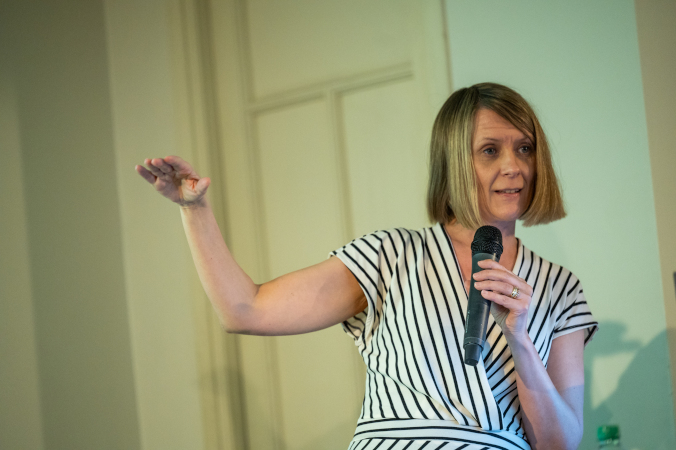
Among the topics discussed, particular emphasis was placed on the importance of flexible learning spacesthat can adapt to different educational dynamics—individual, collaborative, or playful—depending on the needs of the moment.
- You might also be interested in reading: “Architecture and Mental Health: How the Design of Spaces Impacts Our Psychology”
The Finnish Case and Transversal Skills
Mäkelä situated his research within the framework of Finland’s National Curriculum for Basic Education, in effect since 2016, which was developed collaboratively by educators and specialists, not by political authorities, placing special emphasis on the fact that:
“It’s not the ministry, it’s not the politicians, but the educators who do the designing. And that’s important.”
This framework places a strong emphasis on the development of cross-cutting competencies, such as critical thinking, self-care, soft skills for daily life and entrepreneurship, working holistically and across the board on students’ cognitive, physical, emotional, and social development. He also emphasized:
“The word ‘well-being’ appears more than 200 times in our curriculum. There must be a reason for that.”
He also explained that in Finland, all schools must carry out at least one multidisciplinary project per year, integrating subjects such as sustainability, teamwork, artistic expression, and digital literacy.
- You might also be interested in reading: “AI Tools for Architects and Designers”
Types of spaces designed to foster cross-disciplinary skills
Based on a study conducted in 15 Finnish schools, funded by the National Agency for Education and the Finnish Ministry of Education, the research conducted by the team of which Mäkelä is a member identified what types of spaces support the development of these cross-curricular competencies. Among the main spaces mentioned, the following stood out:
- Spaces for collaboration and meetings: For work in large or integrated groups, such as classrooms connected by movable partitions.
- Spaces for hands-on learning: Home economics workshops, science labs, and craft and art studios.
- Spaces that foster cultural engagement and expression: tiered performance areas, multiliteracy programs, display walls for student projects, and open libraries.
- Spaces for independent work: Formal and informal spaces where students can work individually or in small groups.
- Spaces for learning about well-being: Relaxation areas, quiet spaces, opportunities to connect with nature, and integrated physical activity zones.
- Opportunities for developing environmental skills and building a sustainable future: Incorporating nature into design, recycling practices, and the use of sustainable materials.
- Multipurpose spaces: Adaptable and easy to modify, tailored to learning needs.
Finally, among other things, Mäkelä concluded:
“Designing a school environment today means thinking about flexibility: a single space must be able to adapt to individual, collaborative, creative, or relaxation activities, depending on the needs of the moment.”
Designing for Growth: Architecture That Fosters Learning from an Early Age
The latest exhibition was presented by Architect Claudia Auer, a professor at Aalto University and a partner at Auer & Sandås Architects Ltd. Auer shared a selection of projects designed by her firm—including kindergartens, elementary schools, and university spaces—that clearly exemplify school design in Finland, where identity, materiality, and pedagogy come together to create innovative learning spaces.
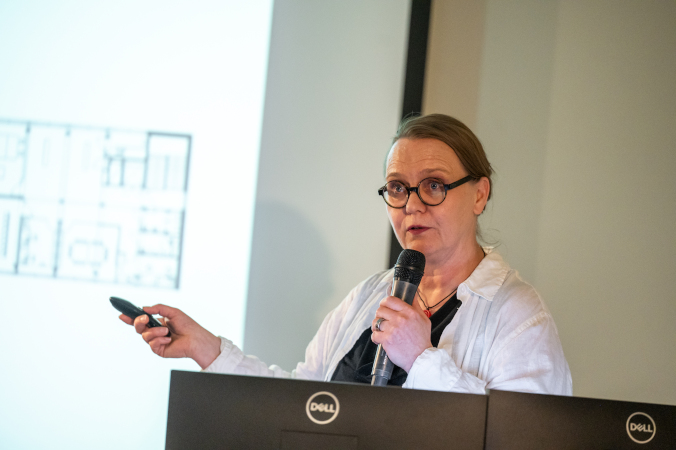
This vision is consistent with a profound understanding of the pedagogy of space, in which architecture becomes an active agent in the educational process, stimulating holistic development through sensory, emotional, and cognitive experiences.
“Learning means taking on new challenges. That’s why the space should encourage communication, create a sense of presence, and also inspire joy and confidence,” Auer explained.
- You might also be interested in reading: “8 Women Who Transformed Architecture, Interior Design, and Landscape Architecture”
Schools as Homes: Identity and Connection to Nature
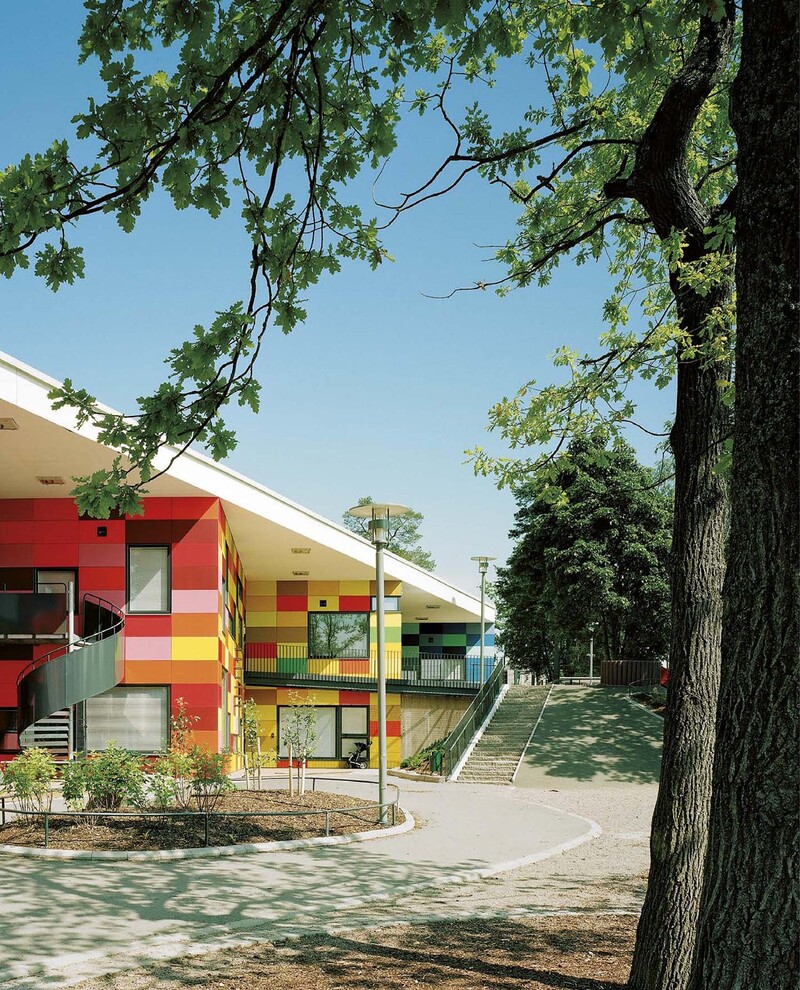
One of the central themes of his presentation was the concept of school as a home, where architecture should help foster a sense of belonging, safety, and warmth. Auer illustrated this approach with the design of the Tuomarila preschool, a colorful, multifunctional building surrounded by nature, located in the city of Espoo.
The garden was conceived as an “small-scale educational village,” where each group of children has its own space clearly identified by colors, materials, and proportions adapted to their bodies and routines.
These types of design decisions are based on a philosophy of user-centered architecture, where the design adapts to children’s actual needs, respecting their scale, their rhythms, and the way they inhabit the environment. “Scale is key: when a child enters a classroom, they must be able to see, understand, and make the space their own,” explained Auer.
This project also incorporated sustainable features such as natural light, high-quality materials, and passive climate control systems, without losing sight of the playful and expressive aspects. The outdoor spaces were designed as extensions of the classroom, allowing learning to take place outdoors as well, in interaction with the environment.
This integration of interior space and nature is based on the principles of biophilic design, which promote an emotional connection with the environment and the students’ mental and physical well-being.
- You might also be interested in reading: “The Brutalist: Brutalist cinema and architecture as symbols of resistance and identity reconstruction”
University Architecture: Environments That Stimulate Creativity
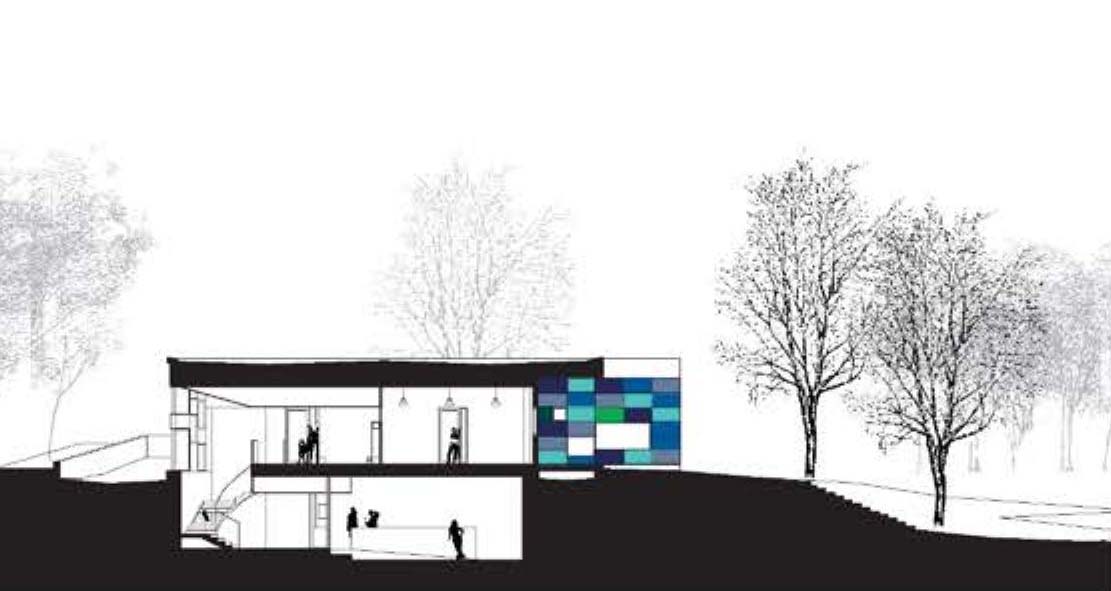 Auer also discussed his experience designing spaces for architecture schools, such as the new building for the School of Architecture at the University of Oulu. There, a modular and tranquil design was proposed, one that would harmonize with the scale of the historic campus, featuring a tree-lined central courtyard that serves as the heart of the complex.
“We wanted an inspiring and serene atmosphere. Small-scale spaces, natural light, and honest materials create an environment that fosters concentration and introspection,”, Auer noted.
Another example was the renovation of a 1960s building at Aalto University, which was transformed into the School of Architecture’s headquarters. The project was organized into two wings: one dedicated to hands-on construction, with workshops and machinery, and the other geared toward reflective study. Both are connected by a “color bath,” a corridor that acts as a sensory transition between modes of learning. These kinds of design elements—linked to color, light, and circulation—reveal how architecture can actively engage with pedagogy.
- You might also be interested in reading: “New Approaches to Sustainability in Urban Architecture”
Open schools, vibrant communities
Finally, Auer showed how school design in Finland has evolved toward multifunctional and community-oriented models. Today, school buildings offer services shared with the community: classrooms that transform into cultural spaces in the evenings, cafeterias that function as community centers, or libraries open to the neighborhood. In this regard, he concluded:
“Designing for learning no longer means thinking only about children. It means creating social infrastructures that are vibrant, accessible, sustainable, and deeply human”.
Are you interested in educational architecture?
Learn about the course "The Future of Educational Architecture"
Architecture and Education: A Shared Agenda
The seminar “Spaces that Foster Learning in Finland” was a key opportunity to highlight the progress of the MultiLED project and to deepen academic exchange between Finland and Uruguay in architecture and education.
Watch the video recording of the seminar, featuring the complete audio-visual recording:
https://youtu.be/JX4GEuEUTdo?si=aCU1HIIQxVTY-qiJ
The exhibitions provided insight into how educational spaces can be designed from a holistic perspectivethat integrates pedagogical, architectural, technological, and social dimensions.
The participation of Universidad ORT Uruguay, through its School of Architecture and the Institute of Education, reaffirms its commitment to the production of applied knowledge, educational innovation, and international cooperation.
In particular, the Dr. Paula Cardellino, as the faculty member in charge of the project at ORT, has established a line of work recognized for its rigorous approach and its strategic contribution to the development of sustainable educational infrastructure, based on evidence and aimed at improving well-being and the quality of learning.
This commitment also extends to the creation of innovative educational environmentscapable of integrating architecture, technology, pedagogy, and community into more inclusive, dynamic, and sustainable learning experiences.