What was your experience like as a student in ORT's Bachelor of Arts in Economics program?
It was a wonderful experience. To this day, I’m still in touch with professors from the Economics program, and I keep in touch with my former classmates. I have fond memories of the classrooms, the professors, the study groups, and the warm welcome I received there.
At the time, the Economics program had a small class size compared to more traditional programs in Business Administration or Public Accounting, so the rapport between professors and students was very strong.
My first contact with ORT was with the coordinator of the Economics program. At the time, I had only a vague idea of what pursuing a career in economics might entail. We had a meeting that provided me with some helpful guidance. Without a doubt, those experiences played a very positive role in shaping what came next.
Today I realize it was a good decision, since it’s a very broad field that can encompass a wide range of work and offers the flexibility to adapt to different situations.
What has your career path been like?
My first formal job came during my freshman year of college. I found it through the university’s job portal—it was an administrative position at ORT Centro—which allowed me to gain work experience.
I spent three years working in the finance department of an offshore brokerage firm. I then joined an online gaming and casino startup, where I worked for 10 years as Country Manager at the company’s offices in a free trade zone in Montevideo.
In late 2019, I decided to move to Europe in search of new opportunities. I started out working on a project developed by Milestone Tech at Facebook’s offices in Dublin. I was later promoted to team lead, overseeing operations for that same project.
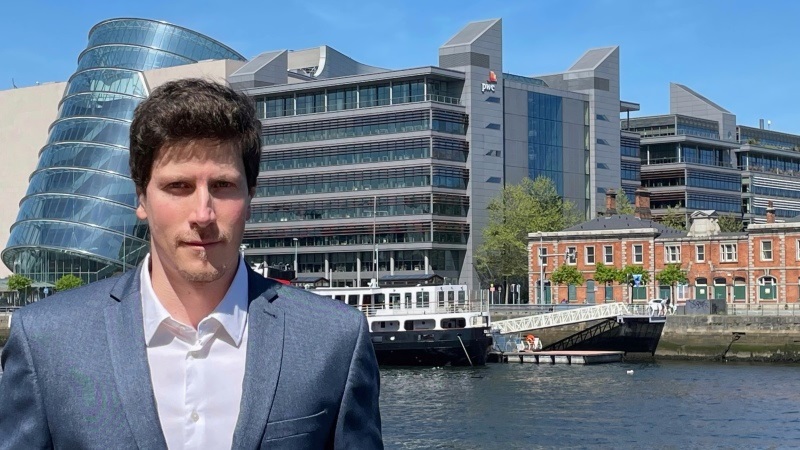
Since 2021, I have been working as a Senior Associate at PricewaterhouseCoopers Ireland, leading the implementation and development of the firm’s Learning & Development department’s operational plans.
How did ORT prepare you for the challenges you've faced?
I believe that ORT has developed an academic program that, in addition to covering the field of study, addresses certain aspects that professionals will encounter in their daily lives.
Assignment deadlines, group work, and presentations in front of a class. All of these are part of the professional world, and the university actively encourages them.
These qualities ultimately translate into resilience, frustration tolerance, and other traits, and help shape the future professional’s personality, commitment, work ethic, and respect for others’ perspectives.
College helped me by providing me with tools and values that are very useful in both my professional and personal life. After that, it all comes down to what you do with those tools and the dedication you bring to the path you choose to follow in life.
How did the idea of continuing your career in Ireland come about?
I had visited Ireland in 2010 and got the impression that it would be a great place to study, but at the time I had to rule it out for professional and personal reasons.
In 2019, the company where I worked was severely impacted by the region’s exchange rate situation, so it decided to withdraw its brand from Uruguay, leading to the closure of its offices. I then began exploring academic opportunities in various European countries.
Ireland offered the most favorable immigration framework among my options; it had a strong job market, and at the same time, I could further advance my career with a new college degree—something I already saw as a necessity.
My bachelor's degree thus became my ticket to the MBA program, and the master's degree subsequently became another stepping stone to a more specialized job market.
What are your current professional challenges as a Senior Associate at PwC Ireland?
It is a firm with high standards of professionalism. In Ireland, in particular, it has ties to leading global companies, as most multinationals have their headquarters there, where they benefit from a very attractive tax environment.
For me personally, it meant adapting to a different work ethic and a different pace of life. The times have changed in such a competitive job market, and PwC works to keep up with that pace. You see it, for example, in everything related to technology: there’s a need to undergo training every six months on a new system or changes to procedures.
On the other hand, it’s also challenging to manage such a diverse team, where I’m the only Spanish speaker. You learn from different perspectives and ways of working, and that’s always enriching. At the same time, those differences force you to see things from their point of view. That’s always demanding and challenging, since you’re used to your own ways of doing things.
The biggest challenges involve unforeseen issues in projects that could jeopardize meeting deadlines, or the way information is presented or work methodologies are implemented.
In our department, we’re already planning projects several years in advance, so there’s no room for improvisation—everything is carefully evaluated. Keeping the team motivated is another challenge I face, especially during the pandemic. It hasn’t been easy to cope with lockdowns while keeping productivity up.
I was also appointed as a career coach for some of the more senior team members. This challenges me to maintain certain levels of productivity and demonstrate committed leadership, which in turn allows me to guide, motivate, and set an example for others.
You earned an MBA from Dublin Business School. How does an MBA complement a bachelor’s degree in economics?
The Bachelor's degree in Economics includes a significant number of courses related to mathematics and statistics, so I thought it would be a good idea to combine it with a program that delves deeper into the operational and managerial aspects of the field.
My bachelor's degree in economics honed my analytical skills, provided me with problem-solving tools, and forced me to analyze complex numerical problems that challenge certain areas of thinking.
An MBA teaches a skill: the skill of management, supported by specific techniques. At the same time, it creates opportunities for networking, which arise from working alongside colleagues on a daily basis.
I believe that a bachelor’s degree and a master’s degree will always complement each other, even if they aren’t strictly related, because the time spent pursuing them contributes to a person’s professional and personal development, regardless of the field.
At the same time, a master’s degree serves as a marker when competing in the job market; it shows others that you have been able to complete a project of a certain level of complexity within a given timeframe.
Professional development will become increasingly necessary throughout a person’s life; otherwise, they run the risk of being left behind in the job market.
I think it was a good choice, one that is well complemented not only by the knowledge I’ve gained, but also by the need arising from the fast-paced and uncertain nature of today’s world.