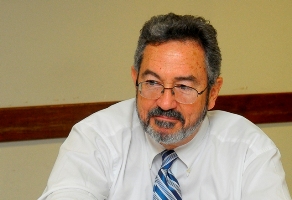
 As part of the accreditation process for the MBA (Master of Business Administration) Universidad ORT Uruguay at Universidad ORT Uruguay AMBA (Association of MBAs), Dr. José de la Torre, a member of the advisory board, spoke in August 2012 about the importance of training in modern management methods.
-You have served as Dean of Florida International University and Director of UCLA’s Center for International Business Education and Research, and you are familiar with business schools around the world. What is the value of an MBA?
-Today, an MBA is almost a commodity, because there has been a massive increase in the number of MBA graduates worldwide. There are now nearly 13,000 MBA programs, and it has become almost a prerequisite for securing high-level positions, especially in international companies. Therefore, it is highly important for the individual. For the country, I believe it is essential today to have people trained in modern management. For the country to progress, it needs well-managed companies that can explore new markets, create new products, and expand abroad—and all of that requires management with the knowledge and skills gained through an MBA program.
-In Uruguay, there are no more than 120 or 130 MBA students per year. Is that a small number relative to the country's population?
-That’s very few. To give you a comparison, in South Florida, where I live, the population is around 4 million, and there are more than 2,500 MBA students in that area. We’re saying that in Uruguay, there are fewer than 10 percent of the MBA students there should be, given the country’s population.
-How does this affect businesses?
-Companies have limited access to personnel trained in modern management techniques, so their performance will be lower than it could be. I’m not saying that an MBA is the only essential training for companies or businesses. There may be people who complete their undergraduate degree in business administration and then go on to train or work at a company and achieve very positive results, but I still think the number of MBAs in Uruguay is very low. It would be important for the country if that number were to grow considerably.
-You are a member of the advisory board for the MBA Universidad ORT Uruguay at Universidad ORT Uruguay. Why is it important to have an advisory board made up of alumni, business leaders, and international academics like yourself?
-I believe it is essential to provide the program’s leadership with a realistic perspective, grounded in the realities of local businesses, while also challenging their direction and decisions. For the program director, having a panel like the one here—composed of eight people who are business executives, highly educated and experienced managers, and a few academics—provides greater capacity to scrutinize a whole range of decisions and make better ones. It is an essential input.
-As a member of the advisory board, how important is research at a business school?
-That is the main reason the school exists: to develop and apply new knowledge. A school that merely brings others’ research into the classroom will lack the dynamism and capacity for change found in a school where faculty members are actively conducting research in the field of management. To me, it is essential and fundamental that faculty members be engaged in research projects.
-Is it important for the country to have an MBA program that is internationally accredited, for example by AMBA? Why?
-That is precisely why the advisory board is so important. International organizations such as AMBA, AACSB International, and EFEBE in Europe—which are the most important accrediting bodies—require schools seeking accreditation to conduct a very thorough self-assessment of their own activities, strengths, and weaknesses. This process leads the faculty to make a series of decisions regarding their performance and their position in the market. It is the equivalent of an ISO process used in industry, such as ISO 9000, etc. What matters is not the conclusion, but the process of questioning how the school operates, how it proceeds, how it develops its staff, and having the ability to compare itself with other leading schools around the world—and, consequently, achieving a positive outcome. It would be an internal review aimed at creating greater value for students.
Accreditation requires you to conduct a self-assessment of your strengths and weaknesses, but at the same time it allows you to compare yourself with other schools that are global leaders. That comparison leads one to be realistic about which areas need improvement in order to aspire to a better standing among leading international schools.
-How did you find the School of Management and Social Sciences compared to business schools in other countries?
-In many respects, its performance metrics are on par with those of the top schools in Latin America and Europe. I work extensively in Europe with schools in Portugal, France, Italy, and Cyprus, and frankly, the metrics I’ve seen regarding various categories of the university’s performance are comparable.
-Which indicators are comparable?
-The percentage of faculty members who hold a doctoral degree, the qualifications of the faculty, the number of students, or the students' educational backgrounds.
-In what direction are business schools around the world evolving?
-Today, it is widely accepted that an MBA program must include two or three key elements, and I believe these are being met here. The first is international awareness; business is becoming increasingly global, and it is impossible to have a modern, effective MBA program without a significant international component. Second, entrepreneurship: starting companies, being an entrepreneur. Having the ability to develop new products and new ideas is fundamental to a country’s growth and to economic growth, and it is an aspect of MBA education that we are increasingly emphasizing. And the third is a sense of social responsibility, personal ethics, and integrity in decisions regarding society and morality. We have seen very serious failures in the business world in recent years, with individuals from large international companies making decisions that lack ethical standards or integrity, and there has been significant criticism of the schools that educated these individuals without instilling that knowledge or foundation. Now there is a strong emphasis on this aspect.
-Do you think the last global economic crisis was an ethical crisis that spilled over into the economy?
-Yes.
-Do you think the lesson was learned?
-We’ll know if we’ve learned anything in 20 years, by which time the next crisis may no longer exist.