Nasdaq, the New York Stock Exchange (United States) favored by tech companies, has recently begun to gain recognition in our country. This was largely due to images circulating on social media of the Uruguayan flag appearing on screens in Times Square, following dLocal’s IPO.
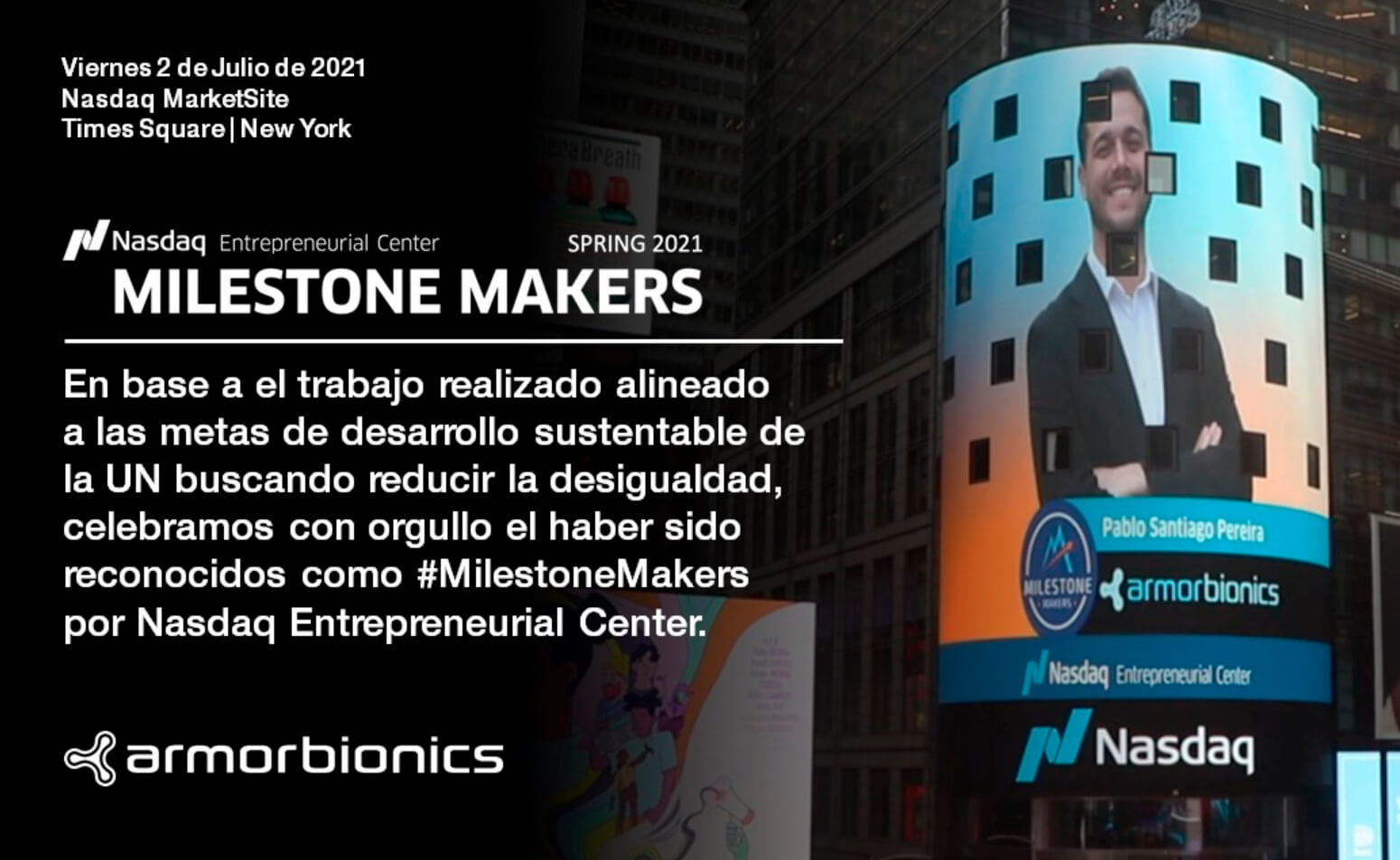
The Uruguayan team at dLocal, however, wasn't the only one to make a star appearance on those screens… Pablo Pereira, a graduate of the Master of Business Administration (MBA) at Universidad ORT Uruguay co-founder of Armor Bionics, also saw his photo there following his graduation from the prestigious Milestone Makers program at the Nasdaq Entrepreneurial Center.
This program aims to help a select group of entrepreneurs achieve ambitious goals that will drive the growth of their respective companies. It is typically an in-person program; however, due to the pandemic, Pereira participated remotely in a “revamped” edition: taking advantage of the virtual format and to give Milestone Makers a global reach, the program was aligned with the United Nations (UN) Sustainable Development Goals (SDGs).
In this regard, Armor Bionics, as a company that uses 3D printing for surgical planning, was included in the SDG 10 cohort, which focuses on reducing inequalities.
Now, Pereira and his partner, Bruno Demuro, are using the tools they learned from the successful entrepreneurs at Milestone Makers not only to tackle one of the major problems left in the wake of the pandemic—the backlog of surgeries—but also to gain enough experience so that, in time, they can pass on those same lessons to other young entrepreneurs.
How did you end up participating in the Nasdaq entrepreneurship program?
I received a scholarship from the U.S. Embassy for the Young Leaders of the Americas Initiative (YLAI) program, and one of the things they did was pair us with a CEO of an American startup to exchange experiences. I was paired with Camilla Olson, who is the CEO of a company that uses artificial intelligence for fashion design. Camilla, who is very talented and has many years of experience, had already gone through the Nasdaq program and recommended me. It also so happened that she had J. Ryan Williams as her coach, and he spent two weeks with me in Uruguay, in true reality-show style, for a documentary about startups in different countries called Outside the Valley. Both Camilla and Ryan recommended me for the program; I applied, and—after a very competitive process, because so many people apply—I was accepted.
"At the Nasdaq Entrepreneurial Center, everyone is an experienced entrepreneur who wants to help future entrepreneurs. The entire program is based on a 'pay it forward' mindset—in other words, when you finish the program, you commit to doing for others what others did for you."
If it's a highly competitive process, the program must be very important...
That's right. Nasdaq is the stock exchange where tech companies are listed, and it has also opened an entrepreneurship center in San Francisco. There, they have all the resources and influence that Nasdaq possesses, but they use them to support entrepreneurs. The philosophy there is that with all the problems the world faces, if we all start taking initiative and tackling each of those problems, we’ll have a better world. In other words, they encourage you to identify a problem you or someone close to you has, tackle it, come up with a solution, validate it, and implement it.
That is why Milestone Makers is linked to the UN's SDGs…
Exactly. This program was originally supposed to be in-person, but due to the pandemic, they pivoted and made it global. To do so, they aligned it with the SDGs and are now selecting a cohort for each goal. I was assigned Goal 10, which is about reducing inequalities. In fact, Armor Bionics’ solution is to tackle health inequities.
Was the program entirely online?
Yes, I did it from Uruguay, and it lasted 14 weeks. All my mentors and my coach were in the United States. They’re all entrepreneurs with a lot of experience who want to help future entrepreneurs. The whole program is based on a “pay it forward” mindset—in other words, when you finish the program, you commit to doing for others what others did for you, by mentoring another entrepreneur. Now, for example, I have to send Nasdaq my recommendation for which startup I think should be in the next cohort.
What is the difference between a coach and a mentor?
A coach focuses more on you as a person; they’re almost like a psychologist. Talking to someone—even if they don’t have specific knowledge of your industry—can help you realize certain things; if it happens to be a coach in your industry, as was the case for me, it’s much more valuable.
A mentor, on the other hand, focuses more on your business and on finding a solution. They open up their professional network to you.
What exactly did the program entail? What did you do during those 14 weeks?
The program is called Milestone Makers, and as the name suggests, it involves setting a goal. In the first week, you set a big goal—one that will transform the company—and for the remaining 13 weeks, you focus on achieving that goal.
What goal did you set for yourself with Armor Bionics?
In the case of Armor Bionics, the goal was to optimize the business model for the United States. In other words, to find customers who would say, “This is perfect for me.”
How has the company fared in achieving that goal?
 You may or may not graduate from the program. I graduated (the graduation celebration involves appearing on the famous Nasdaq screens in Times Square, New York). I managed to get in touch with a medical director at one of New York’s largest hospitals. I went there—because I wasn’t making any connections from a distance—met with him, and a 15-minute conversation solved everything. We’re now in the testing phase. The sales processes are extremely long, but we have a lot of potential in the United States.
We’ve already worked with clients in that country, but the issue is that we didn’t know—or weren’t sure—what the optimal business model was for what they’re looking for. So, you might be offering the client something good, but perhaps you’re not doing it in the best way. In the end, we found that ideal offering to make our pitch more compelling when talking to them. Things are going great for us in Latin America. The U.S. is a super competitive market, and this will be key to our growth and development.
What's going on with Uruguay?
In Uruguay, it takes longer. We often get Uruguayan clients referred to us by people abroad, even though they’re “in the same neighborhood.”
And why is that? Does 3D printing in healthcare need more marketing?
 It’s not just us; many Uruguayan entrepreneurs find it harder to sell their products in Uruguay than abroad. The conversations we have in the United States are much more straightforward. Here, it’s hard to get companies—or, in this case, hospitals—on board. It’s a matter of getting on board and adopting technology. There are many surgeons who have been operating the same way for 20 years and want to keep doing it that way.
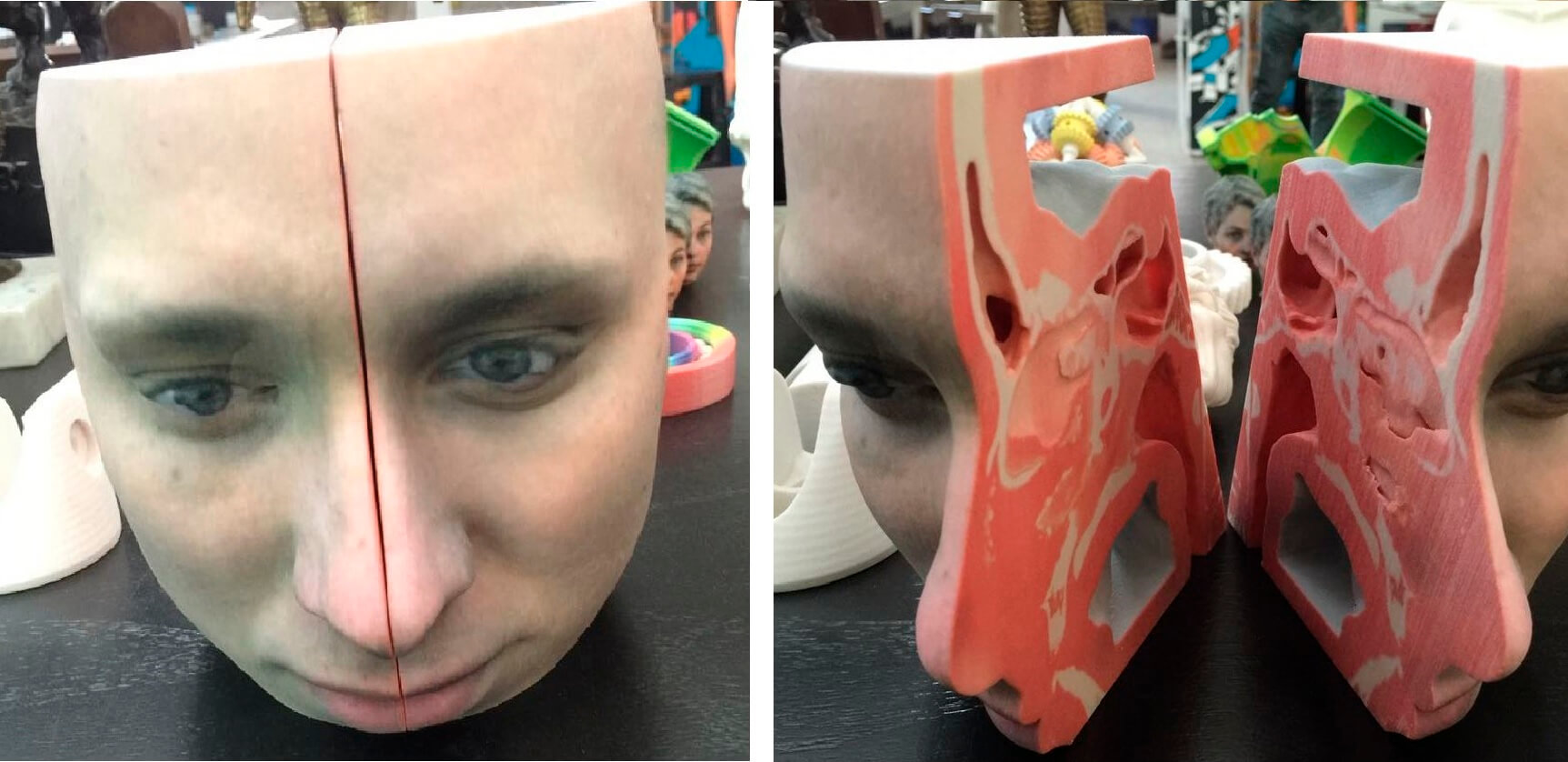
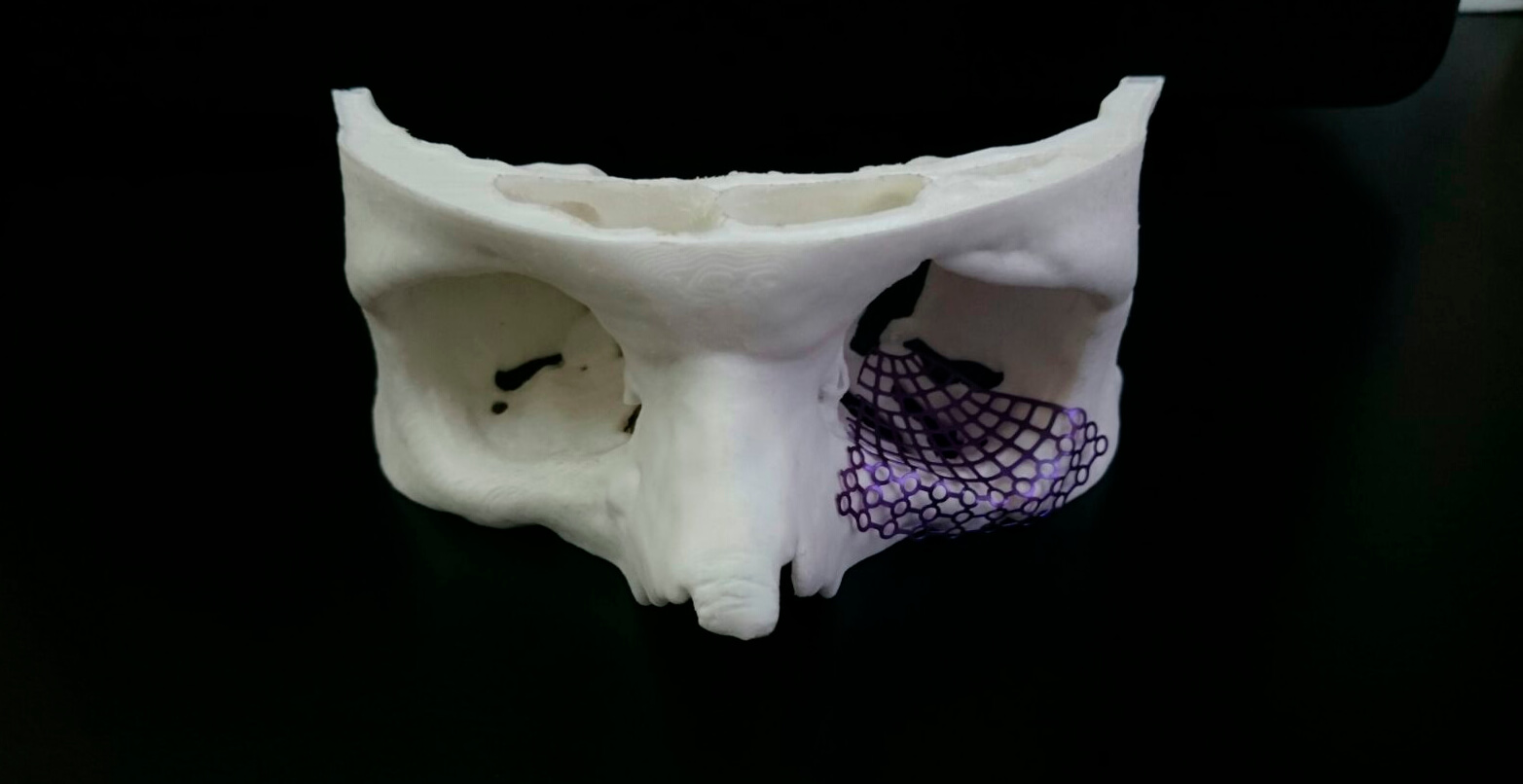
It’s very rare to attend a medical conference without hearing a presentation on 3D models for surgical planning. The big problem there is that hospitals need to make a massive investment to purchase printers and software. That’s why we offer all of that as a service—because we saw that while some hospitals have massive budgets, many others simply can’t afford it. How do they manage in Africa or Latin America? That’s why we provide it as a service: we have the printers; we have everything. We give the surgeon the 3D model for that surgery without requiring them to make the entire investment.
In any case, right now, rather than focusing on why it’s so hard to make progress in Uruguay—although that’s changing, because we’re getting more calls these days—we’re focused on what the post-pandemic future will look like.
Why is that?
The pandemic caused a massive backlog of surgeries. For example, in Uruguay alone, there are 55,000 surgeries waiting to be performed. Precisely because a surgeon has the 3D model in hand and can practice and plan the surgery using it, when the time comes to actually perform the procedure on the patient, they can do so much more quickly and efficiently.
The way to perform more surgeries is by shortening the duration of each one. Studies in Uruguay indicate that surgeons will have to perform 50% more surgeries over the course of a year to catch up. In the United States, for example, there is a backlog of one million spinal surgeries.
It's happening all over the world. That's why, today, our focus is on getting everything ready for the surge in cases that will come as the pandemic begins to subside and the situation returns to normal.
"In Uruguay, there are 55,000 surgeries on the backlog. When a surgeon has a 3D model in hand and uses it to practice and plan the surgery, they can perform the actual procedure on the patient much more quickly."
As an entrepreneur, what are the key tools and concepts you value most about the Milestone Makers program?
The shift in mindset regarding mentoring. Here, in Latin American startups, we don’t tend to be as open as they are in the United States. Over there, you have ten mentors and you open up your company to them; you tell them what you’re working on and get feedback. Mentors don’t ask for anything in return. That way of working and that “pay it forward” concept are among the things that changed me the most—that idea of saying, “I received this,” and wanting to help another entrepreneur down the line in the same way.
Another lesson I took away from the program is the importance of focusing on a specific goal. In Uruguay, it’s very common for directors and managers to be constantly putting out fires instead of thinking about the future. That happens in hospitals—you tell them, “I have this solution,” and they say, “I can’t, I’m too busy with this other thing,” and it’s true. But sometimes you have to distinguish between what’s urgent and what’s important.
The program helped me realize that by focusing on one specific thing—and only that—for a set period of time, you can achieve your goals.