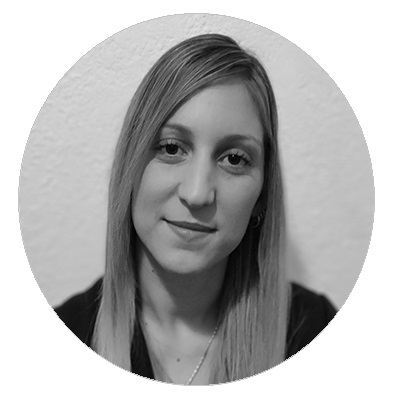
 She has held a tenured teaching position since 2015 at an A.PR.EN.D.E.R. school (Priority Attention in Environments with Relative Structural Difficulties) located in the Metropolitan Area. She has also worked as a teacher at a standard urban school, a rural (multigrade) school, and as a Spanish language teacher at two high schools in the interior of the country.
In the midst of the pandemic, what was it like to defend your thesis online?
It was a positive experience, as it encouraged us to overcome certain barriers related to the use of technology and the virtual environment. The presentation proceeded smoothly, and clear and precise guidelines were established regarding its content and organization.
The difference lies in the method of delivery. I believe we need to overcome our fears regarding the online format, as questions arise prior to the defense regarding the functionality of the access device, the platform, and its proper use, as well as connectivity.
I think this last point is the one that causes the most uncertainty—or at least, that’s the case for me. The reason is that, since I live in a small town in the interior of the country, difficulties sometimes arise that aren’t resolved immediately, a situation that is further complicated by the public health emergency.
I see the main advantage as being that it’s very important for those of us who live in the interior of the country—in my case, 80 kilometers from Montevideo—since it eliminates travel time and waiting.
I think the challenge lies in adapting to the use of technology, since we’re used to feeling more secure in face-to-face settings—which may be due to our more traditional educational background. However, the entire master’s program prepared us to use digital media competently, so I expected this consistency in the final presentation—this break with convention, this innovation.
What was it like to finish your final project under those circumstances? Did it change the process you had been following throughout the semester in any way?
In my case, I continued working as usual. The process, which I was already carrying out independently, remained unchanged, with the consistent support of my advisor, who was always available.
Personally, I had less free time to work on the project, since the suspension of classes in elementary school required more work than usual.
I was born and raised in a rural area, an environment where I learned a great deal, but one that has its limitations when it comes to access to education. In other words, the opportunities for learning both inside and outside of school are not the same as in urban areas
What motivated you to continue your education and training?
My motivation comes from my desire to better myself and the belief that this is achieved through education. Ever since I was little, I enjoyed studying and expanding my knowledge through the books we had at home, since we didn’t have internet access. I attended a rural school and later went on to high school, an opportunity my family provided me with, since in our area other classmates stayed behind to work in the fields and didn’t continue their studies—something viewed “positively” there.
After finishing high school and ruling out various career paths, I decided to pursue a degree in education at a teacher-training college that was relatively close by, since, for financial and logistical reasons, it was the most feasible option for me to pursue higher education. I was also drawn to the field because I was familiar with it firsthand: my mother is a teacher.
At that IFD, it was decided to hold a conference attended by various professionals, including individuals with master’s degrees in different fields. It was there that I resolved that, once I completed my initial training, I would continue my professional development. Later, the opportunity arose to apply for one of the scholarships that ORT University awards to ANEP; I was able to secure it, and without it, I would not have been able to pursue this training.
What have you learned, or what is the most valuable insight you’ve gained from the graduate program?
It’s a high-level program, but it requires a lot of effort, time, and dedication throughout the learning process. I think everything I’ve learned has been valuable, since all that knowledge comes together in what I’m able to do.
I would also like to highlight the aspects related to the assessment of training needs and the use of its results as key factors in the decisions made when planning training initiatives.
Above all, I value the research skills we develop throughout the master’s program
In your work, what aspect do you think you’ll be able to improve or enhance as a result of completing your master’s degree?
I can’t directly apply what I’ve learned to my work, but it has influenced my ability to analyze and make changes to my teaching practices. It has also expanded my opportunities to contribute both theoretically and practically, which has been of interest to the teaching community I belong to.