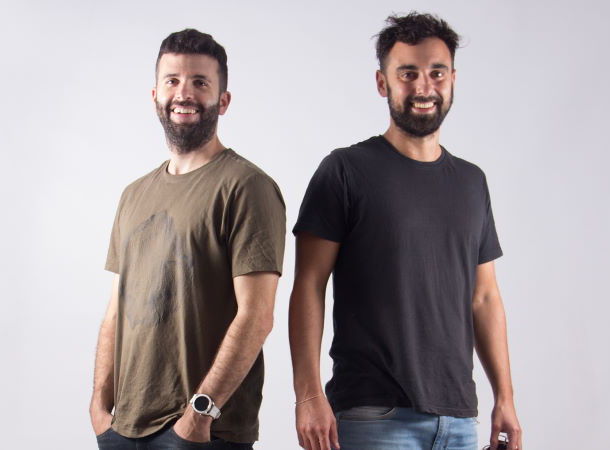
Nicolás Noblía holds a bachelor’s degree in Industrial Design from Universidad ORT Uruguay, where he currently teaches at the School of Design. He is co-director and creative director of the Elemento studio, where they strive to create “products with soul.”
Today, after undergoing several changes, he explained that Elemento has two main areas of focus:
- Our Product Design service, primarily focused on furniture, is aimed at industries looking to expand or innovate their product lines. “In this area, we work extensively with the Brazilian market, which has a very high product turnover rate, meaning they are constantly in need of new designs to add to their catalog.”
- At the same time, with a greater focus on companies in the local market, they offer a Strategic Innovation service. “Basically, we take a comprehensive approach to business models and generate ideas to help companies reinvent themselves, adapting to new market demands and consumer trends that, as we understand it, influence every sector. This is an area we never imagined we’d get involved in, but we later realized that the designer’s perspective—which is very focused on creating new and better user experiences—makes for an ideal fit for the task.”
The Keys to Good Furniture Design
Noblía asserts that “if an object successfully combines these four elements, it has a good chance of being a memorable design.”
-
The function
Generally speaking, we don’t start by wanting to design a specific product; instead, we begin with real-life situations, and from there, we look for solutions that simplify or enhance the user experience—solutions that make their lives easier.
Why do I say “generally”? On other occasions, we respond to a specific request from a company where we don’t have much leeway, but when it’s a more open-ended process, we don’t know what kind of product we’ll end up creating until the development has progressed quite a bit.
-
Production feasibility
It is essential to understand the technical capabilities a company has for carrying out a project. There is no point in me creating a beautiful design if it goes beyond what the company is capable of doing.
At the same time, and especially given the market segment we are targeting, we aim for the solution to be not only viable but also simple, since complicating production processes has a direct impact on costs and, consequently, on the product’s chances of ultimately reaching the market.
-
Optimize costs
This is in line with the goal of entering the market. It involves considering how the product will be transported—which may mean designing it to be disassembled—as well as optimizing materials, minimizing waste, and so on.
-
A story to create
This is something that defines Estudio Elemento. We don’t want to create products that lack soul; we want to infuse them with a certain poetry so that, as users explore our products, they discover a wealth of details that give each piece its unique identity.
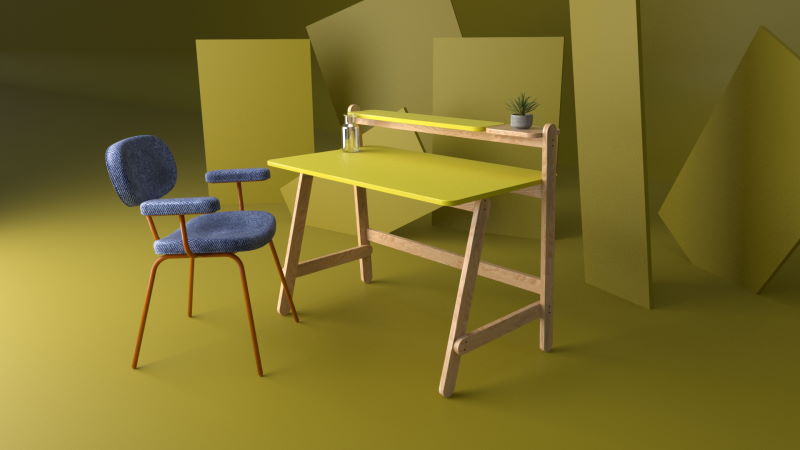
It is an approach that also helps us justify our design choices for each project; for example, we have products inspired by architectural imagery, urban warfare scenarios, and objects that reference scenes from Bauhaus works.
Tips for a young designer
“There’s no magic formula—or at least we don’t have one,” the designer admits, but he does mention a few things that proved helpful in his experience.
-
Learn about the contest
This is essential for understanding what the competition’s goals are. “Some competitions are more conceptual, others focus on products that are more easily commercialized, and there are countless other variations.” He recommends reviewing past editions, looking at the winning products, examining the jury and its composition, and so on.
-
Create products that make an impact
When evaluating entries, the jury reviews hundreds or thousands of submissions, Noblía notes. “There’s definitely an initial screening process where they select the entries with the greatest visual impact, without even reading much about the concept.” If an entry passes the initial screening, the jury will then review the concept.
-
Telling a good story
“It’s important to know that people process information better when it’s presented as a story.” A good story, the designer argues, helps people remember things better: “If we create a narrative behind the product, it will be better remembered and its impact will be much deeper.”
Contests as an opportunity
Nicolás Noblía won his first international competition in 2014, with his "Frans" bench at Salão Design, alongside his colleague Andrés Espina.
“Perhaps that’s where it comes from—and from all the wonderful experiences that competition gave us—that we have such a deep affection for them.” That year, he said, led to many connections that were essential in helping us understand how the industry works and all its intricacies. “When we went to the ceremony, we met businesspeople, colleagues from both Uruguay and Brazil, and people in the design field; they were key to our success in entering the market the way we did.”
The Shanghai Ottoman sofa—inspired by Chinese architecture—by Estudio Elemento won an award at the first edition of the Vero De Design competition. “When we traveled to the awards ceremony, we never imagined that the story would unfold in such a way that today, four years later, we would have a store for the brand here in Uruguay and, in turn, be collaborating more and more actively in the brand’s overall decisions on an international level.”
“On that trip,” Noblía said, “it was the first time we saw the brand’s products in person. “We were very impressed and discovered a concept quite different from what we were used to seeing. That’s why, some time later, we decided to explore the feasibility of bringing that brand—with such a fresh concept—to Uruguay. Fortunately, after a tremendous amount of effort from everyone, we succeeded.”
Participating in competitions is undoubtedly a great way to showcase your work. If you know how to make the most of the opportunity, it can be a real way to gain access to markets or projects that you might not have even imagined before.
The Vero de Design competition promises to include the winning products in the Veromobili catalog, meaning they will go on sale in a massive market like Brazil. Noblía points out that São Paulo, where Veromobili has a showroom, has a population of over 40 million.
“Plus, it serves as a gateway to the brand; that’s how it was for us.” After that initial contact, they established a direct line of communication to send more design ideas, which were gradually incorporated into Vero’s product catalog.
The deadline for submitting entries to the fourth edition of the Vero De Design competition is June 24. The competition calls for the design of a product or product line to be included in the Veromobili catalog.
On Thursday, May 13, Noblía, along with Granotich and two colleagues from Veromobili, gave a talk on E-Design for furniture, during which they provided details about the Vero De Design competition.
https://www.youtube.com/watch?v=PWuM9ezp2T0