Schools, high schools, universities, stores, theaters, movie theaters, airports, and closed borders. The COVID-19 pandemic caused many doors to close. However, it also led to some others opening and brought people a little closer together.
In the first half of 2021, two international students decided to complete their graduate internships at the Institute of Education at Universidad ORT Uruguay.
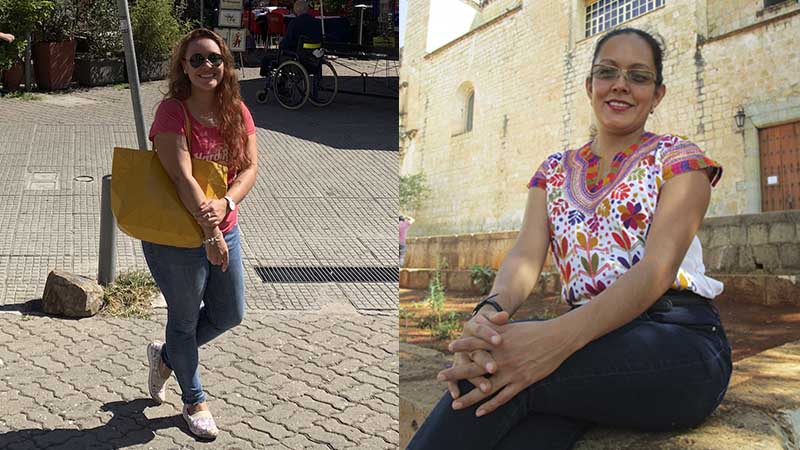
Estíbaliz Pérez—a Costa Rican student in the Doctor of Education program at the Autonomous University of Madrid—and Zaunay Rivera—a Mexican student in the Master of Management and Development program at the National Polytechnic Institute—explained why they chose to do their internship here, what their overall assessment was, and what they took away from the experience.
Destination: The Institute of Education
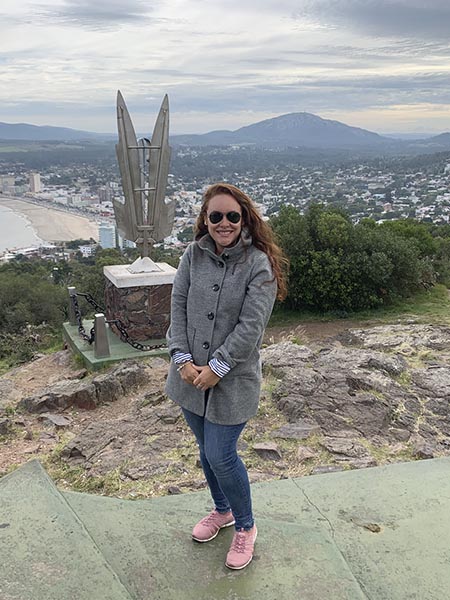 “In Latin America, Uruguay is a leader in education, due to the Ceibal Plan “and the various educational policies they have implemented, which have fostered innovation and yielded many positive results in the eyes of the international community,” noted Estíbaliz Pérez, an expert in educational innovation and founder of EduNova Costa Rica.
For many years, she followed in Uruguay’s footsteps. In particular, she followed the path of Dr. Denise Vaillant—dean of the Institute of Education at Universidad ORT Uruguayone of the experts in teacher training whom she most admires.
Since his doctoral studies offered him the opportunity to do an international doctoral internship, he looked into ORT and its programs: “I applied, knowing that in Uruguay I would learn a great deal from your experience in designing educational policies and innovation programs related to teacher training.”
On the other hand, Zaunay Rivera—who currently works as an elementary school teacher at the Oaxaca State Institute of Public Education—did not know much about Uruguay: her knowledge was based mainly on what she had heard in the media.
I was researching foreign universities that offered programs in executive education related to educational management. Through the Educational Management Support Network (RedAGE), I found a number of institutions that were studying topics of interest to me, such as Universidad ORT Uruguay , in particular, its Master’s program in Educational Management. I then decided to contact them and apply for a research internship.
“It was very important that Universidad ORT Uruguay gave Universidad ORT Uruguay this opportunity,” said Rivera, since, amid the pandemic, “the situation was more than a little complicated.”
“The responses I received from many other universities were that there was no option for a virtual research internship, or that the internships were strictly in-person,” explained Rivera.
In Pérez’s case, the internship at the Institute of Education will give her the opportunity to earn the title of “International Doctor,” awarded by the Autonomous University of Madrid to students who have spent at least three months studying abroad. However, as the student noted, many of her classmates did not have the same opportunity that Universidad ORT Uruguay offered her, due to the pandemic.
https://youtu.be/gTB5CiwbaG8
Different realities, similar challenges
“While it is true that Uruguay is a leader in many areas of education, we face many of the same challenges, just to a greater or lesser extent,” Pérez stated. For her, one of the most interesting aspects of pursuing a doctorate in Spain, living in Costa Rica, and completing a doctoral internship in Uruguay was being able to observe the unique characteristics of each context as well as the commonalities.
However, what are these challenges? The two students encountered the same issues in Uruguay as they had in Costa Rica and Mexico: school principals overwhelmed by administrative work and with little time for educational development.
According to Pérez, the difference between Costa Rica and Uruguay lies in the fact that Uruguay is already taking specific steps to train school principals in order to promote distributed leadership and pedagogical leadership. However, in his view, the challenge for Uruguay is to ensure that this training reaches as many people as possible.
Rivera also noted progress in his field of study compared to Mexico: “Uruguay is quite well-established in terms of educational management, but under new paradigms and with new elements related to shared learning, teamwork, and collaboration.”
“They are different in terms of resources and local characteristics, but the educational needs are the same. Ultimately, the pandemic has made it clear that we are a global community: resources and local characteristics make a difference, but the challenges are the same—on a larger or smaller scale, with better or worse solutions,” Pérez said.
“A dream come true”
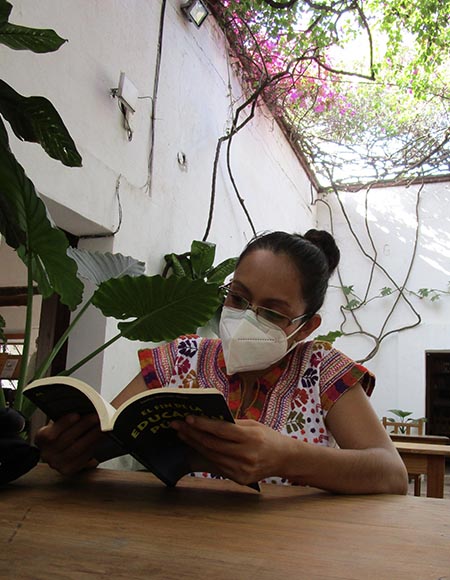 Becoming the principal of a school is one of Rivera’s professional goals. As a result of her international internship—and as she explained—she was able to gain insight into what it means to be a principal, what the main challenges are, and the strategies involved in the job. All those ideas she had been reading about were finally put into practice, which, in her words, proved to be “very enriching.”
Some time ago, when Pérez began his doctoral studies, beyond earning a degree that would advance his professional career, he was interested in the opportunity to have an intercultural experience and to learn about other educational approaches.
Through her work with Vaillant, she was able to gain a deeper understanding of the educational landscape in Latin America and Uruguay: “It’s been wonderful to meet school principals from rural areas and Montevideo, and to see how that relates to what’s happening in my own country. And how I might take the needs I’ve identified and those innovation processes and bring them together.”
“I believe that’s what truly defines a well-rounded academic professional: examining theory, applying it to specific contexts, bringing it into the real world, and using comparative analysis to develop solutions,” Pérez emphasized.
Pérez is taking away “a lot” from this experience. Now he can say he has experience working on projects with other countries: “That’s a huge asset on your resume, and it gives you the chance to experience things outside your home country that will have a major impact on your professional and academic career.”
In addition, being able to spend time with Vaillant, a professional she has “admired greatly for many years,” was like “a dream come true.” “I’ll cherish that joy, that privilege, on a personal level,” she added.
The lessons we take with us
“It’s very important to give yourself this opportunity to interact, build relationships, and learn about other contexts beyond your own national, state, and regional realities,” said Rivera when asked about the value and importance of pursuing a graduate internship.
In his view, this is an “essential part of professional training at any level,” as well as a “core” and “invaluable” component: “When you allow yourself to experience a different context and engage with other realities, your horizons expand.”
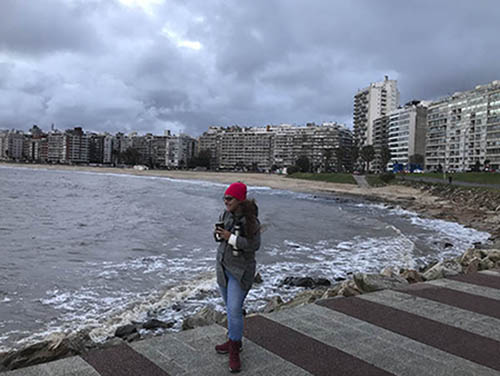 For her, the exchange is enriching on both a professional and personal level. “It’s possible to see myself, get to know myself, and understand myself better by seeing another reality, by seeing what’s happening elsewhere,” she added.
Would you recommend doing an internship? Without hesitation, Pérez and Rivera said they would. “I think we should focus on international opportunities, on increasing academic mobility, and on truly connecting with people and the academic community,” concluded Rivera.
“I would recommend it 2000%, because it’s an academic, personal, cultural, and professional experience: you grow in every way,” Pérez replied. “That cultural exchange—sometimes in person and sometimes virtual—is incredibly important because it opens up our brains, our minds, our hearts, and our culture; we learn so much and grow as people and as human beings,” he concluded.
A round trip of lessons
The two international students participated in courses offered by the Institute of Education. The course “Teacher Professional Development”—taught by Vaillant—benefited from Pérez’s collaboration in redesigning the course, developing synchronous activities, and monitoring and evaluating participants. Rivera facilitated, engaged, provided feedback, and shared her experiences with students in Educational Institution Management, in collaboration with Dr. Andrea Tejera, academic coordinator of the Master’s in Educational Management and the Master’s in Trainer Training.
In addition to other tasks they undertook at the Institute, both set out to capture what they learned during their international internship in academic articles. On the one hand, Pérez is conducting comparative studies between Costa Rica and Uruguay in the fields of leadership and professional development. Rivera, on the other hand, is working on a research project examining the challenges faced by the directors of the four cohorts of the Diploma in Educational Planning and Management within the framework of Deep Learning, both before and during the COVID-19 pandemic.
“Experiences like these allow us to break down institutional barriers: internships with partners from other countries are always very rewarding, as they show us the potential for collaboration that teams have when we allow ourselves to open up the boundaries of our organizations,” said Tejera.
Both Rivera and Pérez had the opportunity to share their experiences in the education sector in Mexico and Costa Rica. They offered a glimpse into their cultures and the educational systems of their respective countries. According to Dr. Andrea Tejera, it was a “highly positive” experience, since “it is always very useful to learn about other realities, because they allow us to see our own through a different lens.”
But the contribution and value of having international students participate virtually resonated not only with those directly and closely involved. Tejera noted that it also facilitated collaboration and the creation of a network of contacts across borders, which greatly enriched the exchange.
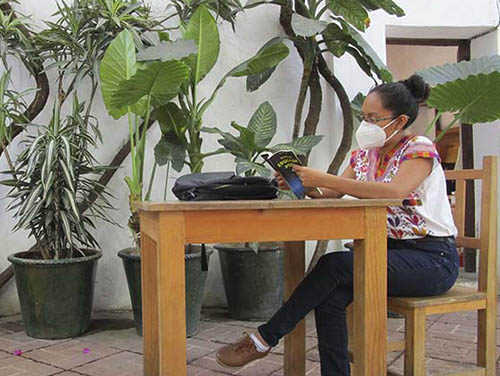 According to Dr. Denise Vaillant, the Institute of Education has “gained extensive experience in offering graduate-level internships, both in-person and online”: “The lockdown caused by COVID-19 allowed us to successfully implement virtual internships, using a variety of formats and platforms.”
During the course of the program, he noted that the students carried out their assigned tasks with a “very high level of commitment and professionalism.” And, in his words, the fact that they chose the Institute of Education has been a “privilege” and a “learning experience for the academic teams.”
“The internships allowed us to strengthen ties and foster collaboration with universities in both Mexico and Costa Rica. This will surely mark the beginning of joint projects with Estíbaliz and Zaunay,” Vaillant concluded.