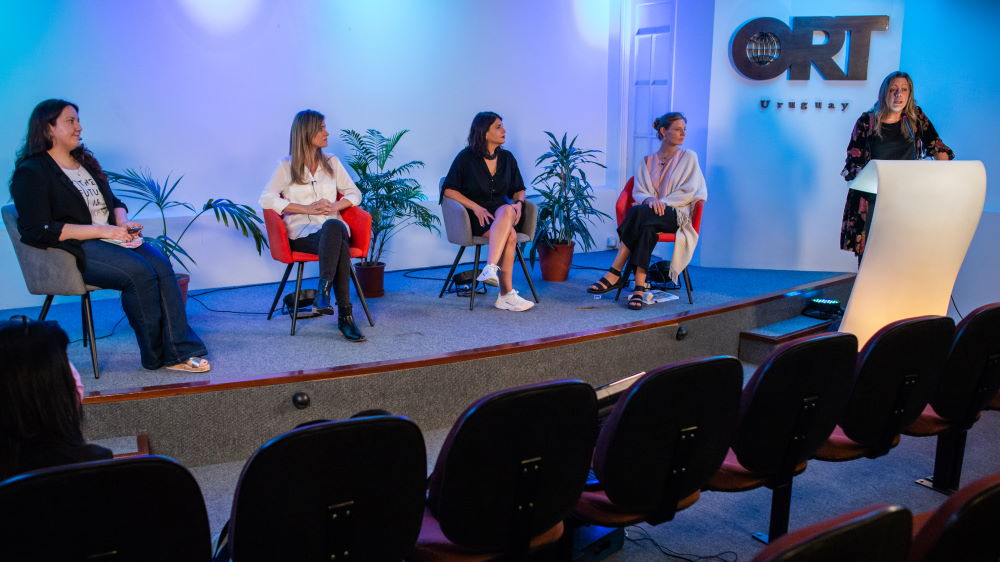
Moderated by Alejandra Rossi, MBA, executive director of Socialab Uruguay, three female entrepreneurs spoke:
-
Guadalupe Sonneveld, B.A.
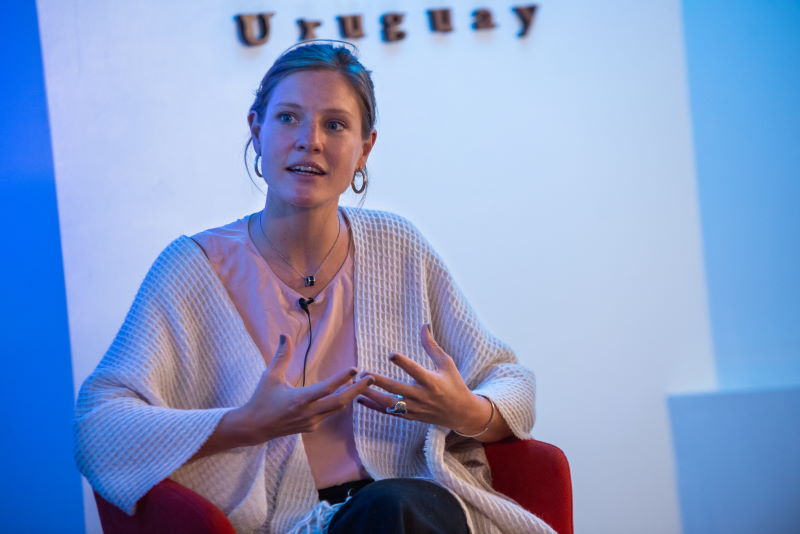
Bachelor of Industrial Design from Universidad ORT Uruguay.
Co-founder of Hifa, a startup that aims to reduce the use of unsustainable products and promote the use of organic waste.
Hifa was incubated by ORT’s Center for Innovation and Entrepreneurship and is the only company in Latin America capable of producing and marketing this type of biodegradable material. In 2020, it was named Circular Startup of the Year.
-
Fernanda Ariceta, MBA
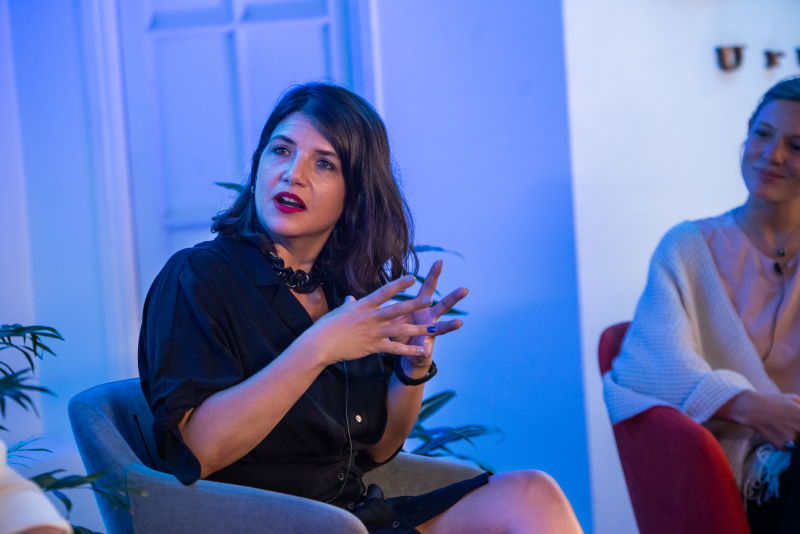
A sociologist, has MBA from Universidad ORT Uruguay. She has 20 years of experience in the media and in providing corporate and advertising communications consulting to companies.
Director of Alva Creative House and a member of Reacción, a consulting firm dedicated to promoting environmental sustainability—from fostering cultural change to developing products and platforms—to help drive entrepreneurial initiatives.
-
Mercedes Lafourcade, B.A.
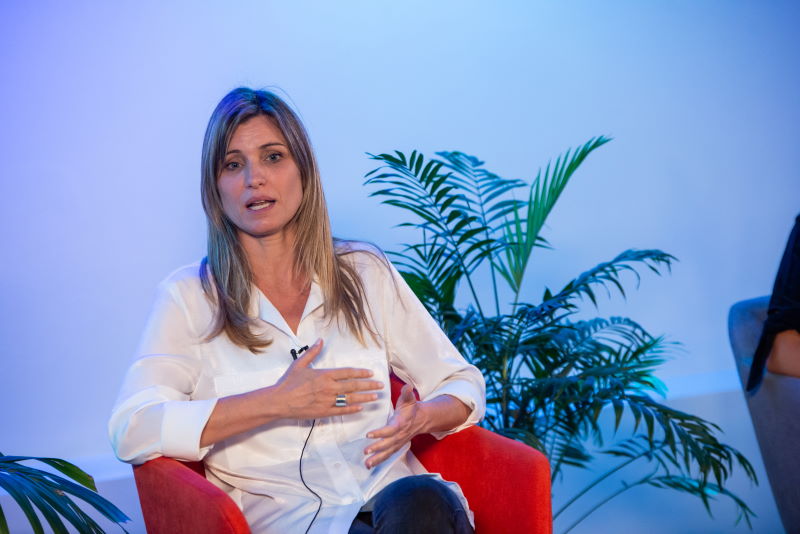
Master’s student in biomedical sciences, educational psychologist, teacher, writer, and editor. Director and founder of the independent publishing house Basilisa, which specializes in designing accessible picture books for children with dyslexia and other reading difficulties.
What would be the major milestone on your entrepreneurial journey?
That was the first slogan Rossi put forward.
“The key is to be profitable, which is no small feat,” said Ariceta, who stressed the importance of building businesses that turn a profit, employ staff, and have a business plan. “At first, people asked us how we made a living; everyone thought we were an NGO.”
Both Sonneveld and Lafourcade mentioned two recent developments in their projects: an acknowledgment and a step forward in the process.
Speaking on behalf of Hifa, its designer was quick to mention the award the company received a few days ago: Circular Startup of the Year, from Uruguay Circular. “When you’ve been working so many hours for so many years, and when you believe in your project, it’s really nice to see organizations like this recognize what you do.”
In the case of Basilisa, Lafourcade said he had “the ambitious goal” of developing an algorithm that converts inaccessible texts into accessible ones. “A week ago, I began testing the first steps: the algorithm already predicts and converts inaccessible sentences into accessible ones,” she celebrated. She said that demand from the Hispanic public is very high, because “there are no books like these in the world.”
What can be done to increase the number of women entrepreneurs?
- Work to change the "aspects associated with femininity" that are generally incompatible with entrepreneurship.
- Knowing that entrepreneurship involves failure; viewing that exposure as an opportunity for growth.
- “I like to talk about role models: ‘I went, I met people, I made friends, I came back, I worked, I failed; I really like to talk about my failures,’” Ariceta explained.
- Dealing with a lot of “no”s.
- Changing the educational paradigm.
- “Sharing household chores and child-rearing responsibilities is one of the major obstacles women face in starting their own businesses and becoming leaders,” Lafourcade said.
- Supporting others: through knowledge and on an emotional level.
- Sonneveld recommended invoking “the inner leader” that you want to see in the world, in order to spread that energy.
What would you ask of the startup ecosystem?
- Raise social and environmental awareness.
- More focus, striving for more, and not waiting so long.
- Moving beyond the primary sector: transcending it, advancing in product development, and strengthening it.
https://www.youtube.com/watch?v=2t5wT4PkJEk