
-
Jewish Diary
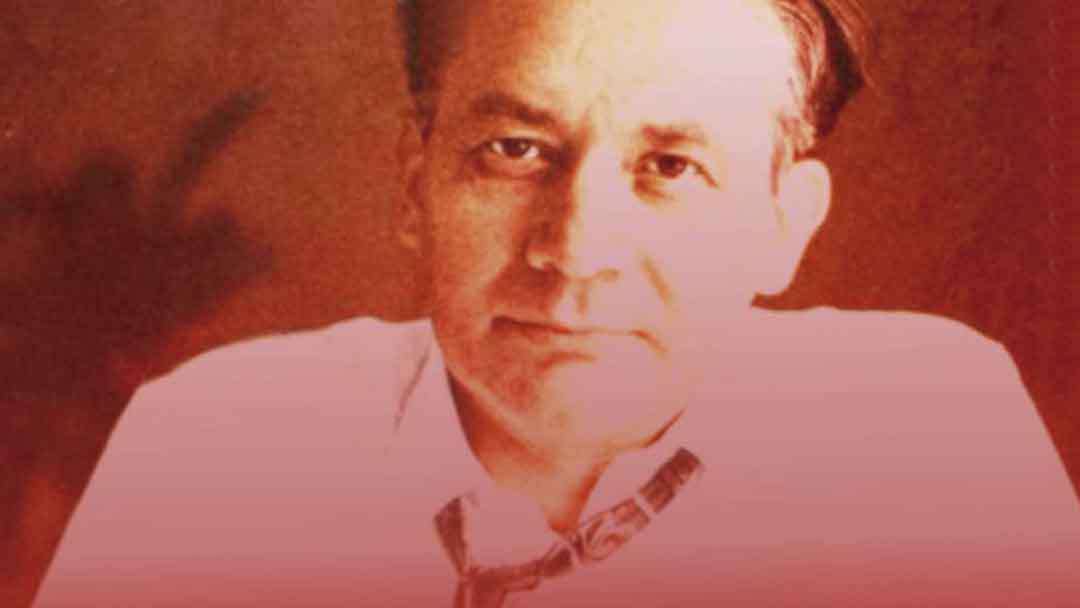
The event featured the presentation of the Jewish Diary , dedicated to attorney Raphael Lemkin (1900–1959), author ofthe book*Axis Rule in Occupied Europe*, published in 1944 in the United States, where Lemkin had managed to escape Nazi persecution.
In his book, Lemkin first used the term“genocide,” and he becamethe leading advocate for its recognition as a crime under international law.
Speeches
-
Charlotte de Grünberg - General Manager
I can’t imagine a happier moment in the year than this one, and I want you to know that because all of you are part of ORT, and you are an incredibly important part of my life. You have contributed—and continue to contribute—to making this what I consider an extraordinarily competent center for its work.
When I see them, I am reminded of a comment by the Israeli poet—the great Israeli poet—Abba Kovner, who worked tirelessly to establish a museum of the diasporas in Tel Aviv, very close to Tel Aviv University. When I attended one of the tours of that museum, Abba Kovner himself was there, and he remarked that, for him, that museum was the symphony of the Jewish people. I have never forgotten that expression, but if you’ll allow me, I’m going to apply it here—to us, to you. Why a symphony? Because it is a collection of voices and instruments playing in harmony at the same time—you and this is ORT.
I haven’t forgotten, and I know you haven’t either. As we’re about to begin the second “New Year” of the standard calendar year, I hope you all get off to a good start and truly enjoy your lives—both personally and here with us, where I feel we’re one entity yet many different voices speaking in unison, especially when it matters most. Talking about ORT—and the dates I’m using to illustrate this a bit are September–October, depending on when the year ends or begins—it’s very hard to find anything new to say, because you all visit our site so often, and I think it’s fantastic that you do, because it forces us to fill it with information that’s ultimately useful. So let’s take a brief look at what’s happened since around the same time last year in terms of developments within ORT. WELCOME
Visits
Dr. Dan Shechtman - 2011 Nobel Prize in Chemistry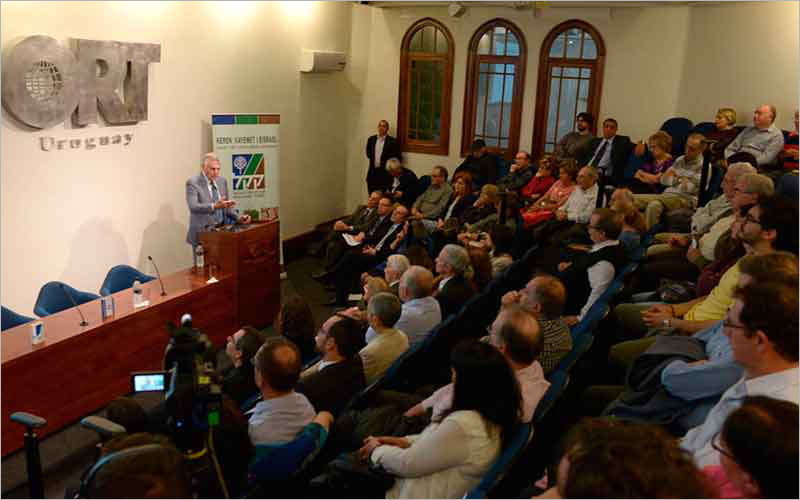
Agreements with universitiesFifteen agreements and memorandums of understanding were signed with various universities during this period.
• Student exchange agreement with the University of East Anglia, England
• Interinstitutional agreement with the University of Łódź, Poland
• Framework Cooperation Agreement with Beijing Union University, People's Republic of China
• Student exchange agreement with Shanghai University of International Business and Economics, People's Republic of China
• Cooperation Agreements with ORT Braude College, Israel
• Agreement with Michigan State University, U.S.A.
• Center for Australian Studies at Universidad ORT Uruguay
• Exchange Agreement with the University of Lima, Peru
• Student exchange agreement with Telecom Bretagne, France
• Framework Cooperation Agreement with Beihua University in the People's Republic of China
• Framework agreement for collaboration with the Evangelical Institution of Novo Hamburgo, Brazil
• Agreement with the School of Engineering at the University of the Republic to develop graduate programs, Uruguay
• Specific joint supervision agreement with Deakin University, Australia
• Framework Agreement on Academic Cooperation with EMLyon Business School, France
• Memorandum of Understanding with Zhejiang International Studies University, People's Republic of China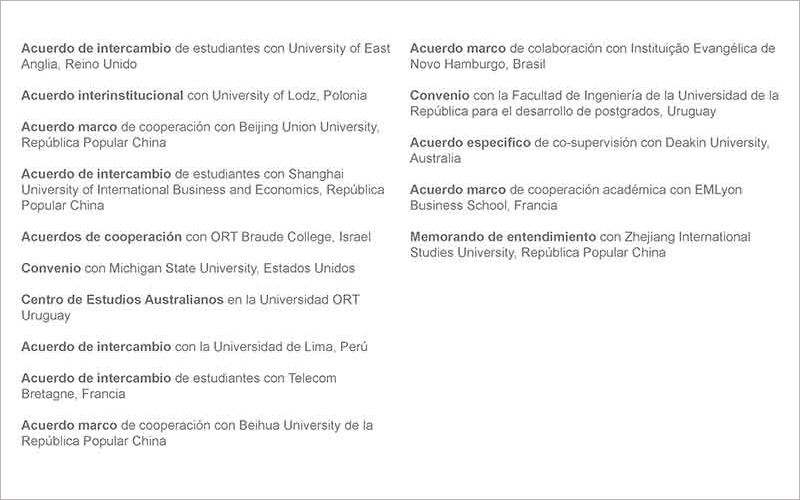
Highlights
• MBA re-accredited by AMBA
• La Casa Uruguaya of the 2015 Solar Decathlon international competition held in Cali, Colombia, in December 2015.
• Students from the School of Communication and Design won the Student Competition at the 2016 Desachate Festival with their "Colorrubia" campaign.
• School of Management and Social Sciences ranked among the best business schools in Latin America. Source: América Economía.
• Students from the departments of Fashion Design, Journalism and Communication, Engineering, Economics, and Animation and Video Games received recognition and awards in both national and international contests and competitions.
• Graduates from the schools of Design, Digital Animation, Audiovisual Communication, Graphic Design, Systems Engineering, Architecture, and the Department of International Studies received honors, awards, and scholarships, and were appointed as international student ambassadors (in Seoul).
• In the competitions category, graduates from the School of Architecture won second prize in the Island of Arts Venice competition, an architectural proposal for the city of Venice, and a graduate from the Department of International Studies was one of the winners of the Many Languages One World competition on the concept of global citizenship.
• Evelyn Aixala, a writing instructor in the joint program between Harbin Normal University and ORT University, received an award from the Ministry of Social Development in a short story contest.
• Gustavo Doorman, a professor in the School of Communication and Design, won the 2016 Graffitti Award for Best Electronic Music Album
• Rene Fuentes, a professor in the School of Communication, won the Onetti Prize for Literature.
• By the end of this year, the Institute of Education will have its first three graduates from the doctoral program.
You can find more information on our website: www.ort.edu.uyOff-site events
ORT Space at the 13th Punta del Este Jewish Film Festival
Film
Menazka: Best Documentary Film Award at the Punta del Este Jewish Film Festival – February 2016.
Book presentation: *The Gurméndez List – The Uruguayan Oskar Schindler*, by Isac Gliksberg, sponsored by Universidad ORT Uruguay.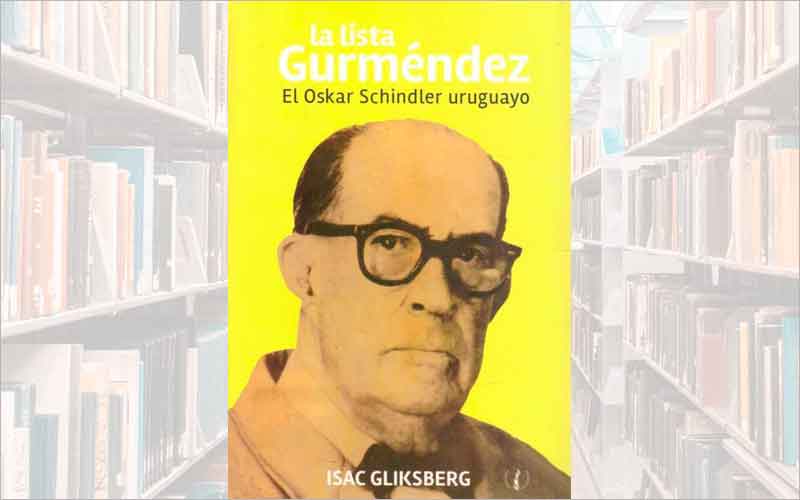
Special Events
Book Launch The Girl Who Watched the Trains Depart at the Solís Theater.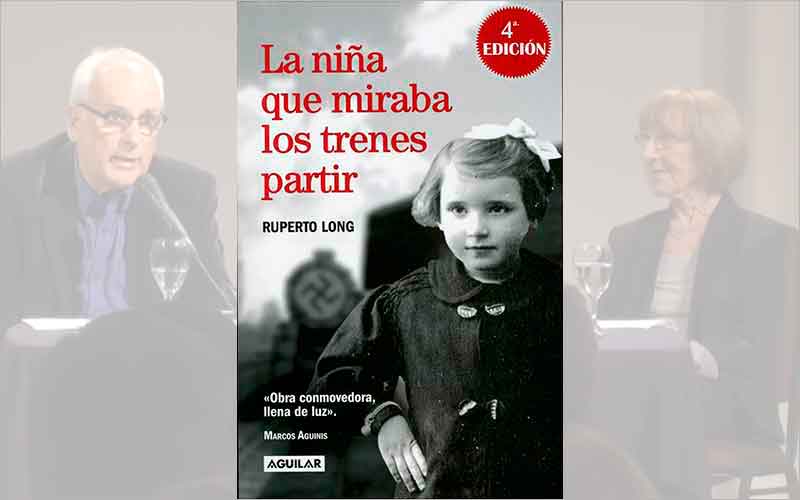
Panel discussion titled "Behind the Scenes of the Book *The Girl Who Watched the Trains Leave*" at ORT Pocitos.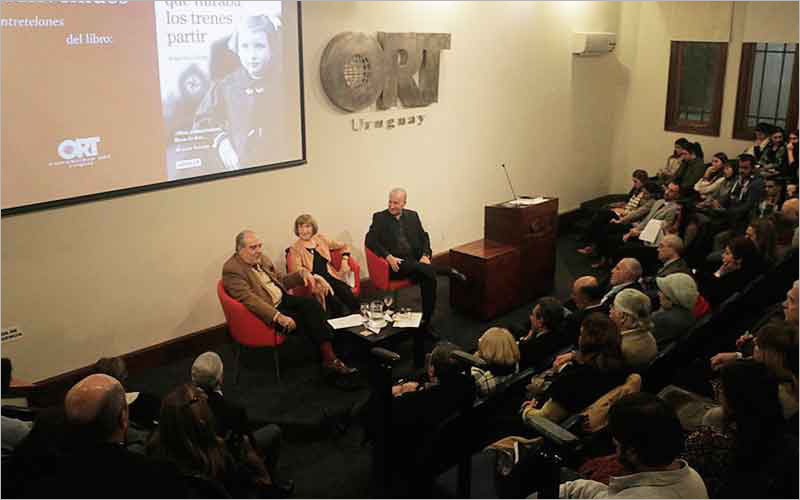
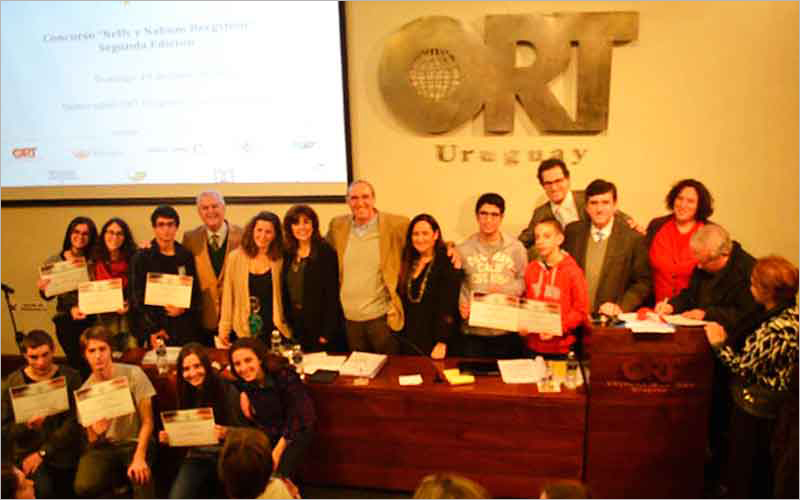
“Israel: 100 Years (1915–2015)” Contest and “Nelly and Nahum Bergstein: 100 Years of Jewish Life in Uruguay” Contest.
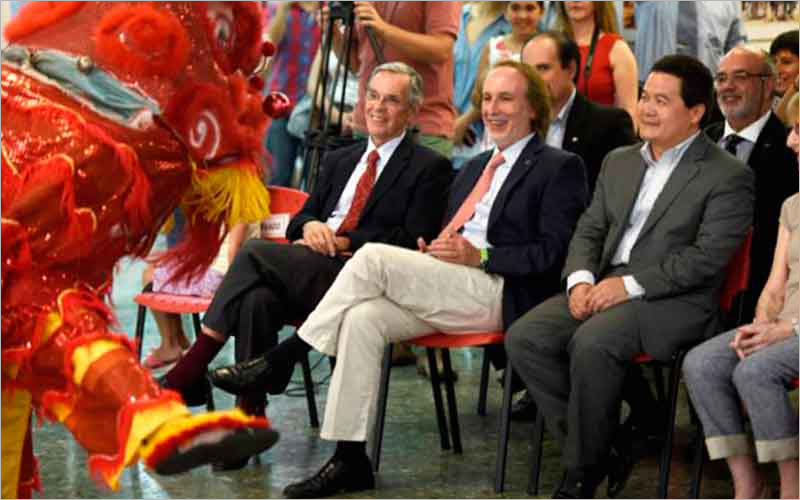
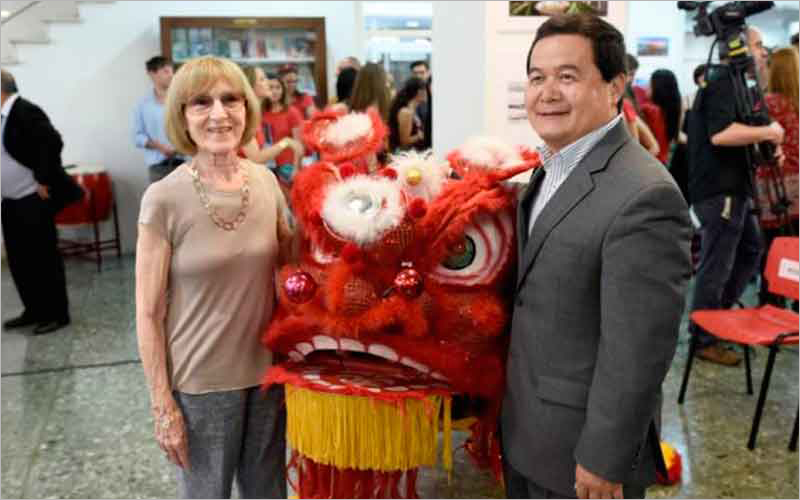
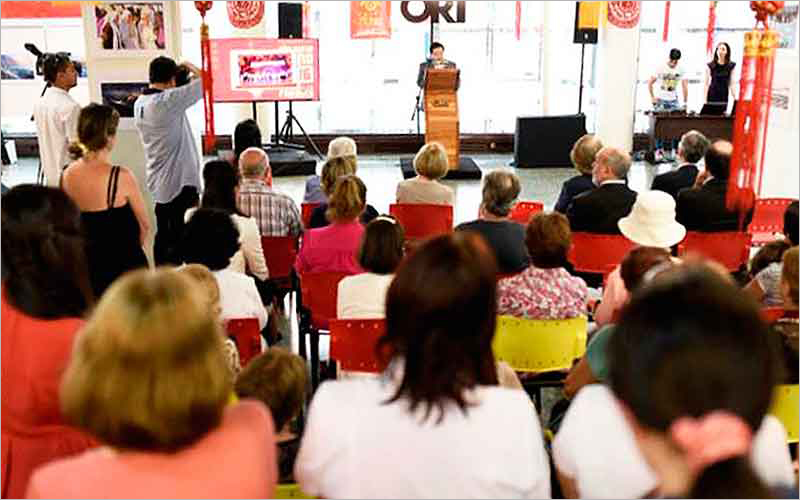
The Lantern Festival was organized by the Language Center with the support of the People's Republic of China and attended by the Ambassador.
Ceremonies
Graduation ceremonies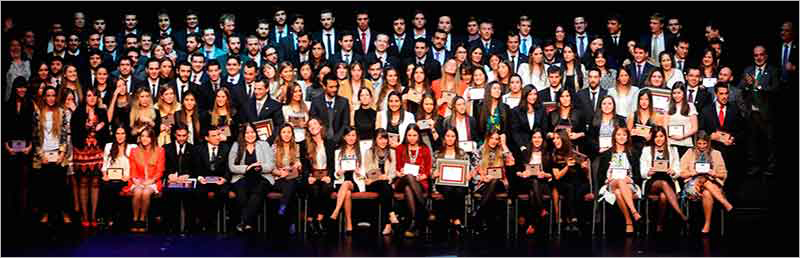
Teaching Excellence Awards Ceremonies
MBA Graduation CeremonyNew scholarship fund
Establishment of a Scholarship Fund in Memory of Sandra Lev Asaravicius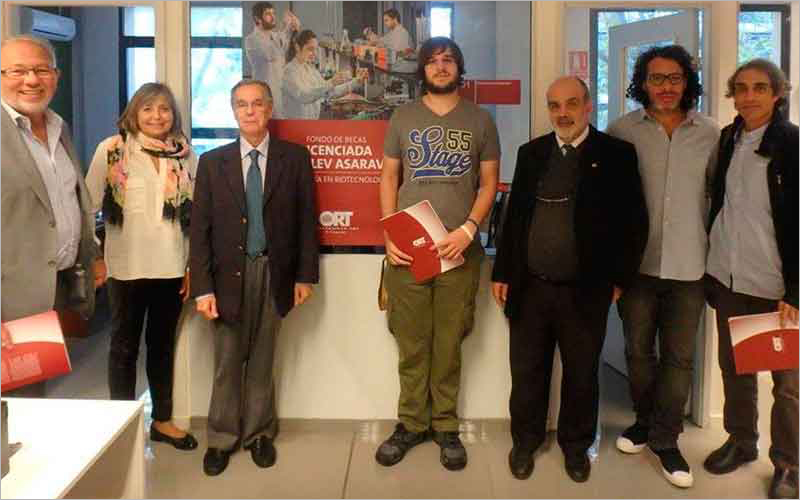
Building improvements
Expansion of the lobby at the Downtown Campus
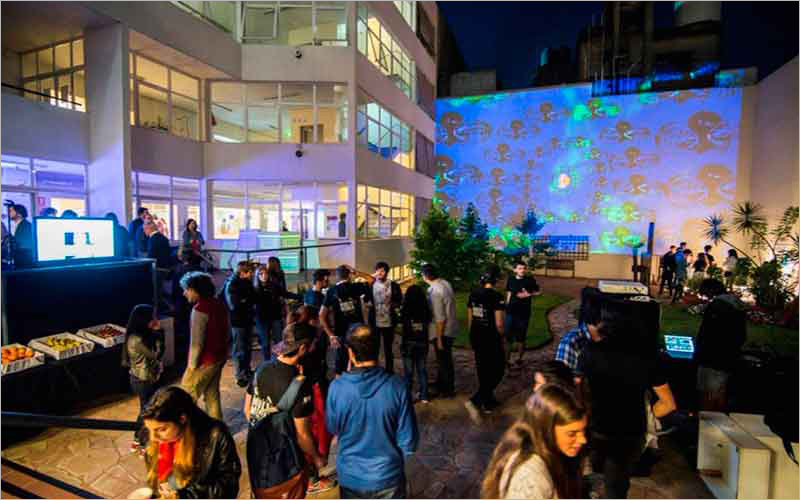
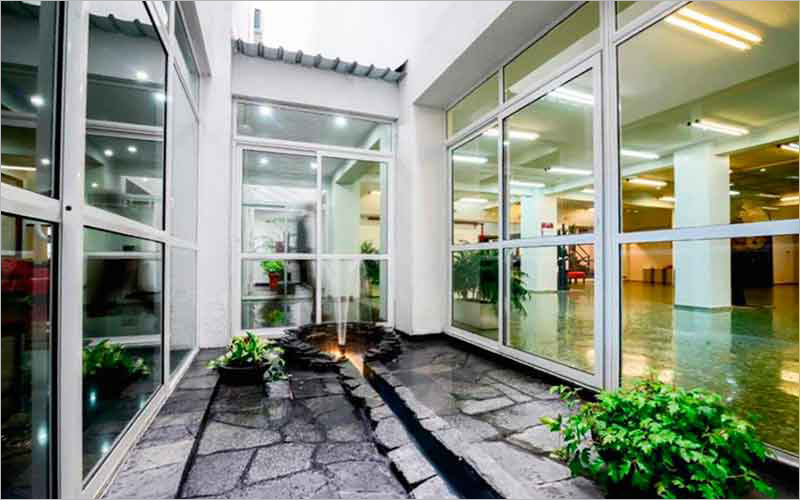
Expansion of the university's Center for Innovation and EntrepreneurshipPublications
Faculty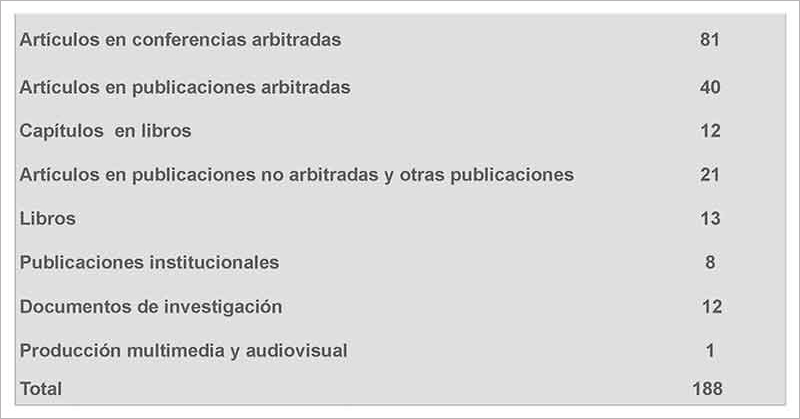
Development of the library collection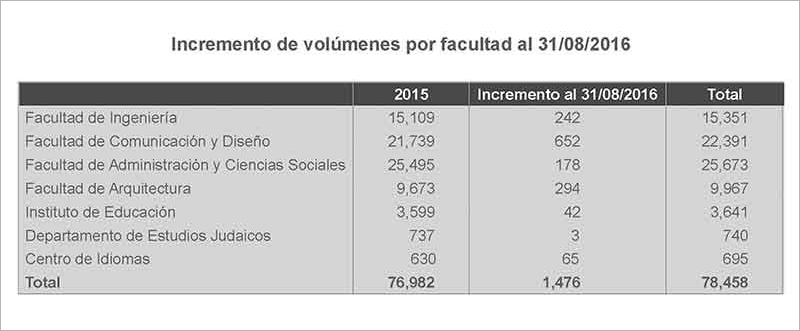
Student exchange in the first semester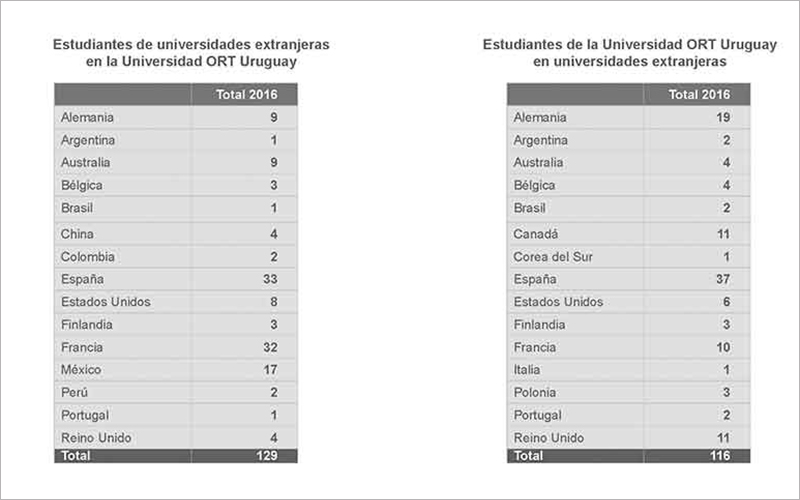
In 2017, ORT celebrates its 75th anniversary.
-
Rafael Winter, Esq. – Vice President of the Montevideo Holocaust Memorial Center
Dedicated to the memory of Shimon Peres (Z"L), a man as great as the cause he championed.
We are on the threshold of a new Jewish year. On October 2, when the first three stars appear in the sky, Rosh Hashanah will have begun. The term literally means “head of the year.” Conceptually, it is the New Year. The origin of this holiday, like that of so many other Jewish holidays, is biblical (Numbers 29:1). It reads as follows: “In the seventh month, on the first day of the month, you shall have a holy convocation; you shall not do any labor; on that day you shall sound the horn” (shofar). The day we are referring to is traditionally called “Rosh Hashanah.”
According to the tradition of the Jewish people, we are about to begin the Hebrew year 5777. The question arises: 5777 years of what? According to the traditional explanation: 5777 years since the creation of the world and/or the creation of humankind. In reality, the oldest Jewish sources do not mention a specific date for the creation of the world. That would be impossible. How did we arrive at this date? Ancient Jewish sages added up the genealogies of various biblical figures up to the Christian era, and the result of that calculation was 3760. If we add the years from the Christian era to that figure, we can see how we arrive at 5777. In any case, and as Jewish tradition understands it, regarding what Rosh Hashanah signifies above all else, the specific number is not what matters most; not even the change of the year is what matters most.
The essence of Rosh Hashanah lies elsewhere, and the key word is “balance.” Balance has to do with “scales,” that is, equilibrium. On Rosh Hashanah, we take stock of the past year, from last Rosh Hashanah to this one. Beyond the judgment of each of us—which, according to Jewish tradition, is carried out by the Creator—the balance each of us strikes with ourselves is fundamental. Not everything in the year that is ending will have been bad. Nor will everything have been good. Ups and downs. Nuances. Lights and shadows. In any case, faced with the mere possibility that the balance might not “add up” as we’d like, faced with the possibility that the Creator’s judgment—which begins on Rosh Hashanah and whose verdict is delivered on Yom Kippur, the Day of Atonement—might not yield the expected “results,” all of that would explain why the celebration of the Jewish New Year is not one of overflowing joy but rather moderate, sober, and restrained. While fully respecting and acknowledging the way each culture and religion celebrates its New Year, in the Jewish tradition we do not simply “put the past behind us”; we do not erase our most recent records. On the contrary: we open them up, review them again, to discern what we did right and what we did wrong. That is the meaning of Rosh Hashanah.
Rosh Hashanah is celebrated in two complementary settings: the home and the synagogue. At home, particularly during Rosh Hashanah dinners, there are certain symbols characteristic of the holiday that are associated with food and reflect the nature of the occasion. We’ll mention two in particular: the round challah and the apple dipped in honey. Together, these two symbols convey hope—the wish that the coming year be whole, complete, and sweet. Gathered around the simply festive table are family, extended family, friends, and, as is customary in many of our Jewish homes, guests invited for those who, for a variety of reasons, have neither a place nor anyone with whom to spend the holiday. We gladly include them at the Rosh Hashanah table. It means including us all. I quote José Jerozolimski (Z"L) from an editorial in the Semanario Hebreo several years ago, highlighting “the capacity for empathy toward those who suffer, the capacity to help the needy, the capacity to understand that the world is not the fiefdom of any one person but a value in which each and every person must have a decent place.”
The other place where we celebrate Rosh Hashanah is at the synagogue. Through our prayers, three concepts and values stand out: repentance, prayer, and good deeds. One of the best-known prayers in the Rosh Hashanah liturgy tells us conceptually that “repentance, prayer, and good deeds can transform the divine verdict from negative to positive.” The concept of repentance is reiterated. It includes three “ingredients”: acknowledgment of the mistake made, a sincere apology, and a commitment not to repeat the same mistake.
Judaism places particular emphasis on good deeds. While the concept of God is certainly a fundamental pillar, Judaism holds that what I DO is just as important—or perhaps even more so—than what I believe. “Love your neighbor as yourself” and “Do not do unto others what you would not have them do unto you” are two basic principles from Jewish sources, the golden rules of Judaism.
Returning to José Jerozolimski: "It is not enough to believe in God; we must bear witness to Him through our personal deeds here on earth. Not only through prayer, but also in our relationships with others, in daily life, and in our everyday conduct—which is no less significant than our daily bread." Faith and reason. As far as possible, faith must be “rational,” because if it is blind, it can lead to acts that are also “blind” and fanatical, such as “killing in the name of God” or “because God wants it.”
Does God really want that? God, whatever His name may be, does not want people to kill for Him, no matter what the sources of any religion may say. God wants people to LIVE for Him. As it says in the passage from the Torah—the Pentateuch—called Nitzavim: “You shall choose life.”
In synagogues, on Rosh Hashanah mornings, there is a climactic moment: the blowing of the shofar. At that moment, it seems as though the synagogue comes to a standstill and the congregation holds its breath. The shofar is a ram’s horn, a symbol of biblical origin as well, linked to a dramatic episode in the life of the Patriarch Abraham. A ram’s horn that is blown like an instrument. When blown, it emits sounds that blend together. The shrill, broken sound of the shofar—sometimes like a cry—touches the heart of every Jew. That sound evokes many events, including historical ones, but it is above all a call to repentance, to reflection, to awaken our consciences. To reconsider. To rouse the people and each one of us from our slumber. “Will you blow the shofar in the city and the people not tremble?” exclaims the biblical prophet Amos. The shofar is also associated with the freedom of the people. Leviticus 25:10 states, “and you shall proclaim liberty throughout the land to all its inhabitants.” Symbolically, this would be done with a blast of the shofar.
Another meaningful custom takes place on one of the afternoons of Rosh Hashanah: it is customary to go to mar nearest mar, river, or stream and toss in a few pieces of bread, interspersed with prayers. This symbolizes our intention to let go of our wrongdoings so that we do not repeat them.
A rabbi, Andrew Jacobs, poses many questions to his community and to himself—questions that we, too, ask ourselves or might ask—when we take stock of the year, as we discussed earlier. Questions such as: Did you take care of yourself this year? Did you take care of the people who are important to you? Do you owe anyone an apology? Have you refused to make peace with someone who offered you an apology? Have you performed acts of solidarity? Have you given your time to noble causes and to other people? Did you have time to explore your spirituality? And what is your statement of principles? What do you want to change for the coming year?
With just a few hours to go before the start of the new Jewish year, we express our hopes and wishes, as is our tradition, that the new year may begin and bring with it its blessings. May the universal values of freedom, equality, solidarity, social justice, love, and peace prevail throughout the world. May the words of the Prophet Isaiah be fulfilled, those that say, “Swords shall be beaten into plowshares, the wolf shall dwell with the lamb, and nation shall no longer lift up the sword against nation.” May religions—all of them—be a force for unity and not for division, violence, or grievances between peoples or individuals. May discrimination, in any of its forms and against anyone, disappear once and for all from the face of the Earth. Respect, consideration, and acceptance of diversity. May human beings be able to meet—anywhere in the world—their basic needs so that they may live with dignity. May great technological progress be accompanied in equal measure by ethical and moral progress. May we human beings be capable of building bridges, uniting more through what unites us and no longer dividing ourselves by what separates us. O God, for us and for all humanity: “Grant us a good year. Inscribe us in the book of a happy life.”
Happy New Year!

-
https://www.youtube.com/watch?v=MaNmS6esNrc"I can't imagine a happier moment this year than this one, and I want you to know that because all of you are ORT, and you are an incredibly important part of my life. You have contributed—and continue to contribute—to making this what I consider an extraordinarily competent center for its work."
Prof. Charlotte de Grünberg
Executive Director