-
Jewish Diary
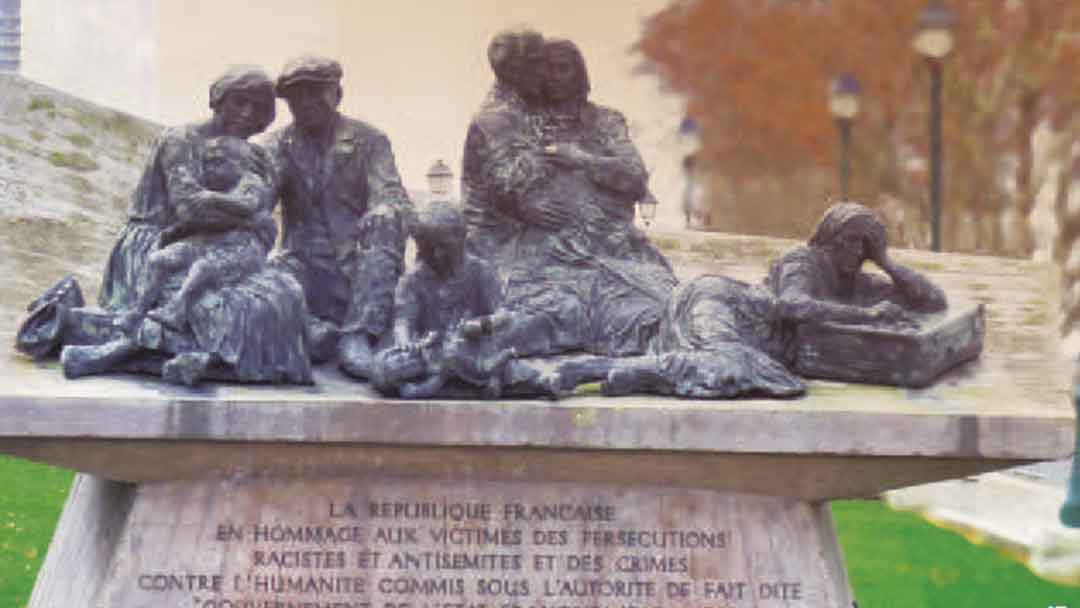
During the celebration, the Jewish Diary was presented, dedicated to commemorating the 75th anniversary of the Winter Velodrome Roundup in Paris.
In July 1942, the Nazi regime, with the support of the Vichy French government and its police, organized a large-scale roundup of Jews carried out in various European countries.
This roundup alone accounted for more than a quarter of the 42,000 French Jews who were sent to Auschwitz in 1942.
Speeches
-
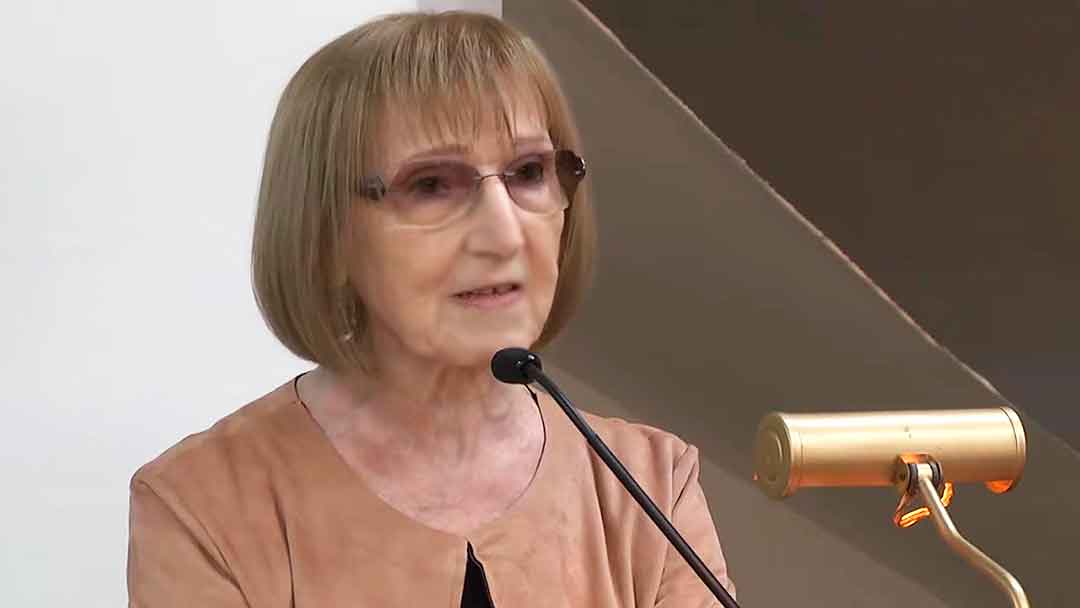
Charlotte de Grünberg - General Manager
Welcome to all—both longtime ORT members and newcomers—to the Association of Friends of Universidad ORT Uruguay.
We have come to the end of another year together—a year filled with notable events, successful projects, and achievements by students, alumni, faculty, and staff alike. Together, we have helped create the atmosphere that surrounds us every day at our beloved ORT, across all its schools, institutes, and departments, with the support of everyone who spends many hours each week within these walls.
Since events are unfolding at a breakneck pace and all of you have access to our internal communication channels, I assume you are well aware of the academic, facility-related, and interpersonal developments taking place within our academic institutions.
Therefore, I will simply mention a few activities from the past few months of this year—which ends next Wednesday, the 20th—such as the new agreements with Korea University in Seoul, the Interdisciplinary Center Herzliya in Israel, Sapienza University of Rome, among others, and the inauguration of the Center for Australian Studies at ORT.
SCHOOL OF BUSINESS AND SOCIAL SCIENCES
For the first time in Uruguay, an undergraduate student can study for three years in our country and one year in the United States and earn a degree from ORT as well as from an internationally accredited U.S. institution.
For example, starting in March 2017, students who have completed the first three years of the Bachelor of Science in Management program will be able to continue their studies for one year at the College of Business at the University of Florida in Miami and earn a dual degree. There is already one student in the Bachelor of Science in Management program who is in Miami, getting an early start on this experience.
SCHOOL OF ARCHITECTURE
An architecture graduate from Universidad ORT Uruguay in Universidad ORT Uruguay a full scholarship in May 2017 to pursue a master’s degree in civil engineering at Stanford University in California.
La Casa Uruguaya to rack up awards. It recently won first prize in the “The Public Chooses: Wooden Architecture” competition, organized by the Chilean Wood Corporation and held in Santiago in August 2017.
SCHOOL OF COMMUNICATION AND DESIGN
Starting in March of next year, the School of Communication and Design will offer a new bachelor’s degree program: the Bachelor of Design, Art, and Technology. The program is designed for students with a strong interest in the worlds of art, design, and technology.
SCHOOL OF ENGINEERING
The MOOC course “A programar,” offered on Coursera in English and Spanish, has attracted approximately 200,000 enrollments over a period of a year and a half, with an average of 920 enrollments per week. It is one of the most popular courses in Spanish on the Coursera platform, and last year it held the top spot for several months.
This year we opened the Biotechnology Research and Innovation Center. For those who haven't seen it yet, I recommend paying it a visit.
INSTITUTE OF EDUCATION
In April 2017, the first cohort of the Master’s Program in Trainer Development began. This graduate program, the only one of its kind in our country, provides a platform for developing skills in planning, implementing, and evaluating training initiatives across various settings, whether in the formal education system or in non-formal education.
In addition, the first five Doctor of Education graduates have graduated over the past 12 months.
JUDEO-STUDIES
In July, the 6th edition of the course “The Shoah, the Human Condition, and Memory” was held; the course was designated as being of educational interest by the Ministry of Education and Culture. Aimed at teachers and educators, the course is designed to introduce them to key considerations when teaching about the Shoah (the Jewish Holocaust).
GENERAL SERVICES
The university's recycling initiative was enthusiastically embraced by a group of 12 people, all university staff members, who volunteered their time.
After a long struggle, all of the buildings occupied by ORT have now received fire department approval.
I invite everyone to visit the spacious new Room 317 on the 3rd floor. It's worth a visit.
As part of our university’s ongoing commitment to promoting the nation’s artistic heritage, we are pleased to sponsor the publication of a book by art critic Nelson di Maggio dedicated to Juan Manuel Besnes e Irigoyen—whom the author describes as the “first” Uruguayan painter—which was unveiled this week at the National Library.
-
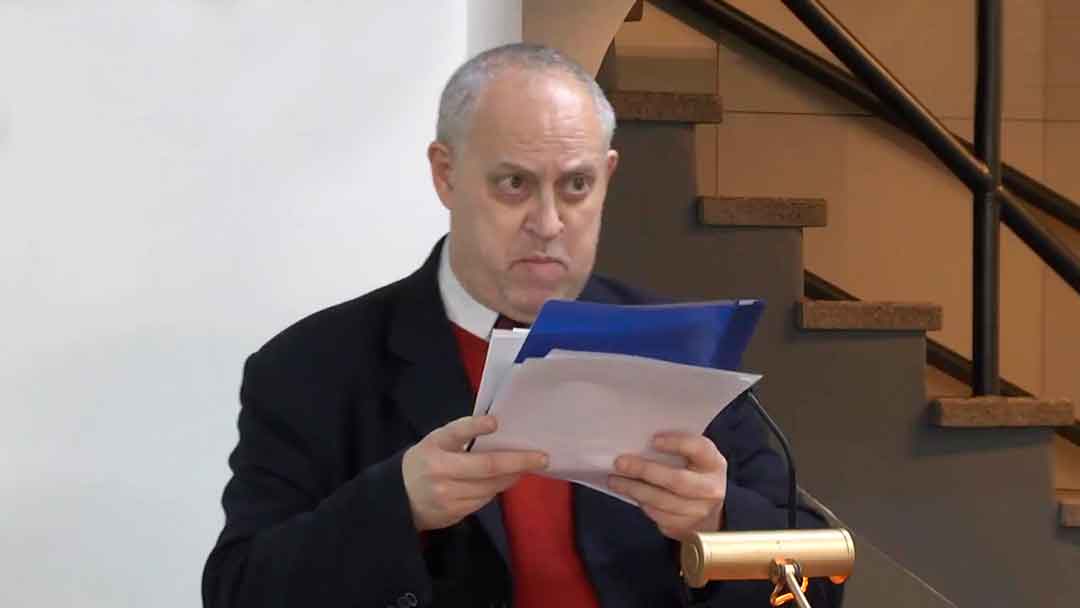
Rafael Winter, Esq. – Vice President of the Montevideo Holocaust Memorial Center
According to Jewish tradition, we are on the threshold of a new year. Next week—more precisely, next Wednesday night, when three stars appear in the sky—Rosh Hashanah will begin. It is one of the classic holidays of the Jewish year. It isn’t Rosh Hashanah yet, but its spirit is already in the air. This is because the preceding month of the Hebrew calendar—the month of Elul—is already preparing us: in the synagogues, the sounds of the shofar can be heard in the mornings, and the prayers of forgiveness called “Selichot” are also recited this month, giving us a preview of the request we make on Yom Kippur, the Day of Atonement, a few days after Rosh Hashanah.
As you are no doubt aware, Jewish communities around the world are about to begin the Jewish year 5778. This raises the question: 5778 years of what? According to Jewish tradition, 5778 years since the Creation of the world; for others, more specifically: 5778 years since the creation of man. The common denominator: Creation. Controversies between religion and science? Let the scholars debate it, respectfully.
But it goes beyond the year; it goes beyond the number. One of the messages is that, in Jewish tradition, creation has a Creator. That is the first sentence of the biblical book of Genesis: “In the beginning, God created the heavens and the earth,” and it then continues with the account of Creation, as the Torah (Pentateuch, the first part of the Bible) understands it. Needless to say, beyond what the sacred Torah states on this matter, everyone is free to develop whatever theories they wish: we welcome all those who, throughout history and up to the present day, have dedicated their lives to research into the origin of the world and of humankind. Study and research: one of the tasks carried out here, at this great institution that is Universidad ORT Uruguay. And ultimately, what matters most is not so much who created the world or when, but above all: What do we do with our world!
In the Rosh Hashanah liturgy, there are three fundamental concepts: Tefilah (prayer); Teshuvah (repentance); Tzedakah (charity: solidarity). I want to focus primarily on the last two. Through these concepts and values, Judaism reaffirms that one of its main goals is Tikun Olam, the repair of the world. What does this mean? It means that, every day, we must strive to be a little better, in order to make this world a better place.
Jewish sources are realistic enough to recognize that we are not—and cannot be—perfect. But we can strive for perfection if we choose to and make good use of our free will: we can become a little better each day and, in doing so, help improve humanity as well. And what does it mean to “make good use of our free will”? According to one of the weekly Torah portions called Nitzavim—“choosing life”—it means choosing what is good. The concepts and values conveyed on Rosh Hashanah transcend the holiday itself; they even transcend Judaism because many of them are universal and therefore essential for all of humanity, regardless of the origin of the sources.
TESHUVÁ. One of the core values associated with Rosh Hashanah. It means: repentance, return. Returning to the right path. According to the sages and scholars, for Teshuvá to truly be Teshuvá, it must above all be sincere: acknowledgment of one’s own mistake (self-criticism); a sincere apology; and a willingness not to repeat the same mistake. We believe that while “what’s done is done,” Teshuvah, repentance (which is ultimately, above all, a moral concept), is or should be within the reach of every human being. Another consequence should be that every person has a second chance, except in extreme cases where individuals do not deserve it due to the magnitude of the atrocities they have committed. Teshuvah is also capable of making this world a better place.
TZEDAKAH. It is another concept, another value. Conceptually, we can translate it as “social assistance,” “helping others,” or “solidarity.” In Hebrew, the concept of tzedakah comes from tzedek, “justice.” For Judaism, tzedakah is not the equivalent of charity or almsgiving. Tzedakah is an act of justice. It is an act of justice to help those in need. It is an act of justice to show solidarity. It is an act of justice to help—as the Torah says time and again—the stranger, the orphan, the widow, the weakest, and the dispossessed. Solidarity often puts us to the test. It is up to us whether we pass that test or not. The Talmud, one of the primary sources of Judaism, also addresses this topic. In one context, it states, “Aniei ireja kodmim,” which translates as “the poor of your city take precedence.”
The Jewish New Year celebrations take place in an atmosphere of joy, yes, but of a measured and restrained joy.
Synagogue. Home. Dinner. Symbols. Traditions and customs. But all within a context of subdued joy. This is because, according to Jewish tradition, Rosh Hashanah goes far beyond a “mere” change of the year. Its essential meaning lies in other aspects. For example, in what we call “Cheshbon HaNefesh.” What is this?
Conceptually, "taking stock." A review of the past year. The end of one year and the beginning of another should serve as an opportunity—as Jewish tradition understands it—to reflect, take stock, and consider the good and not-so-good deeds we have done. "Taking stock" does not refer solely to negative events.
There are surely also good deeds we have done—ones we need not boast about, but which are worth keeping in mind for our own sake, for our spiritual satisfaction and peace of mind. When taking stock from one year to the next, the good deeds are included. But there are undoubtedly “the other ones” as well. And these, through teshuvah, must be sincerely acknowledged; we must apologize for them and commit to not repeating them. That is what Yeshbon Hanefesh is: taking stock, self-criticism, introspection, and personal evaluation.
In just a few moments, through my colleague and friend Jagai, we will hear the sounds of the shofar. It is blown—in addition to the month of Elul—on the mornings of Rosh Hashanah and at the conclusion of Yom Kippur. The mitzvah is to “hear” the sounds of the shofar, one of the most significant traditions associated with these momentous occasions. And beyond the various historical and religious reasons for blowing the shofar, its sounds should serve to make us reflect and awaken us from our spiritual lethargy and passivity.
As the biblical prophet Amos—a champion of social justice—says: “Can the shofar be blown without the people trembling?” The shofar is a call to our consciences. In the times we live in, there are many reasons to awaken our consciences. Too many. Good things happen too. But when we become aware of some of the many horrible things that occur—some more visible, others less noticeable—Injustices. Hunger. Poverty. Inequality. Lack of freedoms. Slavery—whatever you call it—continues to exist in different parts of the world. The nuclear and arms race. Human rights that are conspicuously absent in many parts of the world. Violence. Terrorism. Discrimination. Humanity has not yet accepted the right of others to be, to live, and to express themselves differently. Equality in diversity remains a distant concept for many. Because the issue is not just about the right to equality. The issue is, above all, about the right to be different.
Discrimination. On this very day—September 15, but in 1935—Nazi Germany enacted the Nuremberg Laws, a devastating blow—though not everyone saw it that way at the time—and a decisive step in the discrimination against Jews, the most tragic consequences of which would become apparent a few years later.
It goes without saying that when we speak of discrimination, we condemn all forms of it: gender, sexual orientation, race, religion, disability (differing abilities), ethnicity, nationality, xenophobia—every form of discrimination. The shofar. Synonymous with freedom. The Torah (Leviticus 25:10) states that at some point—perhaps in the Messianic era—the shofar “shall proclaim liberty throughout the land to all its inhabitants.”
One of the symbols we have on the Rosh Hashanah table is the apple dipped in honey. The other is the challah, the round loaf of bread. The common thread: it symbolizes the hope that the coming year will be well-rounded (like the challah), sweet (like the honey), good, complete, and blessed. For everyone.
Our final wishes are for peace. As our sources say, “peace to those near, peace to those far away.” Peace. For all humanity. Shalom. Salam. May the words metaphorically expressed by the biblical prophet Isaiah become a reality—or at least may the process begin. “They shall beat their swords into plowshares. The wolf shall dwell with the lamb. And nation shall not lift up sword against nation.”
Happy New Year!