History
ORT was founded in 1880 in St. Petersburg, Russia, with the aim of supporting the struggling Jewish population by helping them acquire skills that would enable them to achieve economic independence.
Throughout its history, which has spanned revolutions and wars, ORT has repeatedly demonstrated its ability to adapt to change.
Few organizations can claim to have maintained such an active, significant, and consistent presence for so many years.
Many things may have changed over the years, but fortunately, many things have also remained the same. To understand ORT’s current structure, it is helpful to examine the organization’s historical development within the broader context of the country.
ORT provides quality education and training tailored to the current needs of the job market in every country where it operates.

Activities at ORT Uruguay in the 1940s
In Uruguay
In Montevideo, ORT Uruguay joined the network established by World ORT.
The organization was founded in 1942 by members of the Jewish community who wanted to support the waves of immigrants fleeing the horrors of the Nazi regime by teaching them trades that would facilitate their social integration into the country's economy and help them become citizens.
From the 1950s through the 1970s, ORT Uruguay strengthened and expanded its educational programs for the general public. It also began to specialize in advanced technologies, such as electronics, training the technicians and professionals the country needed.
The 1980s and 1990s
During the 1980s, ORT Uruguay grew rapidly, becoming one of the leading organizations in the training of technicians in electronics, telecommunications, and computer science.
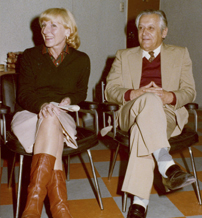 The growth of the student body was accompanied by a significant expansion of the university's facilities and the introduction of new technology.
Bernard Wand-Polak
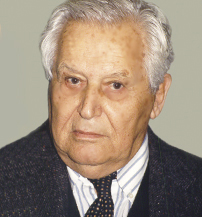 In 1989, the ORT Technological Institute—as it was then known—was the largest nongovernmental organization dedicated to technology education in Uruguay.
It offered dozens of short-term degree programs in the fields of management and technology, promising quick job placement for young people and addressing a need in Uruguayan society.
Engineer Bernard Wand-Polak served as director of World ORT in Latin America during the 1970s and 1980s.
His vision for the organization was ahead of its time; he believed that information technology and electronics would play a vital role in the development of countries and their education systems.
Under his leadership, ORT computing centers were established in Argentina, Brazil, Chile, and Uruguay.
Higher education
In 1985, ORT applied to the Ministry of Education and Culture for official recognition of its degrees in Systems Analysis and Electronics.
These programs were offered by various departments within the institution, which were consolidated in 1996 into what is now the Bernard Wand-Polak School of Engineering.
The official recognition of the Systems Analyst degree in 1988 marked the first time the Uruguayan government granted a higher education license to a non-governmental educational institution.
In the 1980s, ORT Uruguay decided to expand and diversify its educational programs in response to the needs of Uruguayan society at the time.
In 1988, the School of Management was established as the country’s first business school. It is important to note that in the 1980s, ORT Uruguay was regarded by Uruguayan society as a tertiary institution in terms of resources, size, faculty, graduates, and academic programs, even before it was granted official university status by the Ministry of Education and Culture.

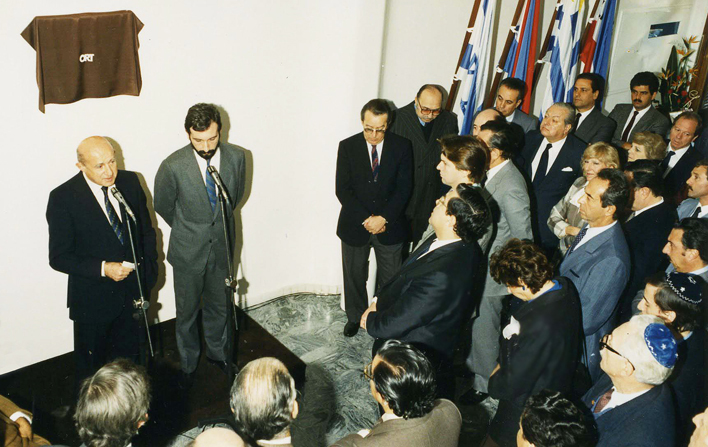
ORT's accreditation as a university by the Ministry of Education and Culture was the result of many years of hard work.
Recognition as a university
In 1995, through Decree 308/95 of August 11, the government established a legal framework for private universities in the country.


In February 1996, ORT Uruguay became the first institution to apply for authorization to operate as a private university, a designation it received in September of that same year.
Thus, ORT Uruguay was the first institution to be recognized as a private university in the country under the new legal framework, and thereby became Universidad ORT Uruguay.

Expanding the scope of education
The Faculty of Communication and Design was a pioneer in offering university-level design degrees in the country. ORT Uruguay established the country’s first private tertiary degree program in design in 1995, which was recognized as a university-level degree in September 1996.
 Later, after being recognized as a university, two new academic units were established: the Institute of Education (1998) and the Faculty of Architecture (1999).
These departments joined the existing Faculty of Engineering, Faculty of Management and Social Sciences, and Faculty of Communication and Design.
Currently, the School of Engineering offers seven undergraduate degrees in engineering, in the fields of computer science and systems, electronics, electrical and telecommunications engineering, and biotechnology.
This last area was added in 2010, after securing funding through an open competition organized by the National Agency for Research and Innovation, and after establishing a specialized laboratory in this field.
This new degree program, which quickly gained national recognition, promotes research and development collaboration with industry.
 In 2017, the new 300-meter2 A biotechnology laboratory was inaugurated, complete with biosafety level 1 and 2 rooms, fermentation rooms, protein purification equipment, washing stations and material preparation stations, and common areas for analysis and molecular biology.
At the end of 2013, the Faculty of Engineering developed SM4T, the country's first Massive Open Online Course (MOOC) designed for teenagers learning to programme.
The course was piloted with 1,290 student participants. SM4T was a joint initiative between Universidad ORT Uruguay Plan Ceibal.
Based on SM4T, ¡A programar! was developed for Coursera, with an English version (Code Yourself) created in collaboration with the University of Edinburgh. In 2017, this course—offered in English and Spanish—reached 200,000 users within a year and a half of its launch, with an average of 920 users per week. It is one of the most popular courses in Spanish on the Coursera website, and for a few months in 2016–2017, it ranked first overall on the platform.
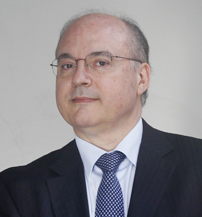 The School of Management, as it was known, became the Faculty of Management and Social Sciences. In 2017, its Master of Business Administration program was ranked among the best in Latin America for the 21st consecutive year, according to the annual publication *América Economía*.
The university offers degrees in Business Management, Economics, Accounting, and International Studies, as well as a wide range of graduate programs and executive training programs.
The Faculty of Communication and Design comprises two schools: one offering degrees in design and the other in communication. The faculty began offering programs in the field of communication in 1996, with degrees in journalism, audiovisual production, and advertising.
Currently, this school offers an undergraduate degree in Communication with four specializations: Audiovisual, Digital Content, Journalism, and Advertising and Marketing, as well as a degree in Business Communication.
In 2008, the faculty signed a framework agreement for collaboration with the California Institute of the Arts (CalArts) in the United States, which helped pave the way for the launch of the degree program in Animation and Video Games (2010). This is the only university degree program in this field offered in Uruguay.
In 2018, another pioneering degree program was launched in the faculty: the degree in Design, Art, and Technology.
 The Institute of Education was established in 1996 with the launch of its first postgraduate degree programs in the field of education, marking the beginning of an academic partnership with the Harvard University Graduate School of Education.
The Training Center for Teaching in Higher Education is part of the Institute of Education. Its mission is to promote continuous improvement in the quality of teaching through support services and professional development for faculty members, both within the university and beyond.
In July 2012, the Institute launched Uruguay’s first Doctor of Education program. This advanced graduate degree, accredited by the Ministry of Education and Culture in 2014, brings together an international network of researchers whose work focuses on issues relevant to educators in Uruguay.
Students from various Latin American countries are pursuing their doctorates. To date, five doctoral degrees have been awarded to graduates of this programme March 2018).
 In April 2017, the first cohort of the Master’s in Training of Trainers began. This graduate program, the only one of its kind in the country, provides a platform for developing skills such as planning, implementing, and evaluating education in its various forms, both within the formal education system and in informal settings.
The Faculty of Architecture was established in 1999 with the mission of offering university degrees in architecture and interior design, as well as diplomas and short-term degree programs in related fields.
Universidad ORT Uruguay currently the only private university that awards an officially recognized degree in architecture, along with the corresponding professional competencies and responsibilities.
External activities and career path
Since its inception, ORT Uruguay has been actively involved in educational research. In line with this focus, the organization has developed experimental projects in the field of educational technology, some of which have received national and international recognition.
Dr. Jorge Grünberg, rector , received the National Technology Prize in 1980 and the Silver Central Regional Prize for Teaching in Technology in Spain in 1984 for his work in the field.
ORT has supported various schools in Montevideo through its extracurricular programs in creative education for elementary schools and information technology for secondary schools.
This assistance included providing the logistical and academic support needed to establish the first computer labs in secondary schools. Today, Universidad ORT Uruguay information technology courses at 14 private schools, including the Network of Jewish Schools in Montevideo, through its Information Technology Knowledge Certification programme.
Jewish studies
In 2003, the Department of Jewish Studies was established with the aim of revitalizing and expanding the program in this field, which had been in place at ORT Uruguay since its founding in 1942.
Its mission is to share Jewish culture and history through the publication of books, the production of films and documentaries, and participation in conferences and exhibitions related to the subject. Among these activities is a course titled “Shoah: The Human Condition and Memory,” which was designated as being of educational interest by the Ministry of Education and Culture in its sixth edition, pursuant to Ministry Resolution 0514/2017.
Since 1982, the university has been editing and publishing the "Ioman ORT" annually for Rosh Hashanah (the Jewish New Year), an almanac that highlights events and figures significant to the Jewish world. The almanac is distributed free of charge.

International cooperation
Since the 1980s, ORT Uruguay has been involved in academic cooperation activities with universities in other countries.
It is a member of major international academic associations, such as the International Association of Universities and the Association of Universities of Latin America and the Caribbean.
The university has academic cooperation agreements with more than 170 academic institutions in Latin America, North America, Europe, Australia, China, South Korea, India, and Israel. These agreements enable academic exchanges between faculty and students and facilitate collaborative activities.
 In 2004, the University established the Student Exchange Office, which is dedicated to bilateral exchange agreements through which more than 100 students from around the world come to ORT each year. One example of these programs is the partnership with Harbin Normal University (HNU) in China, which began in 2009.
The Chinese students spend their third year of their four-year degree program at ORT, as part of a joint Spanish programme by ORT and HNU. They also take courses in regular degree programs alongside local and international students from other countries.
In September 2012, 42 Chinese students arrived in Uruguay; they were the first group of students to participate in an exchange programme a Uruguayan and a Chinese university.
International accreditation
As part of its quality assurance policy, the university has conducted a variety of self-assessments of its degree programs since 2000. In addition, as part of its network of partners and its efforts to strengthen and consolidate its academic programs, Universidad ORT Uruguay hosted international partners conducting evaluation visits.
The university encourages administrative and academic staff to participate in accreditation and quality assurance processes, particularly at the regional level.
In 2005, the undergraduate programs in Electronic Engineering and Telecommunications Engineering were accredited by Mercosur through the Experimental Mechanism for Degree Accreditation (MEXA) for a maximum period of six years.
The accreditation was renewed in 2011 through the ARCU-SUR system, which had replaced MEXA in 2006. The undergraduate degree in Architecture was also accredited by ARCU-SUR in 2009 for the maximum period. This accreditation was renewed in 2016.
These undergraduate programs have had their academic quality certified through the ARCU-SUR regional accreditation system. ARCU-SUR is operated by a network of government accreditation agencies from Argentina, Bolivia, Brazil, Chile, Colombia, Paraguay, Uruguay, and Venezuela, and continually adds new degree programs.
ORT Uruguay has submitted each of its degree programs for accreditation as soon as the network of accrediting agencies made accreditation available for the relevant academic field.
In January 2013, the Master of Business Administration (MBA) program was accredited by the Association of MBAs (AMBA), an international authority in postgraduate management education dedicated to the quality certification of MBA and Doctor of Business Administration programs.
This accreditation places our MBA among the top 6% of accredited master’s degrees in management worldwide. The AMBA accreditation was renewed in 2017.
Faculty
The academic staff consists of more than 1,400 professors and researchers, many of whom work full time and hold advanced degrees, including 158 Ph.D.s and doctoral degrees.
Research
Universidad ORT Uruguay applied research across all of its faculties. This research is carried out in close collaboration with companies and research centers and encourages student participation.
Academic contributions take the form of articles in academic journals, presentations at technical and scientific conferences, books and book chapters, as well as research findings that are transferred to industry in various ways. In 2016, ORT’s academic cluster produced 166 publications across all academic departments.
In 2016, a Technology Center was opened to facilitate collaboration with the biotechnology industry. The center was funded by the National Research and Innovation Agency (ANII) through a competitive grant program. The center’s objectives include contributing to the design of new products and services—including bioprocess design—as well as updating analytical and diagnostic tools, creating genetically modified organisms, and exploring various aspects of protein chemistry and nanotechnology applications.
Support for graduates and entrepreneurs
In cooperation with the Technology Laboratory of Uruguay (LATU) and with support from the Inter-American Development Bank (IADB), Universidad ORT Uruguay the country’s first business incubator, Ingenio, in 2001. It was designed for entrepreneurs and emerging telecommunications and information systems companies.
Based on this experience, the Center for Innovation and Entrepreneurship (CIE) Universidad ORT Uruguay established in 2009 at Universidad ORT Uruguay . The CIE promotes and develops new generations of entrepreneurs. It fosters innovation and an entrepreneurial mindset among students, helps them seize opportunities, and strengthens ties between entrepreneurs and the academic and business communities.
Students and graduates receive job placement support—graduate employability exceeds 95%—as well as support in starting their own businesses, which are often based on students’ final projects. Thousands of graduates excel in their careers, many running their own companies.
Sports & social activities
The Sport and Social Activities Center organizes recreational activities for students and provides the necessary facilities for training so that students can represent the university in local and international sporting events.
The university regularly competes in the following sports:
- Basketball
- Basketball (35+)
- Futsal (men's and women's)
- Handball
- Hockey
- Volleyball (men's and women's)
Students and graduates from all departments participate in games and enter tournaments within the university.
Students who wish to join competitive teams must register for the season in order to participate. During the off-season, activities are organized for students, teachers, and university staff.
Extension activities
The Mother and Child programme a Productive Training programme established in 1988 and served more than 20,000 people while they were operated by ORT Uruguay. Their impact continues today, now that these centers are self-managed—a key objective of the project designed to ensure its long-term sustainability.


The signing of the first agreement with the Municipal Government of Montevideo: Julio Iglesias, then Mayor of the City; Dr. Fernando Scrigna, Secretary General of the Municipal Government of Montevideo; and Prof. Charlotte de Grünberg, General Director of ORT Uruguay.
Among the university's outreach activities, the Integrated Social Action Project stands out.
This project was designed and implemented by ORT Uruguay under an agreement with the Municipal Government of Montevideo and funded by international organizations such as the European Union and the Canadian International Development Agency (CIDA).

The administrative committees that emerged from the community, trained by ORT and supported by local government authorities, now successfully manage the centers.
Each center continues to operate, although now independently.
Infrastructure
Two specialized libraries, housing over 100,000 volumes, are available to students and teachers.
They also have access to thousands of journals, e-books, theses, and articles in a wide range of fields, made available through the university's subscriptions to major bibliographic databases around the world, or through the national portal Timbó.
Reading rooms and conference rooms are also available, as well as Wi-Fi coverage.
The technology infrastructure for academic support includes:
- Over 1,200 state-of-the-art computers connected to high-speed Internet.
- Electronics and telecommunications laboratories.
- TV and radio studios equipped with HD cameras.
- Control rooms and post-production equipment [MdCA1]
- Laboratories for prototype design and construction
- Biotechnology laboratories
Universidad ORT Uruguay the first institution in the country to adopt digital technology for professional production and broadcasting in multimedia formats.
In 2012, the university was selected by the National Research and Innovation Agency (ANII) through a competitive grant process that made possible the establishment of the 3D Prototyping Lab, which opened in June 2013.
The laboratory was the first of its kind in the country and complements other equipment in the School of Design for metalwork, woodwork, and work with plastics and textiles.
In 2017, a second laboratory was inaugurated and became the first Biotechnology Center in Uruguay. The Biotechnology Research and Innovation Center (CBI+I) was selected in a funding competition launched by the National Research and Innovation Agency (ANII), along with other Technology Service Centers from various sectors.
The goal of CBI+I is to foster collaboration between businesses and public and private institutions that generate and require knowledge, providing young scientists with the opportunity to participate in research projects directly linked to industry.
Downtown Campus (photo gallery)

Pocitos Campus (photo gallery)

Looking to the future
Remaining true to its historical roots of providing educational opportunities grounded in social justice, ORT Uruguay funds a scholarship programme benefits over 4,400 students. This programme a diverse and inclusive environment where students from different socioeconomic backgrounds and different parts of the country come together.
It is a forward-thinking organization when it comes to methodological innovation in teaching and learning, making use of new technologies while paying close attention to those who are educationally, socially, and economically disadvantaged.
With over 10,000 students across four faculties and one institute, the university offers 62 different vocational, undergraduate, and graduate programs in the fields of architecture, engineering, biotechnology, management, economics, international relations, design, animation, communication, and education.
In a world where careers are constantly evolving, with some professions disappearing and others emerging at a rapid pace, Universidad ORT Uruguay remains as committed as ever to its students’ success and invests all of its resources to achieve this goal.
Many people have contributed to ORT’s development. Volunteers and professionals have devoted their time, resources, attention, and unwavering commitment to making ORT in Uruguay the great organization it is today.
It is a remarkable and compelling story that presents both a tremendous opportunity and a challenge for the future.
https://www.youtube.com/watch?v=AV3uIVRzB4g