As one of the most joyful holidays on the Jewish calendar, Purim commemorates how the Jewish people were saved from extermination by the Persian king Ahasuerus, because one of his advisors, named Haman, could not tolerate the defiance of the Jew Mordecai, who refused to bow down before him.
The story, as told in the Megillat Esther (Scroll of Esther), recounts how she, as one of the king’s wives, revealed herself to him as a Jew after devising a palace plot to expose the advisor Haman as a traitor and thereby secure the salvation of her people.
The story takes place during the period when the Jews were in exile in Babylon, following the destruction of the Temple in Jerusalem in 586 B.C.E.
Purim, along with Hanukkah (which is usually celebrated in December), are two holidays on the Jewish calendar whose relevance today lies in the struggle against tyranny, the imposition of ideas by force, and intolerance.
Purim commemorates the salvation of a people from what seemed like inevitable physical annihilation; as a result, the celebration takes a tangible form, involving the offering of feasts and gifts to relatives and friends, as well as acts of charity toward those in need.
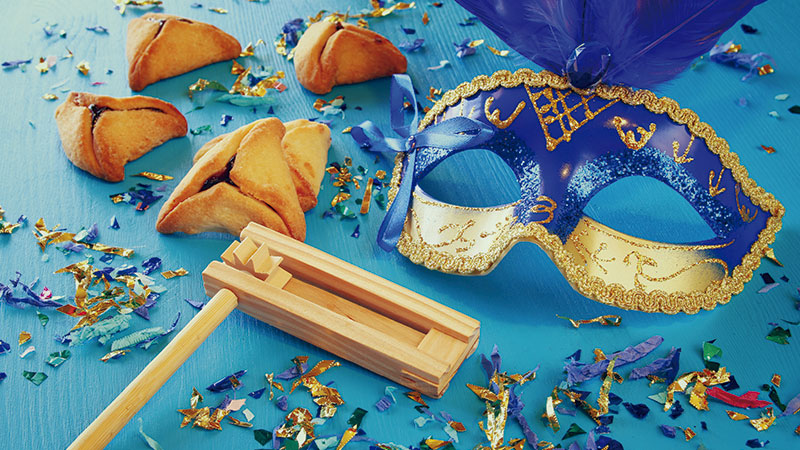
The tradition also includes a costume party, the distribution of mishloach manot (baskets of holiday-specific treats), eating filled pastries called oznei Haman (Haman's ears), and drinking wine "until one can no longer tell the difference between Mordecai and Haman."
The name Purim, the plural of pur, means “to cast lots,” since it was by lot that Haman decided the day of punishment (extermination) that would befall the Jewish people because of Mordecai’s defiance.
Purim is enshrined in Jewish tradition as one of the eternal festivals—those that will continue even after the coming of the Messiah—because it represents a people’s victory over tyranny and despotism, against the abuse of power and intolerance.
A victory that must be renewed forever.