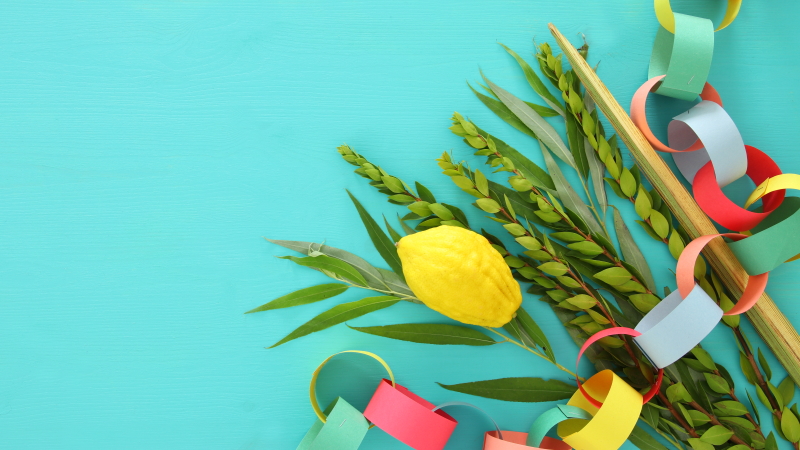
With its roots in the pre-monotheistic period of the Hebrew people, Sukkot—the first festival on the calendar following the days of reflection that begin on Rosh Hashanah and culminate on Yom Kippur—celebrates the end of the harvest season, the reaping of the fruits of a year’s labor, and, on its ninth day, marks the beginning of the new agricultural cycle. On this occasion, the festival begins at sunset on October 15, 2027.
The reading of the Torah (Pentateuch) coincides with this agricultural cycle. During the first seven days of Sukkot, the final chapters of Deuteronomy are read; on the eighth day, the festival of Shemini Hatzeret is observed; and on the ninth—Simchat Torah (the Festival of the Torah)—the cycle of biblical readings begins anew with the first chapter of Genesis.
Tradition holds that, during the eight days in Israel—nine in the Diaspora—that the festival lasts, Jews around the world build small booths in which they dwell during those days. For believers, this serves as a reminder of their dependence on God and of the way Jews lived during their long journey to Israel following their liberation from slavery in Egypt.
It is the most joyous festival on the Hebrew calendar. It celebrates both the material and spiritual harvest of the year that has just ended, symbolized by four elements of nature that characterize the festival and must be present in the sukkah during all the days and nights spent there: palm branches (lulav), which generally form the roof of the sukkah (booth); myrtle branches (from a leafy tree known in Hebrew as Adas); willow branches (from the river willow); and the etrog, a citrus fruit grown in the land of Israel exclusively for this occasion.
These four elements (Arbaat HaMinim), each quite distinct from the others, represent the internal diversity of the Jewish people, who nevertheless feel and recognize themselves as one, gathered together during these days inside the sukkahs, as they offer prayers for the happiness and prosperity of Israel and all the peoples of the world.
This is a fitting occasion to wish the entire ORT family a bountiful harvest in their endeavors this year, 5788.