When they are discarded, they cannot be thrown away with regular trash: they contain valuable materials as well as hazardous components, so they require special handling.
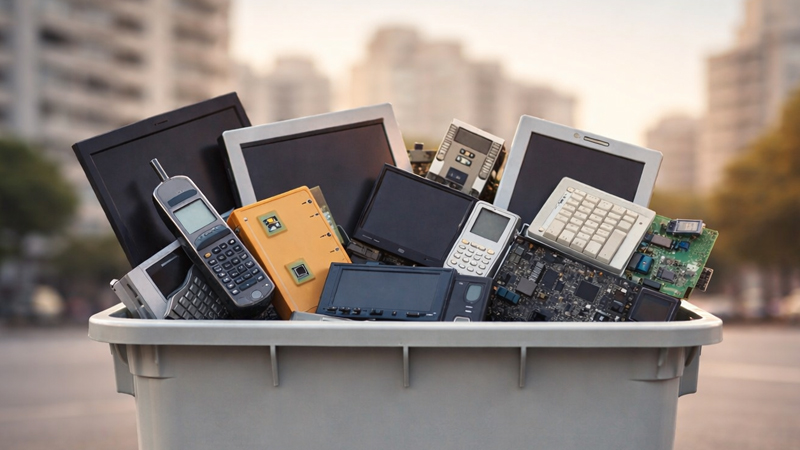
Why It's Important to Recycle WEEE
Recycling WEEE is essential because, if not managed properly, electronic waste can release toxic substances into the air, water, and/or soil, causing irreversible damage.
In addition, some equipment contains highly hazardous substances, such as persistent organic pollutants (POPs), which can travel long distances and accumulate in the tissues of living organisms.
In Uruguay, this issue is particularly significant because the volume of electronic waste generated is high: an average of 11.5 kg per person per year is reported.
How to Dispose of WEEE at the University
To improve recycling:
- Please place only small electronic waste in the purple WEEE container.
- Deliver it without any wrapping or boxes.
- If the device contains personal information (such as a cell phone), delete the data before disposing of it.
What happens next?
WEEE is sent to specific management channels because it contains both recoverable materials and materials that must be treated as hazardous.
Once collected, they go through several stages: collection and transport, secure storage, sorting, and disassembly—a process that often involves many manual steps to separate components (such as removing circuit boards, cables, metals, plastics, and other parts) and improve the quality of the materials that are later recycled.
In some cases, mechanical processes (such as crushing and sorting) are used after dismantling to recover materials.
In Uruguay, there are specialized contractors who perform these tasks, and the recent regulatory framework (Decree 292/24) aims to ensure traceability and collaboration with authorized operators, so that the treatment is environmentally sound and safe.