
The Mandarin Chinese course is practical and designed to equip students with the necessary tools to visit China and navigate the professional environment there, while gaining an understanding of key aspects of contemporary Chinese culture.
The program aims to foster communicative language use by maximizing opportunities for interaction with native Mandarin speakers through the programmes with China offered by Universidad ORT Uruguay.
The selected vocabulary consists of the most frequently used words and those considered most useful.
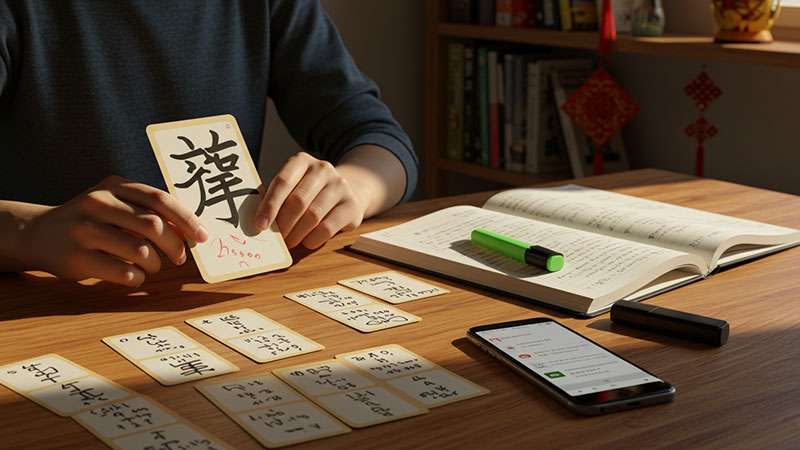
In terms of writing, the focus is on mastering the characters required for the different levels of the HSK (International Mandarin Chinese Proficiency Test).
Each unit has cultural segment related to the theme, which involves a reading, demonstration, or explanation of a relevant aspect of Chinese tradition.

Is it hard to learn Mandarin Chinese?
Although there are thousands of Chinese characters, only 3,000 are used in everyday life.
It is estimated that in just six months, a student can learn the 500 words needed to reach a basic level.
Although it is a very different language, the characters are based on drawings (pictograms) and are easy to recognize once you understand their origins.
The excuse that “it’s too hard” doesn’t apply to Mandarin Chinese, since it’s one of the simplest languages in terms of grammar.
In Spanish, for example, verbs change according to person, number, and tense, and there are also many irregular verbs.
This doesn't happen in Chinese, since the verb never changes; to talk about the future or the past, you simply need to add a particle like "tomorrow" or "yesterday."
Furthermore, there is no masculine or feminine gender, nor is there a plural form, which makes learning this language much easier.
The Importance of Mandarin Chinese
More and more human resources experts are highlighting the importance of learning Chinese as a gateway to opportunities in the job market.
More and more companies, both nationally and internationally, value candidates who are fluent in this language.

Companies that need to establish business agreements with China require staff who can negotiate with Chinese executives.
For those just starting out in the job market, it’s important to stand out from the crowd. And knowing Chinese will give you excellent opportunities to catch the attention of future employers.
Speaking Mandarin Chinese will set you apart from other candidates and add value to your resume.
Having a basic knowledge of Mandarin Chinese will be very useful when you travel to China, since most Chinese people don't speak any other languages—not even English.
Knowing Mandarin Chinese opens the door to one of the world's oldest and most fascinating cultures.
Because it is so different from other languages, learning Chinese will be a real mental workout. Mastering Chinese calligraphy is a unique experience that many experts believe fosters the development of artistic skills.
One of the main advantages of learning Chinese characters is that you’ll also gain access to other languages, such as Cantonese and Japanese, which use many traditional or simplified Chinese characters in their writing.

Interesting facts about this language
- Chinese is the oldest language in the world. Inscriptions dating back 5,000 years have been identified.
- This language does not have a specific word for " yes."
- In names, the surname always comes first and usually consists of one character (one syllable) or sometimes two.
- In the past, Chinese was written from top to bottom, because before the invention of paper, bamboo slips were the only medium available for writing. Today, it is written in the same way as in the West.
- "Have you eaten?" That's how people greet each other in China—it's the equivalent of our "How are you?"
- In Chinese language courses, students learn simplified characters, as these are the ones that have been used in mainland China since the second half of the 20th century. They are simpler characters that require fewer strokes. Traditional characters are still used in regions such as Taiwan, Hong Kong, and Macau.
Language teaching materials
On June 13, 2014, the Chinese Corner was inaugurated in the library of the Downtown Campus, in cooperation with the Chinese National Office for Teaching Chinese as a Foreign Language (Hanban).
There has than 300 books, CDs, and DVDs has for learning about Chinese language, culture, and history.
These materials are available to all students interested in learning Chinese.
The HSK Exam (Hanyu Shuiping Kaoshi)
This is the only official, internationally recognized exam designed for non-native speakers of Chinese who are learning the language for academic, professional, or communication purposes.
It is organized by the Chinese institution Hanban, in close collaboration with Beijing Foreign Studies University.
This exam consists of six levels that correspond to the Chinese Language Proficiency Scale for Speakers of Other Languages (CLPS) and the Common European Framework of Reference for Languages.
Candidates who pass the HSK Level 1 exam are able to understand and use some basic Chinese phrases and words, and can meet specific communication needs.
- HSK 1 (100 characters) - Level 1 A1
You can understand and use some very basic Chinese phrases and words, as well as meet specific communication needs. - HSK 2 (300 characters) - Level 2 A2
The test-taker can use Chinese in familiar everyday situations and engage in simple, straightforward exchanges, having achieved the first level of basic proficiency in the language. - HSK 3 (600 characters) - Level 3 B1
You can use Chinese for basic communication in professional, academic, and social contexts. Additionally, when traveling in China, you will be able to handle communication tasks in most situations that arise. - HSK 4 (1,200 characters) - Level 4 B2
The test-taker can use the Chinese language to discuss a wide range of topics and engage in conversations, communicating with relative fluency with native Chinese speakers. - HSK Level 5 (2,500 characters) - C1 Level
You can read Chinese newspapers and magazines, enjoy programmes and television programmes in Chinese, and deliver relatively comprehensive speeches in Chinese. - HSK 6 (5,000+ characters) - Level 5 C2
The candidate is able to easily understand news in Chinese when listening or reading, and can also fluently express their opinions both orally and in writing.

Institution offering the courses
The Uruguay-China Cultural Integration Center (Cicuch) promotes all aspects of ancient and modern Chinese culture.
An understanding of culture fosters and strengthens bonds of friendship and encourages exchange, which is the primary purpose of this center.
On July 21, 2015, Universidad ORT Uruguay CICUCH signed a cooperation agreement aimed at developing collaborative activities in the cultural sphere and offering Mandarin Chinese language courses on the university’s campus
Annual course
March 10 to December 15, 2026.
Course load: one hour and fifteen minutes per week.
Schedule: Tuesdays at 8:00 p.m.
Format: online via Zoom
Cost
General public: $3,000 per month, payable in advance by the 10th of each month.
A one-time registration fee of $3,000 is required (this does not apply to subsequent courses). This fee may be paid in two installments (half in March and half in April).
Payments must be made in advance by the 10th of each month.
Students at Universidad ORT Uruguay a 20% discount on the monthly tuition and registration fee.
To register, please contact CICUCH by email at centroicuch@gmail.com