Para desarrollar más este tema y la importancia de las soft skill o habilidades blandas dialogamos con el docente Mag. Pablo Hernández y con el consejero estudiantil, Psi. Víctor Lutz, para que desde sus roles dieran sus opiniones sobre el desarrollo y la incorporación de estas habilidades dentro del sistema educativo.
Habilidades blandas, qué son y cómo incorporarlas
Las habilidades blandas, también conocidas como habilidades sociales, interpersonales o no técnicas, son características personales y sociales que van más allá de los conocimientos técnicos y se refieren a cómo interactuamos y nos relacionamos con los demás.
En el ámbito de la tecnología, estas habilidades son cada vez más importantes debido a la naturaleza colaborativa y multidisciplinaria de muchos proyectos tecnológicos.
Pablo.
Para Pablo era importante desde que se recibió borrar el estereotipo de los “ratoncitos de cuatro paredes” como muchos percibían o los graduados del área de tecnología. Fue así que empezó a trabajar, junto con el área de Software Factory de la facultad, para abrir materias electivas sobre este tema y se incorporaron a la grilla las siguientes electivas: Gestión de Comunicación, Habilidades de Equipo, Técnicas de Negociación y Resolución de Conflicto, y Habilidades Gerenciales.
Tanto fue el interés que despertaron en los estudiantes que pasaron de materias electivas a curriculares.
“El foco de las materias siempre fue lo humano, brindar herramientas al estudiante para que cuando se enfrente a un trabajo en una empresa se desenvuelva mejor”, explica Pablo y agrega, “incluso son materias que les sirven a los estudiantes para desarrollar sus proyectos de fin de carrera, que es el primer escalón tangible en el que se enfrentan a un cliente y al trabajo en equipo con distintos roles”.
“Las habilidades blandas son atributos personales y sociales que nos permiten interactuar efectivamente con los demás, adaptarnos a diferentes situaciones y desempeñarnos de manera exitosa en el ámbito laboral y en la vida en general.
Se centran en aspectos como:
- La comunicación
- El trabajo en equipo
- El liderazgo
- La resolución de problemas
- La creatividad,
- La inteligencia emocional
- La adaptabilidad
- La flexibilidad
- Los valores humanos
- La capacidad de negociación
Y muchas otras competencias relacionadas con la interacción humana.
En el ámbito de la tecnología, estas habilidades son cada vez más importantes debido a la naturaleza colaborativa y multidisciplinaria de muchos proyectos tecnológicos”, explica Pablo.
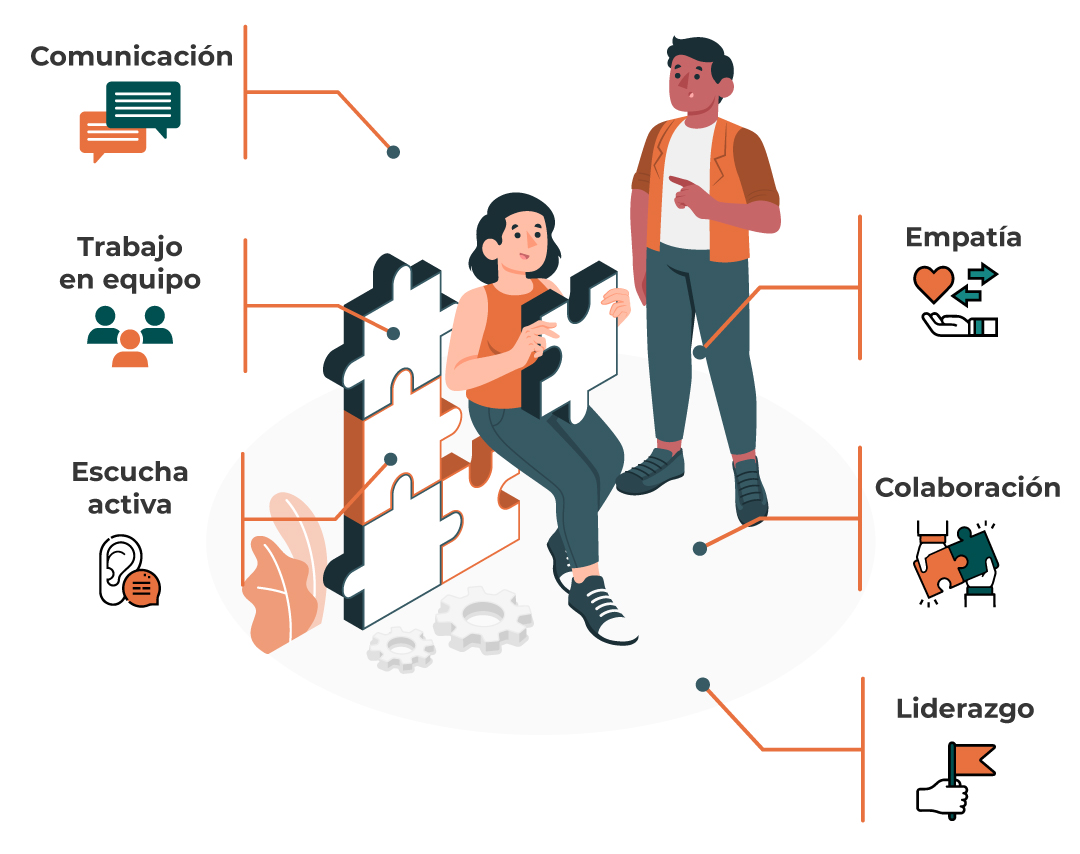
Por su parte, Víctor agrega la importancia de las habilidades comunicaciones como el habla, la escritura y la comunicación no verbal, que es el 75 % de la comunicación. Subraya que dentro de las materias se tratan temas como colaboración, conflicto, competencias, negociación y mediación.
Para Víctor, el sistema educativo es el lugar propicio para desarrollar estas habilidades.
Promueven la escucha activa, aprenden a trabajar en equipo, a respetar las ideas de los demás y a aprovechar la diversidad de perspectivas.
“El estudiante o profesional se va a integrar en una organización, mediado por relaciones humanas, para cumplir una tarea con un conjunto de personas que no conoce y donde debería adaptarse rápidamente”, dice y continúa “es por esto, que las relaciones interpersonales se encuentran dentro del marco de los equipos de trabajo, donde se juega la 'tarea en el proceso', en la búsqueda de desarrollar un mejor producto posible.”
“Mientras el equipo va resolviendo los problemas técnicos, paralelamente se va jugando una suerte de relaciones y vínculos que posibilitan el proceso, por lo tanto, el tema de la comunicación es un punto nodal”, dice Víctor.
“Se debe considerar la comunicación como una técnica y no verla solo como un hecho cotidiano, que, de tan cotidiano, damos por sentado que el otro, ya sea el compañero o el cliente, entiende y comprende lo que estamos diciendo, entonces es necesario desarrollar la capacidad de emitir mensajes claros y la capacidad de escucha”, explica.
Otro punto que destaca es la negociación, que adquiere gran relevancia en los momentos de conflictos o crisis y reflexiona: “somos humanos y el conflicto va a estar siempre presente en nuestra vida, es por esto, que es necesario tenerlo claro para enfrentar estas situaciones e ir directamente a sus resoluciones, ya sea en el interior del equipo o con el cliente.”
Preparación para el liderazgo
Tanto para Pablo como para Víctor, las habilidades blandas también desempeñan un papel importante en el desarrollo de líderes efectivos, líderes que conozcan a sus equipos de trabajo, que puedan ver las necesidades del otro, que sepan identificar roles y cómo resolver conflictos.
El sistema educativo universitario puede brindar oportunidades para que los estudiantes asuman roles de liderazgo en proyectos académicos u otras actividades extracurriculares.
El liderazgo eficaz requiere habilidades de comunicación, resolución de conflictos y motivación de equipos, entre otras.
Al desarrollar estas habilidades durante su educación universitaria, los estudiantes estarán mejor preparados para asumir roles de liderazgo en su vida profesional.
Para concluir Pablo menciona, “estamos convencidos de que este es el camino, estas habilidades se pueden enseñar, entrenar y mejorar, son aplicables y necesarias en diferentes entornos laborales y diversos contextos, también complementan las habilidades técnicas para lograr un desempeño óptimo en el trabajo, la colaboración efectiva y el desarrollo de relaciones sólidas con los demás”.