El acuerdo multipartidario político-institucional de amplia base le da sostenibilidad y le quita incertidumbre a las inversiones en el sector de la energía, donde el sistema eléctrico nacional, que funciona dentro del marco de una política energética estable, enfrenta nuevos retos que surgen por los cambios ocurridos en el mercado, tales como el crecimiento de la demanda, la progresiva incorporación de actores privados en la generación eléctrica a partir de fuentes renovables y la futura instalación de una planta regasificadora en Montevideo.
El sector eléctrico en Uruguay, consolidado desde hace más de cien años, desempeña un rol relevante en la economía nacional. En 2012, el sistema contaba con una capacidad instalada de 3.049 MW de potencia, basado principalmente en la generación de las centrales hidráulicas (1.538 MW) y de las plantas térmicas que funcionan con combustibles fósiles (1.223 MW), siendo aún incipiente el proceso de incorporación y desarrollo de fuentes no convencionales, en particular biomasa (236 MW) y eólica (52 MW). El país tiene una cobertura muy alta para la región, con una tasa de electrificación del 98,7% como resultado de la construcción de redes rurales en las últimas décadas. Sin embargo, el sistema eléctrico registra importantes pérdidas que totalizan un 19%, de las cuales el 3% corresponden a la transmisión y un 16% a la distribución, siendo gran parte atribuible a factores no técnicos. Con una demanda en crecimiento continuo, en el rango de entre 3% y 4% anual, y una capacidad de desarrollo de generación hidroeléctrica de gran escala prácticamente agotada, la dependencia del petróleo y de las importaciones será cada vez mayor si se no logra desarrollar otras fuentes de energía.
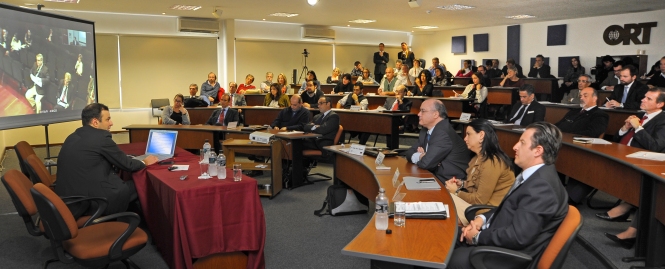
Esta síntesis se desprende del Informe del Sector Eléctrico de Uruguay presentado por el ingeniero eléctrico y doctor en ingeniería eléctrica Mario Vignolo, jefe del Departamento de Potencia en el Instituto de Ingeniería Eléctrica de la Facultad de Ingeniería de la UdelaR, en la primera jornada del Ciclo de Discusión de Políticas Públicas organizada por la Universidad ORT Uruguay y CAF-Banco de Desarrollo de América Latina. El tema de dicha jornada realizada el 28 de mayo de 2013 fue “El Sector Eléctrico en Uruguay: Situación y Perspectivas”.
El trabajo del Ing. Vignolo fue comentado por tres panelistas uruguayos: el ingeniero industrial mecánico y magíster en economía de la energía Beno Ruchansky, ex Presidente de UTE; el contador público Alejandro Perroni, ex Gerente General de UTE y actual Presidente del Directorio de Gasur; y el ingeniero industrial, opción eléctrica, Juan José Carrasco, ex Gerente del Área de Distribución de UTE y actual director ejecutivo de la Comisión de Integración Energética Regional (CIER). La tarea de moderador le correspondió al ingeniero Mauricio Garrón, especialista sénior en energía de CAF-Banco de Desarrollo de América Latina.
Con el objetivo de evaluar la situación y perspectivas del sector eléctrico en Uruguay, los panelistas procuraron identificar oportunidades y obstáculos para el desarrollo del sector, evaluando entre otros elementos, el marco regulatorio, la política energética del Estado, la gobernanza y gestión de las empresas estatales, la diversificación de las fuentes, los orígenes y los proveedores energéticos, la integración y las interconexiones eléctricas con los países vecinos y la posibilidad de que Uruguay se convierta en un país con excedentes de energía. A continuación un resumen de los principales temas tratados por los especialistas.
El marco regulatorio debería ser revisado para que seadecue a la experiencia acumulada en los últimos años
El Informe del Sector Eléctrico de Uruguay presentado por el Ing. Mario Vignolo expresa: “La Ley de Marco Regulatorio de 1997 (…) establece la separación de roles dentro del Estado en el sector eléctrico, diferenciando la actividad empresarial a cargo de UTE (Administración Nacional de Usinas y Trasmisiones Eléctricas) de la actividad regulatoria a cargo de (…) la URSEA (Unidad Reguladora de Servicios de Energía y Agua). Asimismo, establece la libre competencia en la generación y la comercialización de energía, creando un Mercado Mayorista de Energía Eléctrica (MMEE) y un administrador de dicho mercado, ADME (Administración del Mercado Eléctrico). Se mantiene, sin embargo, tal cual establecía la Ley Nacional de Electricidad de 1977, el régimen de servicio público para la transmisión y la distribución de electricidad, que funcionan como monopolios naturales, siendo el titular de tales servicios la empresa UTE. Tanto para la transmisión como para la distribución de energía eléctrica, las tarifas son reguladas, al igual que la calidad de servicio, rigiendo el principio de libre acceso a las redes, el cual permite la competencia de los generadores dentro del mercado”.
Uno de los integrantes del panel, el Ing. Beno Ruchansky, comenzó preguntándose si el actual marco regulatorio es adecuado para contribuir al crecimiento sostenido del sector eléctrico. Para poder dar una respuesta manifestó que hay que analizar el tema, por un lado, desde el punto de vista de las políticas energéticas y, por otro, desde la óptica de la arquitectura institucional y regulatoria a efectos de evaluar si favorece la concreción de nuevos proyectos.
Política energética. El Ing. Ruchansky destacó el comentario del Ing. Vignolo en la presentación de su trabajo, al señalar la importancia de la política energética del Estado porque el mercado por sí mismo puede no conducir a resultados adecuados.
El ex Presidente de UTE explicó que el crecimiento del sector eléctrico se ha dado por el lado de la generación térmica al estar prácticamente agotada la explotación a gran escala de las represas hidroeléctricas en Uruguay. Esta situación nos plantea un problema porque determina un aumento importante de los costos de la energía. La ausencia de nuevos ingresos de potencia al sistema eléctrico en los últimos 15 años provocó sobrecostos cuando se tuvo que atender una mayor demanda con generación de energía a partir de combustibles derivados del petróleo, o cuando hubo que recurrir a la energía de los países vecinos, que no siempre ha estado disponible y que, además, es cara. Ante ese diagnóstico, sostuvo que es necesario que los países tengan políticas energéticas, tal como lo había expresado el Ing. Hamilton Moss, vicepresidente de Energía de CAF-Banco de Desarrollo de América Latina, al inaugurar el Ciclo de Discusión de Políticas Públicas.
En Uruguay, la política energética (N. del R.: Aprobada por el Poder Ejecutivo en 2008 y ratificada por la Comisión Multipartidaria de Energía del Parlamento en 2010) tiene por objetivo alcanzar un suministro más seguro y tener una energía más barata y menos dependiente del petróleo y de las importaciones, con lo cual se ganan grados de independencia energética. Para Ruchansky, esta política que ha adoptado una estrategia de diversificación de fuentes y de promoción de energías autóctonas y renovables, tiene un plus ya que es parte del resultado de acuerdos multipartidarios en diversas áreas, entre ellos en el sector energético, lo cual la convierte en una política de Estado. Esto le da sostenibilidad y le quita incertidumbre a las inversiones ya que el eje energético es el único que no ha sido puesto en tela de juicio en ninguna instancia pública.
A su vez, el Cr. Alejandro Perroni valoró que la política energética haya sido refrendada por un acuerdo político-institucional de amplia base. No obstante, puntualizó que este tipo de acuerdos deben ser revisados y vueltos a discutir al cabo de cierto tiempo de acuerdo con los cambios de las realidades del mercado. De lo contrario, aparecen discontinuidades en la política. Puso como ejemplo que, desde que se aprobaron los acuerdos de la Comisión Multipartidaria con metas de corto, mediano y largo plazo, han aparecido reservas de shale gas, se produjo el accidente de la planta nuclear de Fukushima y se cayó en forma estrepitosa el precio de los paneles fotovoltaicos.
Arquitectura institucional y regulatoria. En términos generales, esta arquitectura se ha ido consolidando al establecerse una separación de roles, con el Poder Ejecutivo en la definición de las políticas energéticas, con la URSEA en su rol regulador, con la ADME como administrador del mercado y UTE en el rol empresarial. La Ley de Marco Regulatorio de 1997 hoy vigente consagra la libre competencia, siendo la transmisión y la distribución monopolios naturales y UTE el titular de los servicios.
Aunque UTE hace contabilidad regulatoria manteniendo la separación contable de actividades, el Ing. Ruchansky puntualizó que la empresa permanece integrada verticalmente. Si se hubiera hecho la separación de manera tal que cada uno de los eslabones constituyera una razón social diferente, eso le habría generado costos de transacción totalmente innecesarios dado el tamaño reducido del mercado local.
Cuando se observa el contexto regional y mundial puede verse que los países que tomaron otros caminos en esa materia se están dando vuelta. En la región está cada vez más acentuada la tendencia a crear empresas energéticas integradas vertical y horizontalmente con el propósito de competir en un mundo cada vez más globalizado. “Competir” muchas veces se transforma en “sobrevivir”. En ese sentido, Ancap (Administración Nacional de Combustibles, Alcohol y Portland) ha aplicado una política de fortalecimiento del eslabón de distribución y ha procurado establecer alianzas importantes que le permitan integrarse, tanto verticalmente para obtener petróleo como horizontalmente para ingresar en el negocio del gas natural. Según Ruchansky, “la integración vertical de UTE es un activo importante para el país y para el propio sector eléctrico”.
Para complementar este punto, el Cr. Perroni señaló que Uruguay necesita hacer una readaptación del marco regulatorio para seguir creciendo en el sector eléctrico. “Es preciso instrumentar una reforma que nos permita adecuar nuestra realidad actual a una realidad pensando en el futuro. Que sea un cambio que nos lleve a reconocer como hemos logrado desarrollar este sistema y como continuar avanzando”, dijo. Agregó que las reglas con que funciona un sistema generan mucho valor en el largo plazo y cuando no se tratan a tiempo generan “disvalor” en el largo plazo, o sea que no hacer nada puede terminar teniendo un alto costo.
|
Gran parte de los decretos reglamentarios de 2002 no se está aplicando El Informe del Sector Eléctrico de Uruguay preparado por el Ing. Mario Vignolo señala que la Ley de Marco Regulatorio de 1997 fue reglamentada a través de cuatro reglamentos propuestos por la ex UREE (Unidad Reguladora de Energía Eléctrica), luego sustituida por la URSEA (Unidad Reguladora de Servicios de Energía y Agua), que los emitió como Decretos entre julio y septiembre de 2002:
Estos reglamentos, según el Informe Sectorial, establecen en detalle el funcionamiento del mercado definiendo los agentes y participantes del mismo, sus derechos y obligaciones, las formas en que se realizan las operaciones de compra y venta de energía, así como también el régimen tarifario de la transmisión y de la distribución. Sin embargo, el Ing. Ruchansky observó que gran parte de dichos reglamentos no se están aplicando. En realidad, el sector eléctrico no evoluciona por ese camino. La política energética se viene implementando a través de decretos del Poder Ejecutivo, que poseen el mismo rango jurídico que los decretos reglamentarios de la Ley de Marco Regulatorio. En ese sentido, es importante elaborar una reglamentación que se adecue a la experiencia acumulada en los últimos años y que dé coherencia a ese marco normativo. |
El riesgo de las consideraciones macroeconómicas en la fijación de las tarifas eléctricas
El Informe del Sector Eléctrico de Uruguay expresa: “Las tarifas de energía eléctrica en Uruguay son fijadas por el Poder Ejecutivo teniendo en cuenta las propuestas de UTE. El criterio utilizado para determinar las tarifas es que UTE tenga ingresos que le permitan cubrir los costos de operación, la depreciación de los bienes afectados por el servicio, y un beneficio razonable. En la práctica, otras consideraciones macroeconómicas se añaden a estos objetivos, tales como el impacto sobre el equilibrio financiero del Estado y la inflación”.
Para el Ing. Ruchansky, la primera parte de ese párrafo es una buena noticia, tanto para el inversor como para la banca de desarrollo que presta a los inversores y a la propia UTE. Sin embargo, el panelista se planteó una pregunta con respecto a cómo afectan las “otras consideraciones macroeconómicas” a las tarifas eléctricas y, por tanto, a la situación económico-financiera de la empresa.
“Hay hechos puntuales, tales como necesidades macroeconómicas, políticas antiinflacionarias u otras, que pueden coyunturalmente haber afectado algún ajuste tarifario. Pero, si se toman en cuenta períodos más extensos, se advierte que dichos ajustes se corrigen en el largo plazo y que UTE no ha sido desfinanciada, lo cual no es algo banal”, señaló Ruchansky. Agregó que cuando se observa la historia de las empresas eléctricas de la región, el hábito de tomar a sus tarifas como ancla antiinflacionaria o como operaciones de rédito político en años preelectorales ha tenido como consecuencia su desfinanciamiento y la desmejora de su gestión. “Es importante resaltar que, en las últimas décadas, eso no ha sucedido en el caso de UTE, por lo cual hoy tiene una situación económico-financiera buena”, dijo.
Gobernanza: ¿quién es el dueño de UTE?
“Las empresas públicas ocupan un lugar central en la economía”, afirmó el Ing. Juan José Carrasco. En efecto, una empresa estatal como UTE que deja una utilidad de más de US$ 2.000 millones anuales no es un asunto menor. Los entes públicos son complejos porque sus clientes actúan a veces como clientes cuando utilizan sus servicios, en otras oportunidades como ciudadanos y en ciertos casos como accionistas. Sucede algo similar con sus dueños. A veces actúan como propietarios porque quieren dinero y en otras oportunidades funcionan para apalancar distintos tipos de políticas sociales y, entonces, trabajan entre el ámbito político y el de propietario. “Por eso, es necesario aclarar los roles de quién hace la política, quién regula y quién realiza la actividad empresarial”, sostuvo Carrasco.
Uno de los principales problemas de UTE es determinar quién es su dueño. ¿Es el Ministerio de Industria, Energía y Minería (MIEM), el Ministerio de Economía y Finanzas (MEF), la Oficina de Planeamiento y Presupuesto u otro? Esta duda, prosiguió el director ejecutivo del CIER, le genera restricciones a UTE en su actividad empresarial; pero esas restricciones solo deberían estar limitadas a aquellas que debería tener para cumplir la política energética que está definida y la regulación existente sobre las empresas.
Gestión. “¿Cómo se podría colaborar para que las empresas públicas sean eficaces y eficientes?”, se preguntó el Ing. Carrasco. Su respuesta apuntó a que los costos de funcionamiento de estos entes deben ser los más bajos y su rentabilidad tiene que ser la más alta. Ese es el mensaje que se le debe transmitir a quienes las gestionan. El derecho de administrar esas rentas corresponde a las personas que fueron elegidas por la ciudadanía, pero no son ellos quienes tienen que gestionar las empresas públicas. Esas relaciones en las cuales el Estado actúa como dueño deben ser de alguna forma explicitadas y fijadas por escrito. Existen ejemplos en el mundo al respecto, como es el contrato de gestión que tiene Copel, que sigue siendo de capital público pero adopta reglas de la Bolsa. También hay otras empresas públicas que tienen una mínima apertura de capital en Bolsa, lo cual introduce una serie de controles y de formas de gestión que aseguran transparencia y generan confianza.
El Ing. Carrasco señaló que se ha producido un hueco generacional en los recursos humanos de las empresas públicas en Uruguay. Luego de la reducción de personal decidida a partir de los años ’90, tanto por razones de eficiencia como por temas legales. Por lo tanto, se debe tratar de hacer una transmisión de experiencias y dar capacidades para que los más jóvenes puedan gestionar las empresas en el futuro. Eso implica que esa gente tenga la habilidad de captar los conocimientos más avanzados en el mundo y también desarrollar conocimiento propio. “Se requieren recursos humanos calificados para que las empresas públicas sean eficaces y eficientes”, dijo.
|
Reformar la gestión de las empresas públicas va a insumir mucho tiempo “Las fronteras y las relaciones entre UTE y Ancap serán cada vez más fuertes y fluidas, así como sus puntos de contacto serán más importantes en los próximos años”, pronosticó el Cr. Perroni. En Uruguay —prosiguió el Presidente del Directorio de Gasur— tenemos que resolver un problema importante al que sucesivamente se le ha ido dejando en la pila de asuntos pendientes. Hay empresas públicas que funcionan con normas jurídicas de gobierno corporativo que estructuralmente son anteriores a la Segunda Guerra Mundial y no es posible encarar el siglo XXI con esta estructura de gobernanza corporativa. El Cr. Perroni coincidió con lo expresado por el Ing. Ruchansky respecto a que Uruguay necesita empresas energéticas fuertes e integradas verticalmente, que sean capaces de competir localmente y también de competir y desarrollarse en la región y en el mundo; pero se precisan instrumentos adecuados para alcanzar esos objetivos. “Este no es un tema de voluntad o que solo se lo haya pensado en Uruguay”, dijo. En este sentido, puso de relieve un trabajo de CAF titulado “Lineamientos para el buen gobierno corporativo de las empresas del Estado”. Entre los muchos ejemplos valiosos en el mundo, destacó lo que haciendo Petrobras en Brasil, que es una muestra de cómo un cambio estructural en la forma de gestionar a este tipo de empresas puede generar muchísimo valor a la sociedad. Según Perroni, las empresas públicas uruguayas tienen el material, las capacidades y las fuerzas para enfrentar proyectos de escala que requieren fortaleza, velocidad de decisión, análisis riguroso, y contratación rápida de profesionales de primer nivel. Pero fue crítico de que ante problemas de distinta índole, entre ellos los fiscales, en los entes del Estado, terminamos buscando soluciones ad-hoc y creando una sociedad anónima para ver cómo podemos enfrentar los desafíos. Manifestó que ha llegado el momento de empezar a analizar el tema en su globalidad y mirar la experiencia de otros países que han logrado alcanzar los equilibrios necesarios y defender el interés social. Sin embargo, prevé que “un cambio de esta envergadura va a insumir mucho tiempo porque es difícil pensar que se pueda resolver en un par de días”. |
Diversificación de fuentes, orígenes y proveedores de energía
Todos los panelistas coincidieron en que la estrategia de diversificación que establece la política del sector tiene como expresión concreta la promoción de energías no convencionales y la introducción de gas natural a la matriz energética.
El Cr. Perroni sostuvo que la decisión de contar con una planta regasificadora en Uruguay es una medida estratégica muy valiosa porque estamos hablando de un combustible que se está utilizando en todo el mundo, que están surgiendo nuevas reservas, que se está desarrollando un mercado spot y que tiene un bajo nivel de emisiones contaminantes. De acuerdo con la mayoría de los expertos, el gas natural es el combustible bisagra entre un mundo que hoy utiliza más hidrocarburos y un mundo que marcha hacia una mayor presencia de renovables.
Para el Presidente del Directorio de Gasur, es importante que Uruguay aproveche el momento estratégico de disponibilidad de equipamiento, tasas de interés internacionales en sus niveles mínimos y tasas de riesgo país muy bajas, porque sabemos que no siempre va a ser así. Esta observación vale para la planta de regasificación así como para otros proyectos de infraestructura. Agregó que la introducción del gas natural en Uruguay tiene otro conjunto de externalidades que son muy valiosas. Por ejemplo, todo lo que se puede hacer en el sector transporte, en la flota, en el desarrollo de la industria, etc. nos permitirá realizar grandes progresos.
En materia de recursos renovables, Perroni abogó por avanzar en el plan eólico. “Tenemos que monitorear permanentemente el equilibrio entre potencia firme y menores costos que puedan surgir de la introducción de fuentes autóctonas y empezar a mirar a la energía fotovoltaica que lentamente comenzará a ser una alternativa viable”, dijo
Contratos. El Ing. Ruchansky destacó la conveniencia de que UTE no dependa de grandes contratos de importación y que ese criterio se haga extensible a los contratos de compra de energía en el mercado eléctrico local, lo que no implica dejar de sacar provecho de los beneficios del comercio de energía eléctrica y, a la vez, seguir pugnando por alcanzar mayores niveles de integración.
Explicó que no es lo mismo para UTE negociar con un proveedor que suministre 400 MW que tratar con otro que solo tiene 50 MW. El objetivo es evitar que se den en el mercado concentraciones que terminen limitando su capacidad de negociación. Nuestro sistema es aún incipiente y, en consecuencia, sería bueno sacar provecho de las experiencias de otros países que han profundizado en esta área y evaluar cuáles han sido sus aciertos y errores. Agregó que sería interesante que se estableciera un esquema regulatorio para las empresas públicas, tal como se desprende de algunas declaraciones del Presidente de la URSEA, porque estos marcos regulatorios se fijaron con un criterio donde se pensaba que solo iban a regular a empresas privadas. Concluyó expresando que sería bueno “aggiornar” dicho esquema y darle un contenido específico respecto a la práctica actual.
Integración e interconexiones avanzarán con la instalación de una planta regasificadora
El Ing. Carrasco manifestó que Uruguay necesita urgentemente contar con más potencia firme y que una vía para conseguirla es a través de la integración regional ya que limita con dos grandes mercados. Recordó que a partir de los años ’90, el Estado uruguayo apostó a que la potencia firme estaba en Argentina y, a su vez, hubo mucha lentitud en adjudicar una planta de ciclo combinado como alternativa. “Entonces, quedamos rehenes de negociar la energía eléctrica a través de las interconexiones, cuyos precios siempre nos resultaron más caros. Las experiencias de integración no resultaron siempre positivas para los países, debido a problemas propios de los mercados de los países exportadores, generando en toda Latinoamérica una tendencia a buscar la autarquía en materia de generación para cubrir los riesgos, pero esa política supone costos mucho más altos”, dijo.
La introducción del gas natural es un tema clave ya que la eventual rentabilidad de la planta regasificadora de Gas Sayago va a colaborar con el tema de integración e interconexiones.
|
Es improbable que Uruguay se convierta en un hub energético regional
Ante la pregunta de un participante acerca de las posibilidades de que Uruguay se convierta en un hub energético regional dada la futura instalación de una planta regasificadora en Montevideo, los panelistas dieron respuestas coincidentes, aunque esbozaron algunos matices. “Cuando se ven los planes de expansión eléctrica en América Latina, todos los países se ven a sí mismos como exportadores, pero ninguno se está planteado ser importador del otro”, manifestó el Ing. Beno Ruchansky. Agregó que no sabe si Uruguay será el hub de gas natural de la región. Sí cree que existe una coyuntura favorable para pensar que dentro de algunos años este país pueda ser excedentario en energía eléctrica y exportar ese excedente a precios razonables. En ese sentido, prevé que los próximos años van a marcar una diferencia sustancial con respecto a los anteriores cuando el país era deficitario en generación energética. Para el Cr. Alejandro Perroni, la historia de Uruguay en el sector energético cuenta con un patrimonio muy importante basado en su trayectoria institucional, tanto del lado del cumplimiento de los compromisos asumidos como en el de la seguridad jurídica que siempre ha mantenido. Por consiguiente, si la nueva infraestructura le permitirá tener un excedente de energía, también va a jugar un rol muy importante la institucionalidad, la capacidad de negociación y de articulación, así como el posicionamiento geográfico y la escala de Uruguay. Sin embargo, consideró que “hub es una palabra grandilocuente”. “Es probable que Uruguay pueda colocar sus excedentes de energía en los países vecinos y, a su vez, le va a permitir negociar en momentos que Argentina y Brasil necesiten energía. Lo más importante que se va a lograr con la planta regasificadora, será contar con más energía y tener precios razonables para poder competir”, expresó el Ing. Juan José Carrasco. Si bien el tamaño de Uruguay puede ser un problema para que se convierta en un hub regional, el autor del Informe del Sector Energía, Ing. Mario Vignolo, sostuvo que la instalación de una planta regasificadora es “una oportunidad para que el país se convierta en un laboratorio en muchos aspectos”. |