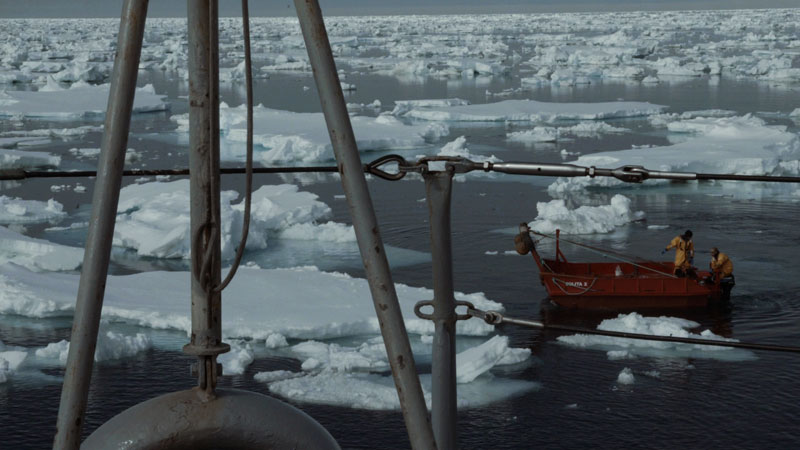
La película plantea dos tipos de viaje a la Antártida. Por un lado, un viaje físico, a través del esfuerzo, el trabajo y la dedicación de un grupo de hombres que en un barco militar atraviesa distintos mares para llegar a cumplir su misión en la Antártida. Por otro lado, un viaje espiritual que emprendemos a través del continente blanco, guiados por una voz que parece brotar de este desolado desierto congelado.
En conversación con el productor de la película, Gerardo Castelli, buscamos comprender qué es lo que hay detrás de este hombre congelado.
¿Cómo surgió la idea de este proyecto?
Hace cuatro años que trabajamos con Carolina en esta película, todo surge de una fotografía que fue tomada por su madre, en que un hombre coloca una bandera en un asta, en medio de un paisaje nevado. La madre de Carolina es científica y ha viajado varias veces a la Antártida, y de esa fotografía surge una pregunta, ¿por qué vamos hasta el fin del mundo a intentar replicar gestos de una sociedad que no existe en ese lugar desolado? ¿Por qué hombres y mujeres arriesgan sus vidas intentando cumplir misiones (militares o científicas) en un lugar inhóspito, donde la naturaleza es más fuerte que el hombre y la vida como la conocemos es imposible? Estas preguntas motivaron la investigación y sembraron la idea que luego se terminará transformando en El hombre congelado.
¿Quiénes formaron parte del equipo de rodaje de la película?
En el rodaje fuimos solo Carolina, que hizo la cámara, y yo, que me encargué del sonido; la producción la hicimos entre los dos. Originalmente intentamos que el equipo tuviera un tercer integrante, pero esto no fue posible por la cantidad de lugares disponibles que había en la Base Artigas de la Antártida, por lo que solamente pudimos viajar nosotros dos.
¿Esto no fue un problema para el rodaje?
Claro que sí, éramos dos personas transportando varios equipos delicados en un barco que se mueve continuamente, con muchos pasillos angostos y escaleras verticales. Fue muy difícil el rodaje en esas condiciones, pero al mismo tiempo beneficioso para la película. Los 140 tripulantes del barco fueron conscientes de nuestro esfuerzo y trabajo, y eso sirvió para que estuvieran dispuestos y abiertos a mostrar el suyo propio, además de que nos ayudaron en todo momento generando un clima de confianza que facilitó nuestro trabajo. Asimismo, la imposibilidad de contar con un tercer miembro del equipo, que iba a ser el fotógrafo, implicó que Carolina hiciera la cámara, algo que, creo, benefició a la película porque su mirada quedó impresa en cada plano de una película que, más allá de lo distante que puede parecer, trata un tema muy personal.
¿Cómo fue la experiencia de estar en la Antártida?
Fue como estar en otro planeta, los rastros de humanidad se desvanecen en un lugar así, los espacios son puros, incontaminados de nuestra presencia. Un lugar que te hace sentir pequeño y desprotegido ante lo enorme y bello de la naturaleza.
¿Encontraron la respuesta a las preguntas que motivaron el viaje?
Creo que para saber esto tendrán que ver la película.